Full Text (PDF)
Indian Journal of Anesthesia and Analgesia 11(4):p 204-208, Oct - Dec. 2024. | DOI: https://doi.org/10.21088/ijaa.2349.8471.11424.5
Original Article
Comparison of Ultrasonography Guided Bilateral Transverse Abdominis Plane (TAP) Block and Local Site Infiltration with 0.2% Ropivacaine for Post Operative Analgesia Following Caesarean Section
Srikanth Reddy Karkala, Pradeep Uday Kiran Boddu, Anuradha Suresh Deolalkar
Author Information
Licence:
Attribution-Non-commercial 4.0 International (CC BY-NC 4.0)This license enables reusers to distribute, remix, adapt, and build upon the material in any medium or format for noncommercial purposes only, and only so long as attribution is given to the creator.
Indian Journal of Anesthesia and Analgesia 11(4):p 204-208, Oct - Dec. 2024. | DOI: https://doi.org/10.21088/ijaa.2349.8471.11424.5
How Cite This Article:
Karkala SR, Boddu PUK, Deolalkar AS, et al. Comparison of ultrasonography guided bilateral transverse abdominis plane (TAP) block and local site infiltration with 0.2% ropivacaine for post operative analgesia following caesarean section. Ind J Anesth Analg. 2024;11(4):204-8.Timeline
Received : May 09, 2024
Accepted : August 13, 2024
Published : December 20, 2024
Abstract
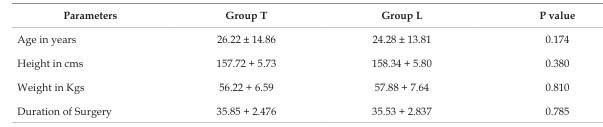
Background: Postoperative pain management plays a key role in perioperative anaesthesia care. Postoperative analgesia can be achieved by the use of oral or parenteral analgesics like NSAIDS and opiods. However, opioids are associated with dose dependent side effects including nausea, vomiting, pruritis, sedation and respiratory depression. Techniques that reduce opioid requirements such as peripheral nerve blocks, neuraxial blocks with local anaesthetics, intrathecal opioids and adjunctive techniques may be beneficial to the patient. Transversus abdominis plane block has recently been described as an addition or alternative to the other analgesic regimes. TAP block has been shown to reduce postoperative opioid use in elective abdominal surgery, including open appendicectomy, laparotomy, Caesarean section and laparoscopic cholecystectomy.1 Aim: The purpose of this study was to compare the efficacy of Ultrasound guided Transversus abdominis plane (TAP) blocks with local site infiltration using 0.2% Ropivacaine in providing postoperative analgesia in patients undergoing elective caesarean section surgeries. Objectives: To study the time taken for first dose administration of rescue analgesic. To study the total amount of analgesic consumed and the assessment of patient satisfaction. Material: After obtaining approval from the ethical committee and obtaining informed consent, 60 pregnant women aged 20-40 years posted for elective caesarean section surgeries were randomly divided into Group T and Group L. Bilateral TAP block was performed in Group T after the completion of surgery, under ultrasonography guidance with a Sonosite M Turbo portable ultrasound unit with a linear 5-10 MHz probe. A 100mm long, 22G short bevel needle (Stimuplex, B. Braun Melsungen AG, Germany) was used to administer a total of 40ml (20ml for each side) of 0.2 % Ropivacaine for the TAP block. In group L, post-operatively a total of 40ml of 0.2% Ropivacaine was used for subcutaneous wound site infiltration. The Srikanth Reddy Karkala, Pradeep Uday Kiran Boddu, Anuradha Suresh Deolalkar et al. Comparison of Ultrasonography Guided Bilateral Transverse Abdominis Plane (TAP) Block And Local Site Infiltration With 0.2% Ropivacaine for Post Operative Analgesia Following Caesarean Section. parameters recorded were intraoperative haemodynamics, postoperative pain scores and the need for rescue analgesia in the first 24 hours postoperatively. Results: A total of 60 patients were analyzed. Duration of analgesia was significantly longer 5.5±2.8 hours in group T compared to group L 2.5±1.36 hours (p<000.1), mean consumption of diclofenac was 107.5±37.8 mg and 162.5±34.585 mg in group T and L respectively (p<0.001). Conclusion: Post-operative analgesia and patient satisfaction is better with ultrasound guided TAP block than with local site infilteration.
References
- 1. Atim A, Biligin F, Kilickya O, purtuogulu T, Alanbay I, Orhan ME. The efficacy of ultra sound- guided transverses abdominis plane block in patients undergoing hysterectomy. Anaesth Intensive Care. 2011;39(4):630-34.
- 2. Gupta A. Local anaesthesia for pain relief after laparoscopic cholecystectomy: a systematic review. Best Pract Res ClinAnaesthesiol. 2005;19(2):275-92.
- 3. Huang D, Ma X, Zhou D. Effects of postoperative analgesia of ultrasound-guided transversus abdominis plane block in hemicolectomy patients. Zhonghuayixuezazhi. 2014; 94(21):1623-6.
- 4. Ventham NT, Hughes M, O’neill S, Johns N, Brady RR, Wigmore SJ. Systematic review and meta-analysis of continuous local anaesthetic wound infiltration versus epidural analgesia for postoperative pain following abdominal surgery. Brit J Surg. 2013;100(10):1280-9.
- 5. Fowler SJ, Christelis N. High volume local infiltration analgesia compared to peripheral nerve block for hip and knee arthroplastywhat is the evidence? Anaesth Intensive Care. 2013;41(4):458-62.
- 6. Coughlin SM, Karanicolas PJ, EmmertonCoughlin HM, Kanbur B, Kanbur S, Colquhoun PH. Better late than never? Impact of local analgesia timing on post-operative pain in laparoscopic surgery: a systematic review and meta-analysis. Surg Endo. 2010;24(12):3167-76. 7. Aydogmus, M. T., Sinikoglu, S. N., Naki, M. M., Ocak, N. B., Sanl?, N., &Alagol, A. (2014). Comparison of analgesic efficiency between wound site infiltration and ultra-sound-guided transversus abdominis plane block after caesarean delivery under spinal anaesthesia. Hippokratia, 18(1), 28.
- 8. Telnes, A., Skogvoll, E., & Lonnee, H. (2015). Transversus abdominis plane block vs. wound infiltration in Caesarean section: a randomised controlled trial. ActaAnaesthesiologicaScandina vica, 59(4), 496-504.
- 9. Sivapurapu V, Vasudevan A, Gupta S, Badhe AS. Comparison of analgesic efficacy of transversus abdominis plane block with direct infiltration of local anesthetic into surgical incision in lower abdominal gynecological surgeries. J AnaesthesiolClinPharmacol 2013;29:71-5.
- 10. McDonnell JG, ODonnell BD, Farrell T, Gough N, Tuite D, Power C, Laffey JG. Transversus abdominis plane block: a cadaveric and radiological evaluation. Regional Anesthesia and Pain Medicine 2007; 32: 399–404.
- 11. Srivastava U, Verma S, Singh TK, Gupta A, SaxsenaA, Jagar KD, Gupta M. Efficacy of trans abdominis plane block for post cesarean delivery analgesia: Adouble-blind, randomized trial. Saudi J Anaesth. 2015 Jul- Sep;9(3):298-302.
Data Sharing Statement
There are no additional data available.
Funding
Department of Anaesthesiology.
Author Contributions
All authors contributed significantly to the work and approve its publication.
Ethics Declaration
Ethical Clearance was obtained from the institutional ethics committee of Bhaskar Medical College prior to the
commencement of study.
Acknowledgements
Information not provided.
Conflicts of Interest
The authors report no conflicts of interest in this work.
About this article

Cite this article
Karkala SR, Boddu PUK, Deolalkar AS, et al. Comparison of ultrasonography guided bilateral transverse abdominis plane (TAP) block and local site infiltration with 0.2% ropivacaine for post operative analgesia following caesarean section. Ind J Anesth Analg. 2024;11(4):204-8.
Licence:
Attribution-Non-commercial 4.0 International (CC BY-NC 4.0)This license enables reusers to distribute, remix, adapt, and build upon the material in any medium or format for noncommercial purposes only, and only so long as attribution is given to the creator.
| Received | Accepted | Published |
|---|---|---|
| May 09, 2024 | August 13, 2024 | December 20, 2024 |
DOI: https://doi.org/10.21088/ijaa.2349.8471.11424.5
Keywords
AnaesthesiaPregnant womenCaesarean SectionPostoperative painUltrasonographyTransversus abdominis plane blockSearch for Similar Articles
Similar Articles
- Awake Fibreoptic Intubation for Airway Management in Massive Thyroid Enlargement...
- A Case of Thoracotomy with One Lung Ventilation for Carcinoma Oesophagus
- A Case of Empyema for Thoracotomy and Decortication-Anaesthesia Management
- Full Mouth Rehabilitation in a 3-Year-Old Female Child with Repaired Tetralogy o...
- Do Gel Manicures Affect SpO2 Readings ? A Clinical Investigation
Article Level Metrics
Last UpdatedTuesday 14 July 2026, 08:19:41 (IST)
5689
Accesses
11
679
00
Citations
NA
NA
NA
Download citation
Article Keywords
Keyword Highlighting
Highlight selected keywords in the article text.
Timeline
| Received | May 09, 2024 |
| Accepted | August 13, 2024 |
| Published | December 20, 2024 |
licence
Attribution-Non-commercial 4.0 International (CC BY-NC 4.0)
This license enables reusers to distribute, remix, adapt, and build upon the material in any medium or format for noncommercial purposes only, and only so long as attribution is given to the creator.