Full Text (PDF)
Journal of Microbiology and Related Research 10(1):p 15-20, January – June 2024. | DOI: https://doi.org/10.21088/jmrr.2395.6623.10124.2
Original Article
Clinical Identification & Anti-fungal Susceptibility of Candida Species by Vitek-2 System
Sheetal Sharma, Vipin Kathuria, Kuldeep Yadav, S.K Datta
Author Information
Licence:
Attribution-Non-commercial 4.0 International (CC BY-NC 4.0)This license enables reusers to distribute, remix, adapt, and build upon the material in any medium or format for noncommercial purposes only, and only so long as attribution is given to the creator.
Journal of Microbiology and Related Research 10(1):p 15-20, January – June 2024. | DOI: https://doi.org/10.21088/jmrr.2395.6623.10124.2
How Cite This Article:
Sheetal Sharma, Vipin Kathuria, Kuldeep Yadav et al. Clinical Identification & Anti-fungal Susceptibility of Candida Species by Vitek-2 System. J Microbiol Relat Res. 2024;10(1):15–20.Timeline
Received : January 02, 2024
Accepted : April 18, 2024
Published : June 25, 2024
Abstract
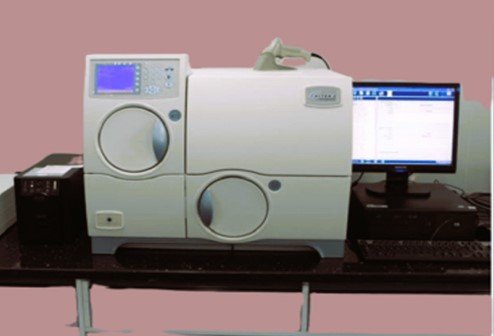
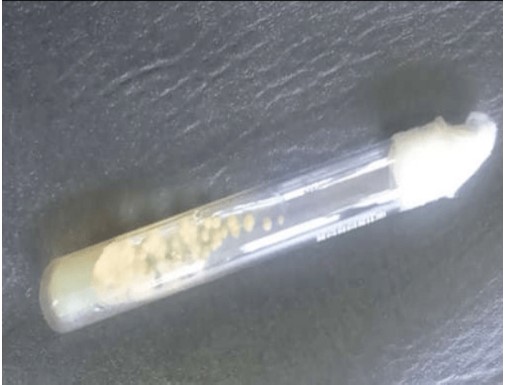
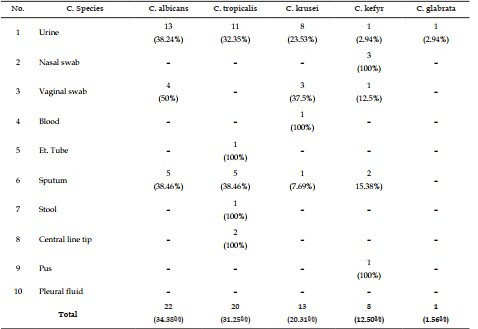
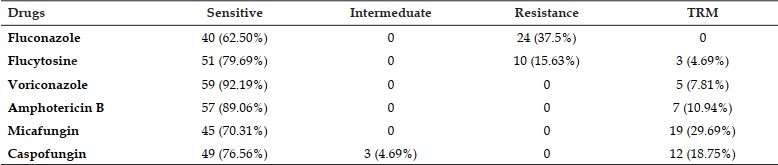
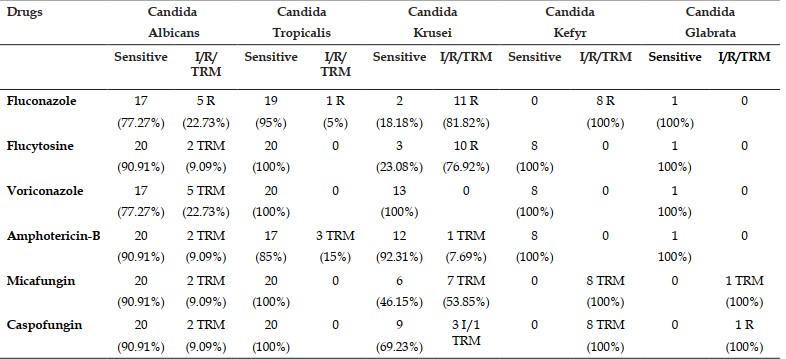
Introduction: Among fungal infections, invasive candidiasis is often associated with increased number of morbidity and death rate. Candida species causing so many infections range from non fatal mucocutaneous infections to fatal blood stream infections, so the aim of this study is isolate and speciate the Candida species and their anti-fungal susceptibility to avoid unnecessarily consumption of anti-fungal drugs. Material & Methods: A Prospective study which was carried out in the Department of Microbiology, Pacific Institute of Medical Sciences Udaipur. Specimen collected from the various sites were collected and cultured on SDA agar and incubated. Identification of Candida species was done through Hi-Crome Candida Differential Agar and anti-fungal susceptibility was evaluated by VITEK-2 automated system and results were calculated through statistical analysis. Results: Out of 64 Candida isolates, 34.38% were Candida albicans, followed by Candida tropicalis (31.25%) Candida krusei (20.31%), Candida kefyr (12.50%) and Candida glabrata (1.56%). The most common Candida species isolated from urine were Candida albicans (34.24%) followed by Candida tropicalis (31.25%). Voriconazole (92.19%) and Amphotericin B (89.06%) were found the most sensitive drugs against the Candida isolates followed by Flucytosine (79.69%), Caspofungin (76.56%), Micafungin (70.31%) and Fluconazole (62.50%). All the Candida kefyr isolates were susceptible to Voriconazole, Amphotericin B and Flucytosine and resistant to Fluconazole. all Candida glabrata isolates were susceptible to all the 4 drugs except Micafungin and Caspofungin. Conclusion: The present study shows the distribution of Candida species in various clinical specimens and also revealed that Non-albicans Candida species are emerging as the predominant species. The increased resistance of Candida isolates towards common anti-fungal drugs which is a concern around all over the world.
References
- 1. Seyoum E, Bitew A, Mihret A et al. Distribution of Candida albicans and non-albicans Candida species isolated in different clinical samples and there in vitro antifungal susceptibility profile in Ethiopia. BMC Infect Dis. Med., 2020; 20(1):4883-5.
- 2. Bhaskaran R, Valsan C, Sathivathy KA et al. Evaluation of the four phenotypic methods for the speciation of Candida isolates in comparison with molecular method. Indian J. Microbiol. 2020;7(2):168–74.
- 3. A. Rengaraj, R. Bharathidasan et al. Speciation and Antifungal Susceptibility Testing of Candida Isolates in Various Clinical Samples in a Doctors’ Diagnostic Centre, Trichy, Tamil Nadu, India. Int. J. Curr. Microbiol. App. Sci 2019; 8(5):1169- 76.
- 4. Zeng Z, Tian G, Ding Y, Yang K, Liu J, Deng J et al. Surveillance study of the prevalence, species distribution, antifungal susceptibility, risk factors and mortality of invasive candidiasis in a tertiary teaching hospital in Southwest China. BMC Infect Dis. 2019; 19(1):4588-9.
- 5. Ghazi S, Rafei R, Osman M, Safadi EI, Mallat H, Papon N et al. The epidemiology of Candida species in the Middle East and North Africa. J Mycol Med. 2019; 29(3):245–52.
- 6. Agrawal, A., Shah H., Tada D., Vegad M., Pipaliya B., & Sathwara N et al. Prevalence of Candida and Its Antifungal Susceptibility in Patients of Urinary Tract Infections: Prevalence of Candida and Its Antifungal Susceptibility in Patients Of UTI. National Journal of Integrated Research in Medicine. 2018; 8(2):44-7.
- 7. Bitew A, Abebaw Y et al. Vulvovaginal candidiasis: Species distribution of Candida and their antifungal susceptibility pattern. BMC Womens Health. 2018; 18(1):94.
- 8. Jangla SM, Naidu R, Patel SC et al. Speciation and antifungal susceptibility testing of Candida isolates in various clinical samples in a tertiary care hospital in Mumbai. Int J Biomed Res. 2018;9(3):106–11.
- 9. Deorukhkar SC, Roushani S et al. Identification of Candida Species: Conventional Methods in the Era of Molecular Diagnosis. Ann Microbiol Immunol. 2018; 1(1):1002.
- 10. Textbook of Medical Mycology; Jagdish Chander, 4th Edition 2018)
- 11. Khadka S, Sherchand JB, Pokhrel BM, Parajuli K, Mishra SK, Sharma S et al. Isolation, speciation and antifungal susceptibility testing of Candida isolates from various clinical specimens at a tertiary care hospital, Nepal. BMC Res Notes. 2017; 10(1):2543-7.
- 12. Sida H, Pethani J, Dalal P, Hiral SH et al. Study of Changing Trend in the Clinical Distribution of Candida Species in Various Clinical Samples at Tertiary Care Hospital, Ahmedabad, Gujarat. Ntl J Community Med. 2017;8(3):109–11.
- 13. Sasso M, Roger C, Sasso M, Poujol H, Saber Barbar S, Lefrant J et al. Changes in the distribution of colonising and infecting Candida spp. isolates, antifungal drug consumption and susceptibility in a French intensive care unit: A 10- year study. Mycoses. 2017;60(12):770 –80.
- 14. Singh R, Verma RK, Kumari S, Singh A, Singh DP et al. Rapid identification and susceptibility pattern of various Candida isolates from different clinical specimens in a tertiary care hospital in Western Uttar Pradesh. Int J Res Med Sci. 2017;5(8):3466–83.
- 15. Singh M, Chakraborty A. Antifungal Drug Resistance among Candida albicans and Non-albicans Candida Species Isolates from a Tertiary Care Centre at Allahabad. J Antimicrob Agents 2017; 3(4):150.
- 16. Sundaram M, Navaneet hakrishnan RM. Evaluation of Vitek 2 system for clinical identification of Candida species and their antifungal susceptibility test. J. Evolution Med. Dent. Sci. 2016; 5(47):2948-51.
Data Sharing Statement
There are no additional data available. All raw data and code are available upon request.
Funding
This research received no funding.
Author Contributions
All authors contributed significantly to the work and approve its publication.
Ethics Declaration
This article does not involve any human or animal subjects, and therefore does not require ethics approval.
Acknowledgements
We would like to express our gratitude to the patients, their families, and all those who have contributed to this study.
Conflicts of Interest
No conflicts of interest in this work.
About this article

Cite this article
Sheetal Sharma, Vipin Kathuria, Kuldeep Yadav et al. Clinical Identification & Anti-fungal Susceptibility of Candida Species by Vitek-2 System. J Microbiol Relat Res. 2024;10(1):15–20.
Licence:
Attribution-Non-commercial 4.0 International (CC BY-NC 4.0)This license enables reusers to distribute, remix, adapt, and build upon the material in any medium or format for noncommercial purposes only, and only so long as attribution is given to the creator.
| Received | Accepted | Published |
|---|---|---|
| January 02, 2024 | April 18, 2024 | June 25, 2024 |
DOI: https://doi.org/10.21088/jmrr.2395.6623.10124.2
Keywords
CompostingPlastic BagPlant Growth studyPhysio-Chemical PropertiesNutrient LossSearch for Similar Articles
Similar Articles
- Blood Metagenomic Sequence Analysis for Evaluation of Chronic Systemic Infection...
- Preparation of Organic Compost from Kitchen Waste and its Efficiency: Managing W...
- Leprosy Pathophysiology, Clinical Features and Management
- Unusual Presentation of Cysticercosis: A detailed Case Report
- A Review on Monkey Pox: From Pandemic to Endemic
Article Level Metrics
Last UpdatedThursday 10 September 2026, 19:18:57 (IST)
1342
Accesses
1
175
00
Citations
NA
NA
NA
Download citation
Article Keywords
Keyword Highlighting
Highlight selected keywords in the article text.
Timeline
| Received | January 02, 2024 |
| Accepted | April 18, 2024 |
| Published | June 25, 2024 |
licence
Attribution-Non-commercial 4.0 International (CC BY-NC 4.0)
This license enables reusers to distribute, remix, adapt, and build upon the material in any medium or format for noncommercial purposes only, and only so long as attribution is given to the creator.