Full Text (PDF)
Indian Journal of Research in Anthropology 11(1):p 55-64, Jan-June 2025. | DOI: 10.21088/ijra.2454.9118.11125.6
Original Article
Changing Scenario of Oraon Tribes: Pattern of Transformation in Chatra District of Jharkhand, India
Swapan Kumar Kolay, Surendra Kumar Bakshi
Author Information
Licence:
Attribution-Non-commercial 4.0 International (CC BY-NC 4.0)This license enables reusers to distribute, remix, adapt, and build upon the material in any medium or format for noncommercial purposes only, and only so long as attribution is given to the creator.
Indian Journal of Research in Anthropology 11(1):p 55-64, Jan-June 2025. | DOI: 10.21088/ijra.2454.9118.11125.6
How Cite This Article:
Bakshi SK, Kolay SK. Changing scenario of Oraon tribes: pattern of transformation in Chatra district of Jharkhand, India. Ind J Res Anthropol. 2025;11(1):55-64.Timeline
Received : March 25, 2025
Accepted : June 05, 2025
Published : June 18, 2025
Abstract
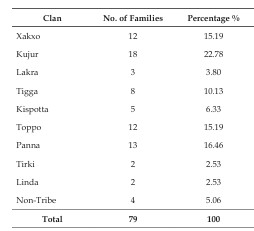
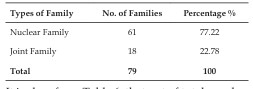
The Oraon tribe, a prominent ethnic group in Jharkhand, India, is distinguished by its unique cultural practices, animistic beliefs, forest-based livelihoods, agrarian economy, Kurukh language, vibrant rituals and festivals. These elements form a strong sense of community and are preserved across generations. However, modern influences such as industrialization, modernization, westernization, sanskritization, and socioeconomic changes have significantly impact their social, economic, political, and cultural life. This study explores the effects of these factors on the cultural transformation of the Oraon tribe. The objectives of this paper are (i) to investigate the factors driving cultural transformation within the Oraon tribe, and (ii) to assess the impacts of modernization and industrialization on social structure and traditions. The research was conducted in Charki Tola, Murwe and Basaria village, located in the Simaria Block of Chatra district of Jharkhand, which is home to approximately 79 Oraon households. A qualitative research approach was employed, utilizing primary anthropological methods such as semi structured schedule, observation, interview and case study. The Oraon tribe is undergoing significant changes in their cultural identity due to internal dynamics and external influences, resulting in transformations in their life and cultural heritage. The Oraon tribe is undergoing significant changes in cultural identity due to modern technology and external influences. Social and cultural shifts are apparent as pressures from dominant cultures, state policies, and external perceptions erode their heritage. To preserve their traditions, initiatives should focus on raising awareness and educating the community about their languages, values, and traditions, ensuring future generations stay connected to their heritage
References
- 1. Bara, M. (2023). Ethnographic Study of Oraon Tribe of Lodhma Village, Jharkhand, IOSR Journal of Humanities And Social Sciences, Volume 28, Issue 4, Series 1, p. 40.
- 2. Bhatt, S.C. & Bhargava, G.K. (Ed.) (2006). Land and People of Indian Tribes Union Territories: Jharkhand, Kalpaz Publications, Delhi, p. (13).
- 3. Census of India (2011). Ministry of Home Affairs, Govt. of India, New Delhi.
- 4. Chatterji, S.K. (2010). Tribal Language, Tribes Through the Age (Ed.), Vista International Publishing House, Delhi, p. 154.
- 5. Dalton, E.T. (1872). Descriptive Ethnology of Bengal, Calcutta, Government of Bengal Press.
- 6. Dehon, P. (1906). Religions and Customs of the Uraons. Asiatic Society, Kolkata.
- 7. Dhan, R.O. (1967). These are my Tribesmen – The Oraons, G.E.L. Church Press, Ranchi.
- 8. Ember, C.R., Ember M.R., Peregrine, P.N. (2021). Political Life: Social Order and Disorder, Anthropology, Pearson India Education Services Pvt. Ltd., p. 497.
- 9. Kumari, U. (2024). The Oraon Tribe of Jharkhand: their Art and Culture, Journal of Arts,HumanitiesandSocialSciences,Volume 7, Issue 7, p. (5).
- 10. Minz, D. & Hansda, D.M. (2010). Encyclopedia of Schedule Tribes in Jharkhand, Kalpaz Publications, Delhi.
- 11. Roy, S. C. (1928). Deities, Spirits and Other Supernatural Powers, Oraon Religion and Customs, Calcutta-4, p (11).
- 12. Sahay, K.N. (2021). Trends of Sanskritization Among the Oraon, Dynamics and Dimensions of Tribal Socities, Commonwealth, New Delhi, p. (212).
- 13. Srivastava, V.K. (2010). Socio-economic Characteristics of Tribal Communities that Call Themselves Hindu, Religions and Development, India, Indian Institute of Dalit Studies (Working Paper Series), New Delhi, p. 5.
- 14. Vidyarthi, L.P., Rai, B.K. (1976). Culture Change in the Tribes of India, The Tribal Culture of India, Concept Publishing Company, New Delhi, p. 234.
- 15. Vidyarthi, L.P., Rai, B.K. (1976). Economic System of the Tribal, The Tribal Culture of India, Concept Publishing Company, New Delhi, p. 142.
Data Sharing Statement
There are no additional data available.
Funding
This research received no funding.
Author Contributions
All authors contributed significantly to the work and approve its publication.
Ethics Declaration
None
Acknowledgements
No Information Provided
Conflicts of Interest
No conflicts of interest in this work.
About this article

Cite this article
Bakshi SK, Kolay SK. Changing scenario of Oraon tribes: pattern of transformation in Chatra district of Jharkhand, India. Ind J Res Anthropol. 2025;11(1):55-64.
Licence:
Attribution-Non-commercial 4.0 International (CC BY-NC 4.0)This license enables reusers to distribute, remix, adapt, and build upon the material in any medium or format for noncommercial purposes only, and only so long as attribution is given to the creator.
| Received | Accepted | Published |
|---|---|---|
| March 25, 2025 | June 05, 2025 | June 18, 2025 |
DOI: 10.21088/ijra.2454.9118.11125.6
Keywords
Oraon tribeTransformationIndustrializationWesternizationSanskritizationSocio-economic changeSearch for Similar Articles
Similar Articles
- Indigenous Knowledge System in Formal Education
- Contemporary Issues and Challenges in Women’s Weavers in the Varanasi Silk Sare...
- Understanding through Traversing the Corridors of History: Richness of Indian He...
- Challenges and Opportunities in Digital Preservation of Intangible Culture Herit...
- Assessment of Nutritional Indicators: A Comparative Study among Pre-School Child...
Article Level Metrics
Last UpdatedThursday 09 July 2026, 14:34:45 (IST)
821
Accesses
2
223
00
Citations
NA
NA
NA
Download citation
Article Keywords
Keyword Highlighting
Highlight selected keywords in the article text.
Timeline
| Received | March 25, 2025 |
| Accepted | June 05, 2025 |
| Published | June 18, 2025 |
licence
Attribution-Non-commercial 4.0 International (CC BY-NC 4.0)
This license enables reusers to distribute, remix, adapt, and build upon the material in any medium or format for noncommercial purposes only, and only so long as attribution is given to the creator.