Full Text (PDF)
Journal of Hospital Administration 7(2):p 19-22, July - December 2023. | DOI: NA
Short Communication
Central Line: Associated Blood Stream Infection
Author Information
Licence:
Attribution-Non-commercial 4.0 International (CC BY-NC 4.0)This license enables reusers to distribute, remix, adapt, and build upon the material in any medium or format for noncommercial purposes only, and only so long as attribution is given to the creator
Journal of Hospital Administration 7(2):p 19-22, July - December 2023. | DOI: NA
How Cite This Article:
Baby SC. Central line: associated blood stream infection. RFP J Hosp Adm. 2023;7(2):55-58.Timeline
Received : April 28, 2023
Accepted : May 26, 2023
Published : December 30, 2023
Abstract
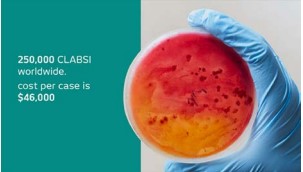
HAIs are resulting from complications of healthcare. They are linked with high morbidity and mortality. On any given day, 1 in 31 hospital patients has an HAI (an infection while being treated in a medical facility). It is one of the most emerging problems in health care. Additional infections occur in other healthcare settings. Seriously ill patients are particularly vulnerable to serious complications due to HAIs, likely due to factors such as progressively more invasive medical technology and complex medical procedures, increasing immunocompromised status and elderly age, and the rising incidence of antimicrobial resistance. The encouraging news is that many HAIs are preventable when evidence based guidelines are incorporated into patient care. Patients who get a CLABSI have a fever, and might also have red skin and soreness around the central line. If this happens, healthcare providers can do tests to learn if there is an infection present. Healthcare providers must follow a strict protocol when inserting the line to make sure the line remains sterile and a CLABSI does not occur. In addition to inserting the central line properly, healthcare providers must use stringent infection control practices each time they check the line or change the dressing.
References
- 1. www.ncbi.nlm.nih.gov
- 2. https://www.cdc.gov/hai/bsi/bsi.html
- 3. https://www.hopkinsmedicine.org
- 4. https://www.jointcommission.org
- 5. https://www.cdph.ca.gov
Data Sharing Statement
There are no additional data available.
Funding
This research received no funding
Author Contributions
All authors contributed significantly to the work and approve its publication
Ethics Declaration
This article does not involve any human or animal subjects, and therefore does not require ethics approval
Acknowledgements
Information Not Provided
Conflicts of Interest
No conflicts of interest in this work
About this article

Cite this article
Baby SC. Central line: associated blood stream infection. RFP J Hosp Adm. 2023;7(2):55-58.
Licence:
Attribution-Non-commercial 4.0 International (CC BY-NC 4.0)This license enables reusers to distribute, remix, adapt, and build upon the material in any medium or format for noncommercial purposes only, and only so long as attribution is given to the creator
| Received | Accepted | Published |
|---|---|---|
| April 28, 2023 | May 26, 2023 | December 30, 2023 |
DOI: NA
Keywords
CLABSI - Central Line Associated Blood Stream Infection WHO - World Health Organization CDCP - Centers for Disease Control and Prevention CVC - Central Venous Catheter HAIs - Healthcare-Associated InfectionsCLABSI - Central Line Associated Blood Stream InfectionWHO - World Health OrganizationCDCP - Centers for Disease Control and PreventionCVC - Central Venous CatheterHAIs - Healthcare-Associated InfectionsSearch for Similar Articles
Similar Articles
- Cardiac Complication of Extrapulmonary Tuberculosis
- Post-Covid Prophylaxis in Adults: A Systematic Review
- Quantitative Study to Analyze the Discharge process among IP Patients in Sun Med...
- Transformation of Indian Healthcare Market from Reactive Service Model to a Pro...
- Examining The LASI Data on Mental Health among the Ageing Population: A Comparat...
Article Level Metrics
Last UpdatedSunday 04 October 2026, 06:27:40 (IST)
1117
Accesses
10
138
00
Citations
NA
NA
NA
Download citation
Article Keywords
Keyword Highlighting
Highlight selected keywords in the article text.
Timeline
| Received | April 28, 2023 |
| Accepted | May 26, 2023 |
| Published | December 30, 2023 |
licence
Attribution-Non-commercial 4.0 International (CC BY-NC 4.0)
This license enables reusers to distribute, remix, adapt, and build upon the material in any medium or format for noncommercial purposes only, and only so long as attribution is given to the creator