Full Text (PDF)
Indian Journal of Library and Information Sciences 19(3):p 215-225, Sep-Dec 2025. | DOI: https://doi.org/10.21088/ijlis.0973.9548.19325.2
Original Article
Awareness, Use and Impact of Online Public Access Catalogue (OPAC) among Research Scholars in Central University of Punjab, Bathinda: A Study
Author Information
Licence:
Attribution-Non-commercial 4.0 International (CC BY-NC 4.0)This license enables reusers to distribute, remix, adapt, and build upon the material in any medium or format for noncommercial purposes only, and only so long as attribution is given to the creator.
Indian Journal of Library and Information Sciences 19(3):p 215-225, Sep-Dec 2025. | DOI: https://doi.org/10.21088/ijlis.0973.9548.19325.2
How Cite This Article:
Irfanullah. Awareness, Use and Impact of Online Public Access Catalogue (Opac) among Research Scholars In Central University of Punjab, Bathinda: A Study. Ind J Lib Inf Sci 2025; 19 (3): 215–225.Timeline
Received : July 29, 2025
Accepted : September 19, 2025
Published : December 30, 2025
Abstract
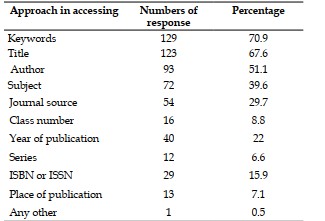
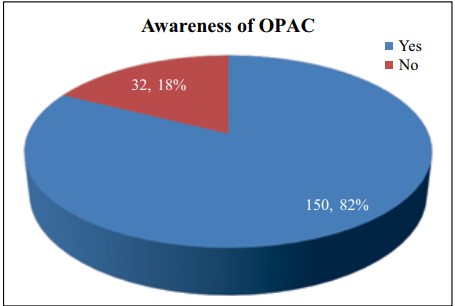
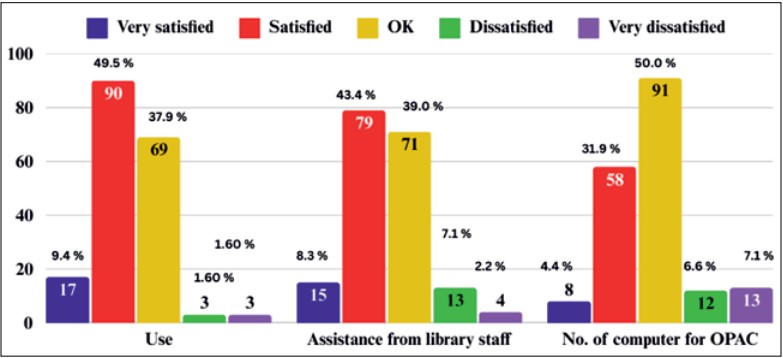
A library catalogue is accessible through an electronic device for the convenience of library patrons is known as an Online Public Access Catalogue (OPAC). It provides a number of access points to get a desired document. ICT revolutionizes daily life by improving connectivity, knowledge sharing, and digital access. It drives innovation, streamlines services, and empowers communities through enhanced information flow. The aim of this study was to know awareness, usage, purposes, frequency of OPAC usage, problems encountered during its use, level of satisfaction and different approach applied in accessing required documents by research scholars in Ranganathan Library at Central University of Punjab, Bathinda. Descriptive survey technique and simple random sampling method was adopted in the study. A well structured questionnaire was prepared and distributed online among 200 research scholars out of total, 182 completed questionnaires were received with 91% response rate. Collected data were analysed using percentage and frequency counts. Finding shows that 82.4% of the respondents are aware about OPAC and more than half number of research scholars uses it occasionally. Checking the availability of the required documents (70.3%) in the library was found as the main purpose of using OPAC. The study observed the slow speed of searching was one of the major problems. Keywords (70.9%) and title (67.6%) were most frequent access points used in searching documents. The result of the study pointed that majority of the respondents were satisfied with OPAC service being offered by the library. The study suggests increasing the numbers of computer in library so that maximum users can use the system at the same time.
References
- 1. Adegun, I. A., Akinola, J. O., Oyewumi, O. O., & Olusegun, A. S. (2021). Online Public Access Catalogue (OPAC) Among Library Users: A Case Study of Olusegun Oke Library, Lautech, Ogbomoso, Oyo State, Nigeria. International Journal of Library and Information Science Studies, 7(5), 11-18.
- 2. Adjei, S., Agyeman, I. K., Adetsi, P., & Agyei, F. O. (2024). Usage of Online Public Access to Catalogue (OPAC) by library users in Catholic University College, Ghana. Asian Journal of Information Science and Technology, 14(1), 40-46.
- 3. About Ranganathan Library, Central University of Punjab, Bathinda retrieved from http://opac.cup.edu.in
- 4. About Central University of Punjab, Bathinda retrieved from https://cup.edu.in
- 5. Bashorun, M. T., & Akorede, S. O. (2019). Awareness and use of online public access catalogue by postgraduate students in University of Ilorin Library. Ilorin Varsity International Journal of Library & Information Science, 2(1/2), 114-127.
- 6. Fabunmi, O. M., & Asubiojo, B. O. (2013). Awareness and use of online public access catalogue by students of Obafemi Awolowo University, Ile-Ife, Nigeria. Library Philosophy and Practice (e-journal), 922.
- 7. Indraji, C., & Dominic, J. (2025). A Study on Facilities and Usage of Web OPAC in University Libraries in Tamilnadu. Library Progress International, 45(1), 12-23.
- 8. Krishnappa, S., & Kemparaju, T. D. (2021). Awareness and use of Online Public Access Catalogue among the Social Science Researchers at Dr. VKRV Rao Library, ISEC Bangalore: A Study. Journal of Indian Library Association 56(4), 97-106.
- 9. Kumar, S., & Vohra, R. (2011). Use of online public access catalogue in Guru Nanak Dev University library, Amritsar: a study. SRELS Journal of Information Management, 48(5), 519-528.
- 10. Salauddin, N. (2025). Awareness and usage pattern of library resources and services by the users of the Maulana Azad Library, AMU Aligarh: An analytical study. Information Development, 02666669241312169.
- 11. Swaminathan, K. S. M. (2017). Use and awareness of online public access catalogue (OPAC) by Students and faculty members of Anna University Regional Campus, Coimbatore, Tamil Nadu–A Case Study. International Journal of Scientific Research and Management (IJSRM), 5(5), 5345-5349.
- 12. Vasishta, S., & Dhingra, N. (2017). Awareness and use of OPAC as information retrieval tool: A study of PEC University of Technology, Chandigarh, India. International Journal of Information Dissemination and Technology, 7(1), 19-25.
Data Sharing Statement
There are no additional data available. All raw data and code are available upon request.
Funding
This research received no funding.
Author Contributions
All authors contributed significantly to the work and approve its publication.
Ethics Declaration
This article does not involve any human or animal subjects, and therefore does not require ethics approval.
Acknowledgements
We would like to express our gratitude to the patients, their families, and all those who have contributed to this study.
Conflicts of Interest
No conflicts of interest in this work.
About this article

Cite this article
Irfanullah. Awareness, Use and Impact of Online Public Access Catalogue (Opac) among Research Scholars In Central University of Punjab, Bathinda: A Study. Ind J Lib Inf Sci 2025; 19 (3): 215–225.
Licence:
Attribution-Non-commercial 4.0 International (CC BY-NC 4.0)This license enables reusers to distribute, remix, adapt, and build upon the material in any medium or format for noncommercial purposes only, and only so long as attribution is given to the creator.
| Received | Accepted | Published |
|---|---|---|
| July 29, 2025 | September 19, 2025 | December 30, 2025 |
DOI: https://doi.org/10.21088/ijlis.0973.9548.19325.2
Keywords
AwarenessUseOnline Public Access Catalogue (OPAC)Central University of PunjabSearch for Similar Articles
Similar Articles
- The Emerging Role of BJP in Telangana Politics Ahead of 2029 Elections
- Information Retrieval with AI: Use of AI Search Tools
- How accurate are cited references in Management journals?
- The Impact of Open Access Movement on Science and Communication Researchers: A S...
- User Perception of ChatGPT and Traditional Reference Services
Article Level Metrics
Last UpdatedSunday 22 November 2026, 02:26:49 (IST)
6523
Accesses
9
1087
00
Citations
NA
NA
NA
Download citation
Article Keywords
Keyword Highlighting
Highlight selected keywords in the article text.
Timeline
| Received | July 29, 2025 |
| Accepted | September 19, 2025 |
| Published | December 30, 2025 |
licence
Attribution-Non-commercial 4.0 International (CC BY-NC 4.0)
This license enables reusers to distribute, remix, adapt, and build upon the material in any medium or format for noncommercial purposes only, and only so long as attribution is given to the creator.