Full Text (PDF)
Indian Journal of Biology 13(1):p 43-50, January-June 2026. | DOI: https://doi.org/10.21088/ijb.2394.1391.13126.5
Original Article
Arthropods as Indigenous Traditional Ethnomedicinal Source in Tribal Communities of Odisha
Prafulla Kumar Mohanty, Sarbeswar Nayak
Author Information
Licence:
Attribution-Non-commercial 4.0 International (CC BY-NC 4.0)This license enables reusers to distribute, remix, adapt, and build upon the material in any medium or format for noncommercial purposes only, and only so long as attribution is given to the creator.
Indian Journal of Biology 13(1):p 43-50, January-June 2026. | DOI: https://doi.org/10.21088/ijb.2394.1391.13126.5
How Cite This Article:
Sarbeswar Nayak, Prafulla Kumar Mohanty. Arthropods as Indigenous Traditional Ethnomedicinal Source in Tribal Communities of Odisha. Ind. J Biol 2026; 13(1): 43-50.Timeline
Received : February 11, 2026
Accepted : March 14, 2026
Published : June 26, 2026
Abstract
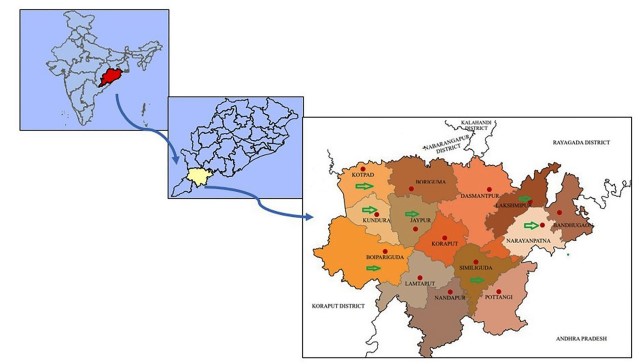
Ethnomedicinal knowledge forms an integral part of traditional healthcare systems among indigenous communities, particularly in biodiversity rich regions of India. The present study documents the ethnomedicinal practices involving arthropods among tribal communities of Koraput district, Odisha, India. Structured interviews, participatory observations, and conversations with knowledgeable elders and local healers were used to gather data. A total of seven arthropod species belonging to the phylum Arthropoda were recorded, including insects and arachnids such as red ants (Solenopsis sp.), praying mantis (Mantis religiosa), house cricket (Acheta domesticus), mole cricket (Gryllotalpa gryllotalpa), cockroach (Periplaneta americana), honey bee (Apis cerana), and scorpion (Palamnaeus swammerdami). Various body parts, including the head, abdomen, cocoon with larvae, and whole body, were used either orally or topically to treat ailments such as wounds, cold and cough, otorrhoea, pain, intestinal disorders, respiratory tract infections, gastric ulcers, and piles. Preparation methods ranged from grinding, boiling, frying, burning, to ash formation, often mixed with water, edible oil, or coconut oil. Quantitative ethnobiological indices such as Relative Frequency of Citation (RFC) and Fidelity Level (FL) indicated a high degree of consensus among informants, especially for house cricket used for pain (RFC 0.98; FL 97.29) and red ant for cold, cough, and wound healing. Both cultural beliefs and the availability of local bioresources are reflected in the ongoing reliance on arthropods. This study emphasises the need to preserve traditional knowledge and the therapeutic value of arthropods in indigenous medicine. The development of novel bioactive compounds and sustainable healthcare alternatives may benefit from scientific validation of these practices.
References
- 1. Alfred J.R.B. (1998) Faunal diversity in India: an overview. In: Faunal diversity in India, vols I–VIII. Zoological Survey of India, Kolkata, pp. 1–495.
- 2. Alonso-Castro A.J., Carranza-Alvarez C., Maldonado-Miranda J.J., Jacobo-Salcedo MDR, Quezada-Rivera D.A., Lorenzo-Marquez H., Figueroa-Zuniga L.A., Fernandez-Galicia
- 3. Alves R.R.N., Rosa I.L. (2005) Why study the use of animal products in traditional medicine? J Ethnobiol Ethnomed 1:1–5.
- 4. Banjo A.D., Lawal O.A., Songonuga E.A. (2006) The nutritional value of fourteen species of edible insects in southwestern Nigeria. Afr J Biotechnol 5:298–301
- 5. Behera K.K., Sahu M.C., Mishra M.K. (2014) Ethnomedicinal uses of insects in Odisha, India. Indian J Tradit Knowl 13:370–377.
- 6. Behera S., Mohanty P.K. (2019) Ethnozoological therapeutic practices of tribes of Mayurbhanj district, Odisha, India. Int J Zool Appl Biosci 4(6): 245–257.
- 7. Bogdanov S. (2016) Honey in medicine: past, present and future. Bee World 93: 1–8.
- 8. Chakravorty J., Ghosh S., Meyer-Rochow V.B. (2011) Practices of entomophagy and entomotherapy by members of the Nyishi and Galo tribes of Arunachal Pradesh, India. J
- 9. Chellappandian M., Pandikumar P., Mutheeswaran S., Paulraj M.G., Prabakaran S, Duraipandiyan V., Ignacimuthu S., Al-Dhabi NA (2014) Documentation and quantitative
- 10. Costa-Neto E.M. (2005) Animal-based medicines: biological prospection and the sustainable use of zootherapeutic resources.An Acad Bras Cienc 77: 33–43.
- 11. Costa-Neto E.M. (2005) Entomotherapy, or the medicinal use of insects. J Ethnobiol 25: 93–114.
- 12. Friedman J., Yaniv Z., Dafni A., Palewitch D. (1986) A preliminary classification of the healing potential of medicinal plants based on a rational analysis of an ethnopharmacological field survey among Bedouins in the Negev Desert. J Ethnopharmacol 16: 275–287.
- 13. Mahawar M.M., Jaroli D.P. (2008) Traditional zootherapeutic studies in India: a review. J Ethnobiol Ethnomed 4:17–29.
- 14. Meyer-Rochow V.B. (2017) Therapeutic arthropods and other invertebrates used in traditional medicine. J Ethnobiol Ethnomed 13:9
- 15. Mootsamy A., Mahomoodly M.F. (2014) A quantitative ethnozoological assessment of traditionally used animal-based therapies in the tropical island of Mauritius. J Ethnopharmacol 154(3): 847–857.
- 16. Oudhia P. (2002) Traditional knowledge about medicinal insects of Chhattisgarh, India. Insect Environ 8: 114–115.
- 17. Puri S.K. (2007) Biodiversity profile of India (text only). Centre for Ecological Sciences, Indian Institute of Science, Bangalore, http://ces.iisc.ernet.in/hpg/cesmg/indiabio.html (accessed 20 June 2007)
- 18. Ramos-Elorduy J. (2005) Insects: A hopeful food source. Ecol Food Nutr 44: 263–285.
- 19. Sajan S.K., Mohapatra P.P., Tripathy B., Rout S.D. (2017) Ethnobiological knowledge and socio-biodiversity values among the Kutia Kandha tribe of Odisha, India. J Tradit Folk Pract 5(2): 50–62.
- 20. Unnikrishnan PM (1998) Animals in Ayurveda. J Amruth 1:1–15.
- 21. Vijayakumar S., Yabesh JEM, Prabhu S., Ayyanar M., Damodaran R. (2015) Ethnozoological study of animals used by traditional healers in the Silent Valley of Kerala, India. J Ethnopharmacol 162:296–305.
- 22. Vitalini S., Iriti M., Puricelli C., Ciuchi D., Segale A., Fico G. (2012) Traditional knowledge on medicinal and food plants used in Val San Giacomo (Sondrio, Italy): an alpine
Data Sharing Statement
There are no additional data available. All raw data and code are available upon request.
Funding
This research received no funding.
Author Contributions
All authors contributed significantly to the work and approve its publication.
Ethics Declaration
This article does not involve any human or animal subjects, and therefore does not require ethics approval.
Acknowledgements
We would like to express our gratitude to the patients, their families, and all those who have contributed to this study.
Conflicts of Interest
No conflicts of interest in this work.
About this article

Cite this article
Sarbeswar Nayak, Prafulla Kumar Mohanty. Arthropods as Indigenous Traditional Ethnomedicinal Source in Tribal Communities of Odisha. Ind. J Biol 2026; 13(1): 43-50.
Licence:
Attribution-Non-commercial 4.0 International (CC BY-NC 4.0)This license enables reusers to distribute, remix, adapt, and build upon the material in any medium or format for noncommercial purposes only, and only so long as attribution is given to the creator.
| Received | Accepted | Published |
|---|---|---|
| February 11, 2026 | March 14, 2026 | June 26, 2026 |
DOI: https://doi.org/10.21088/ijb.2394.1391.13126.5
Keywords
EthnomedicineArthropodsTribal knowledgeTraditional healthcareRelative Frequency of CitationFidelity LevelSearch for Similar Articles
Similar Articles
- Medicinal Mushrooms: Potent Fungi for Diverse Human Health Benefits
- Honey for Nutrition and Health Benefits - Traditional and Modern Uses in Human D...
- Foraging Behaviour of Indian Honey Bee, Apis Cerana Indica Fab, (Apidae: Hymenop...
- Role of Curcumin in Wound Healing
- Characterization of Blood cells and Comparative Analyses of Hematological Profil...
Article Level Metrics
Last UpdatedWednesday 21 October 2026, 10:26:31 (IST)
2844
Accesses
33
355
00
Citations
NA
NA
NA
Download citation
Article Keywords
Keyword Highlighting
Highlight selected keywords in the article text.
Timeline
| Received | February 11, 2026 |
| Accepted | March 14, 2026 |
| Published | June 26, 2026 |
licence
Attribution-Non-commercial 4.0 International (CC BY-NC 4.0)
This license enables reusers to distribute, remix, adapt, and build upon the material in any medium or format for noncommercial purposes only, and only so long as attribution is given to the creator.