Full Text (PDF)
Indian Journal of Biology 9(2):p 53-60, july-december 2022. | DOI: https://doi.org/10.21088/ijb.2394.1391.9222.5
Review Article
Role of Curcumin in Wound Healing
Ravi Kumar Chittoria, Jacob Antony Chakiath
Author Information
Licence:
Attribution-Non-commercial 4.0 International (CC BY-NC 4.0)This license
enables reusers to distribute, remix, adapt, and build upon the material in any
medium or format for noncommercial purposes only, and only so long as
attribution is given to the creator.
Indian Journal of Biology 9(2):p 53-60, july-december 2022. | DOI: https://doi.org/10.21088/ijb.2394.1391.9222.5
How Cite This Article:
Jacob Antony Chakiath, Ravi Kumar Chittoria/Role of Curcumin in Wound Healing/Indian J Biol 2022; 9(2):53–60.Timeline
Received : June 24, 2022
Accepted : July 26, 2022
Published : December 30, 2022
Abstract
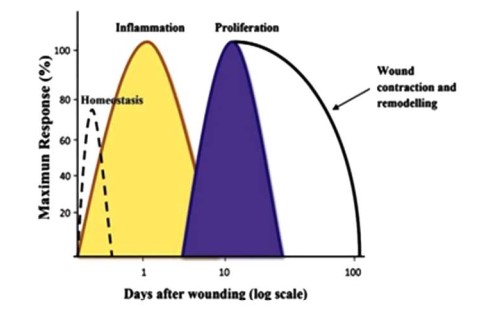
Wound healing implicates several biological and molecular events, such as coagulation, inflammation, migration-proliferation, and remodeling. Turmeric (Curcuma longa) is a popular Indian spice that has been used for centuries in herbal medicines for the treatment of a variety of ailments such as rheumatism, diabetic ulcers, anorexia, cough and sinusitis. Curcumin has been shown to possess significant anti-inflammatory, anti-oxidant, anti-carcinogenic, anti-mutagenic, anticoagulant and anti-infective effects. Curcumin has also been shown to have significant wound healing properties. It acts on various stages of the natural wound healing process to hasten healing.
References
- 1. Eming S, Brachvogel B, Odorisio T, Koch M. Regulation of angiogenesis: wound healing as a model. Prog Histochem Cytochem 2007; 42:115–70.
- 2. Chattopadhyay I, Biswas K, Bandyopadhyay U, Banerjee R. Turmeric and curcumin:biological actions and medicinal applications. Curr Sci 2004; 87:44–53.
- 3. Patwardhan B, Warude D, Pushpangadan P, Bhatt N. Ayurveda and traditional Chinesemedicine: a comparative overview. Evid Based Complement Alternat Med 2005; 2:465–73.
- 4. Milobedzka J, Kostanecki S, Lampe V. Zur Kenntnis des Curcumins. Ber Deut Chem Ges1910; 43:2163–70.
- 5. Enoch S, Grey J, Harding K. Recent advances and emerging treatments. BMJ 2006;332:962–5.
- 6. Topman G, Lin F, Gefen A. The natural medications for wound healing—curcumin, aloe-vera and ginger—do not induce a signiÞcant effect on the migration kinematics of cultured Þbroblasts. J Biomech 2013; 46:170–4.
- 7. Epstein F, Singer A, Clark R. Cutaneous wound healing. N Engl J Med 1999; 341:738–46
- 8. KulacM, AktasC, TulubasF, UygurR, KanterM, Erboga M, et al. The effects of topicaltreat-ment with curcumin on burn wound healing in rats. J Mol Histol 2013; 44:83–90
- 9. Mohanty C, Das M, Sahoo S. Sustained wound healing activity of curcumin loaded oleic acid based polymeric bandage in a rat model. Mol Pharm 2012;9:2801–11.
- 10. LiangG, YangS, ZhouH, ShaoL, HuangK, XiaoJ, et al. Synthesis, crystalstructureand anti-inßammatory properties of curcumin analogues. Eur J Med Chem 2009; 44:915–9
- 11. Mun SH, Joung DK, Kim YS, Kang OH, Kim SB, Seo YS, et al. Synergistic antibacterial effect of curcumin against methicillin-resistant Staphylococcus aureus. Phytomedicine 2013; 20:714–8.
- 12. Singh RK, Rai D, Yadav D, Bhargava A, Balzarini J, De Clercq E. Synthesis, antibacterial and antiviral properties of curcumin bioconjugates bearing dipeptide, fatty acids and folic acid. Eur J Med Chem 2010;45:1078–86.
- 13. Joe B, Vijaykumar M, Lokesh B. Biological properties of curcumin-cellular and molecularmechanisms of action. Crit Rev Food Sci Nutr 2004;44:97–111.
- 14. Imlay J. Pathways of oxidative damage. Annu Rev Microbiol 2003;57:395–418.
- 15. Matés J, Pérez-Gómez C, De Castro I. Antioxidant enzymes and human diseases. ClinBiochem 1999;32:595–603.
- 16. RoyS, KhannaS, NalluK, HuntT, SenC. Dermal wound healing is subject to redox control. Mol Ther 2006;13:211-20.
- 17. Thangapazham R, Sharad S, Maheshwari R. Skin regenerative potentials of curcumin. Biofactors 2013;39:141–9.
- 18. Petroll W, Cavanagh H, Barry P, Andrews P, Jester J. Quantitative analysis of stress Þber orientation during corneal wound contraction. J Cell Sci 1993;104(Pt 2):353–63.
- 19. Sai KP, Babu M. Collagen based dressings — a review. Burns 2000;26:54–62
- 20. Scharstuhl A, Mutsaers H, Pennings S, Szarek W, Russel F, Wagener F. Curcumininduced Þbroblast apoptosis and invitro wound contraction are regulated by antioxidants and heme oxygenase: implications for scar formation. J Cell Mol Med 2009; 13:712.
- 21. Desmouliere A, Geinoz A, Gabbiani F, Gabbiani G. Transforming growth factorbeta 1 induces alpha-smooth muscle actin expression in granulation tissue myoÞbroblasts and in quiescent and growing cultured Þbroblasts. J Cell Biol 1993;122:103–11.
- 22. Koivisto L, Häkkinen L, Larjava H. Reepithelialization of wounds. Endod Top 2011;24:59 –93.
- 23. Anand P, Nair H, Sung B, Kunnumakkara A, Yadav V, Tekmal R, et al. Design of curcumin-loaded PLGA nanoparticles formulation with enhanced cellular uptake, and increased bioactivity in vitro and superior bioavailability in vivo. Biochem Pharmacol 2010;79:330–8.
- 24. Durgaprasad S, Reetesh R, Hareesh K, Rajput R. Effect of topical curcumin preparation (Biocurcumax) on burn wound healing in rats. J Pharm Biomed Sci 2011; 8:1–3.
Data Sharing Statement
There are no additional data available. All raw data and code are available upon request.
Funding
This research received no funding.
Author Contributions
All authors contributed significantly to the work and approve its publication.
Ethics Declaration
This article does not involve any human or animal subjects, and therefore does not require ethics approval.
Acknowledgements
We would like to express our gratitude to the patients, their families, and all those who have contributed to this study.
Conflicts of Interest
No conflicts of interest in this work.
About this article

Cite this article
Jacob Antony Chakiath, Ravi Kumar Chittoria/Role of Curcumin in Wound Healing/Indian J Biol 2022; 9(2):53–60.
Licence:
Attribution-Non-commercial 4.0 International (CC BY-NC 4.0)This license
enables reusers to distribute, remix, adapt, and build upon the material in any
medium or format for noncommercial purposes only, and only so long as
attribution is given to the creator.
| Received | Accepted | Published |
|---|---|---|
| June 24, 2022 | July 26, 2022 | December 30, 2022 |
DOI: https://doi.org/10.21088/ijb.2394.1391.9222.5
Keywords
Curcuminwound healingSearch for Similar Articles
Similar Articles
- Medicinal Mushrooms: Potent Fungi for Diverse Human Health Benefits
- Honey for Nutrition and Health Benefits - Traditional and Modern Uses in Human D...
- Foraging Behaviour of Indian Honey Bee, Apis Cerana Indica Fab, (Apidae: Hymenop...
- Characterization of Blood cells and Comparative Analyses of Hematological Profil...
- Morphological Features of Various White Blood Cells of 10 years Castrated Non-De...
Article Level Metrics
Last UpdatedWednesday 21 October 2026, 09:13:29 (IST)
2842
Accesses
14
355
00
Citations
NA
NA
NA
Download citation
Article Keywords
Keyword Highlighting
Highlight selected keywords in the article text.
Timeline
| Received | June 24, 2022 |
| Accepted | July 26, 2022 |
| Published | December 30, 2022 |
licence
Attribution-Non-commercial 4.0 International (CC BY-NC 4.0)
This license
enables reusers to distribute, remix, adapt, and build upon the material in any
medium or format for noncommercial purposes only, and only so long as
attribution is given to the creator.