Full Text (PDF)
Indian Journal of Emergency Medicine 11(4):p 271-274, Oct - Dec. 2025. | DOI: https://doi.org/10.21088/ijem.2395.311X.11425.11
Case Report
A Doughnut in the Brain
Jaislin Joseph, Varun H.S., Rajeshgopal Rao, Suhas Rao
Author Information
Licence:
Attribution-Non-commercial 4.0 International (CC BY-NC 4.0)This license enables reusers to distribute, remix, adapt, and build upon the material in any medium or format for noncommercial purposes only, and only so long as attribution is given to the creator.
Indian Journal of Emergency Medicine 11(4):p 271-274, Oct - Dec. 2025. | DOI: https://doi.org/10.21088/ijem.2395.311X.11425.11
How Cite This Article:
Joseph J, Varun HS, Rao R, et al. A Doughnut in the Brain. Ind J Emerg Med. 2025;11(4):271-4.Timeline
Received : July 15, 2025
Accepted : October 22, 2025
Published : December 30, 2025
Abstract
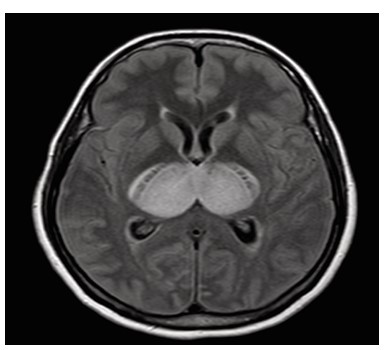
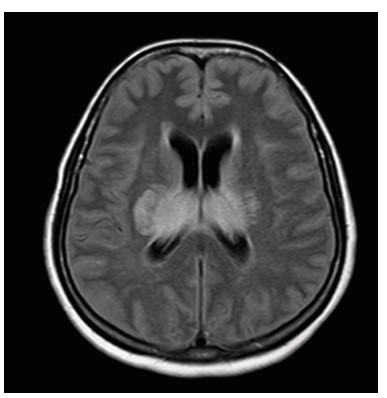
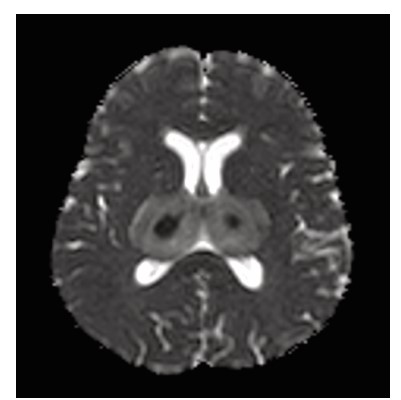
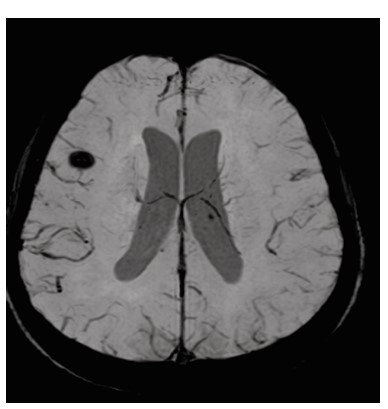
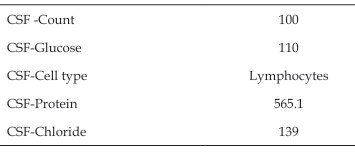
Dengue fever, a mosquito borne viral illness, is endemic in many parts of the world, particularly in tropical and subtropical regions. It is caused by four distinct serotypes (DENV 1–4) of single stranded RNA viruses from the Flaviviridae family. Although it is generally considered non-neurotropic, certain strains, especially DENV-2 and DENV-3, have been associated with neurological involvement. Neurological complications can include encephalopathy, encephalitis, meningitis, acute disseminated encephalomyelitis (ADEM), stroke, and Guillain-Barré syndrome. Dengue encephalitis, a relatively uncommon but serious manifestation, arises from direct viral invasion of neural tissue. This case report presents a patient with altered mental status and characteristic MRI findings symmetrical involvement of the thalami and cerebellum, known as the “double doughnut sign” indicative of dengue encephalitis. Cerebrospinal fluid analysis confirmed the diagnosis. Early recognition, neuroimaging, and supportive management with immunomodulation played a crucial role in the patient’s recovery. Clinicians should maintain a high index of suspicion for dengue encephalitis in endemic areas when encountering unexplained encephalopathy.
References
- 1. Murthy J.M. Neurological complication of dengue infection. Neurol India. 2010 Jul-Aug; 58(4): 581-4. doi: 10.4103/0028-3886.68654. PMID: 20739796.
- 2. Jugpal, T.S., Dixit, R., Garg, A., Gupta, S., Jain, V., Patel, R., & Agarwal, S. (2017). Spectrum of findings on magnetic resonance imaging of the brain in patients with neurological manifestations of dengue fever. Radiologia Brasileira, 50, 285-290.
- 3. Calderón-Peláez M.A., Velandia-Romero M.L., Bastidas-Legarda L.Y., Beltrán E.O., Camacho-Ortega S.J., Castellanos J.E. Dengue Virus Infection of Blood-Brain Barrier Cells: Consequences of Severe Disease. Front Microbiol. 2019 Jun 26; 10: 1435. doi: 10.3389/ fmicb.2019.01435. PMID: 31293558; PMCID: PMC6606788.
- 4. Koley T.K., Jain S., Sharma H., Kumar S., Mishra S., Gupta M.D., Goyal A.K., Gupta M.D. Dengue encephalitis. J Assoc Physicians India. 2003 Apr; 51: 422-3. PMID: 12723667.
- 5. Madi D., Achappa B., Ramapuram J.T., Chowta N., Laxman M., Mahalingam S. Dengue encephalitis-A rare manifestation of dengue fever. Asian Pac J Trop Biomed. 2014 May; 4(Suppl 1): S70-2. doi: 10.12980/ APJTB.4.2014C1006. PMID: 25183150; PMCID: PMC4025291.
- 6. Lum L.C., Lam S.K., Choy Y.S., George R., Harun F. Dengue encephalitis: a true entity? Am J Trop Med Hyg. 1996 Mar; 54(3): 2569. doi: 8600761. 10.4269/ajtmh.1996.54.256. PMID:
- 7. Shah N., Nair A.V., Ahamed S., Manoj K.S. Dengue doughnut: A diagnostic magnetic resonance imaging finding in dengue encephalitis. J Postgrad Med. 2018 Apr-Jun; 64(2): 127. doi: 10.4103/jpgm.JPGM_374_17. PMID: 29692403; PMCID: PMC5954811.
Data Sharing Statement
There are no additional data available. All raw data and code are available upon request.
Funding
This research received no funding.
Author Contributions
All authors contributed significantly to the work and approve its publication.
Ethics Declaration
This article does not involve any human or animal subjects, and therefore does not require ethics approval.
Acknowledgements
We would like to express our gratitude to the patients, their families, and all those who have contributed to this study.
Conflicts of Interest
No conflicts of interest in this work.
About this article

Cite this article
Joseph J, Varun HS, Rao R, et al. A Doughnut in the Brain. Ind J Emerg Med. 2025;11(4):271-4.
Licence:
Attribution-Non-commercial 4.0 International (CC BY-NC 4.0)This license enables reusers to distribute, remix, adapt, and build upon the material in any medium or format for noncommercial purposes only, and only so long as attribution is given to the creator.
| Received | Accepted | Published |
|---|---|---|
| July 15, 2025 | October 22, 2025 | December 30, 2025 |
DOI: https://doi.org/10.21088/ijem.2395.311X.11425.11
Keywords
Dengue feverInfectious encephalitisMRI findingsExpanded dengue syndrome & complicationsSearch for Similar Articles
Similar Articles
- Inherited Thrombophilia as a Cause of Post-Partum Massive Pulmonary Embolism: A...
- ATAK Complex Presenting as Hypertensive Pulmonary Edema Following Meropenem-Indu...
- When Infection Triggers Thrombosis: A Case of Extensive DVT in a Young Male
- Case Report: Diagnostic Dilemma in 69-Year-Old Male with Radiating Right Shoulde...
- The Silent Gallbladder, The Slowing Heart: Cope’s Sign in Acute Calculous Cholec...
Article Level Metrics
Last UpdatedTuesday 20 October 2026, 10:42:10 (IST)
6079
Accesses
49
1017
00
Citations
NA
NA
NA
Download citation
Article Keywords
Keyword Highlighting
Highlight selected keywords in the article text.
Timeline
| Received | July 15, 2025 |
| Accepted | October 22, 2025 |
| Published | December 30, 2025 |
licence
Attribution-Non-commercial 4.0 International (CC BY-NC 4.0)
This license enables reusers to distribute, remix, adapt, and build upon the material in any medium or format for noncommercial purposes only, and only so long as attribution is given to the creator.