Full Text (PDF)
Indian Journal of Emergency Medicine 11(4):p 297-300, Oct - Dec. 2025. | DOI: https://doi.org/10.21088/ijem.2395.311X.11425.16
Case Report
REPE after Spontaneous Pneumothorax Drainage
Apurva Sahay, Surjeet Acharya, Kishalay Datta
Author Information
Licence:
Attribution-Share Alike 4.0 International (CC BY-SA 4.0)This license enables reusers to distribute, remix, adapt, and build upon the material in any medium or format for noncommercial purposes only, and only so long as attribution is given to the creator.
Indian Journal of Emergency Medicine 11(4):p 297-300, Oct - Dec. 2025. | DOI: https://doi.org/10.21088/ijem.2395.311X.11425.16
How Cite This Article:
Sahay A, Acharya S, Datta K. REPE after Spontaneous Pneumothorax Drainage. Ind J Emerg Med. 2025;11(4):297-300.Timeline
Received : October 14, 2025
Accepted : November 14, 2025
Published : December 30, 2025
Abstract
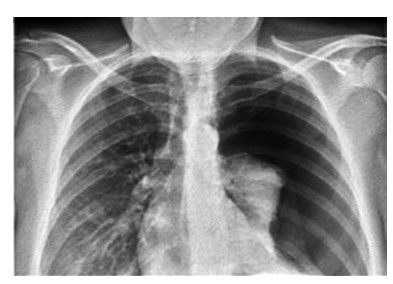
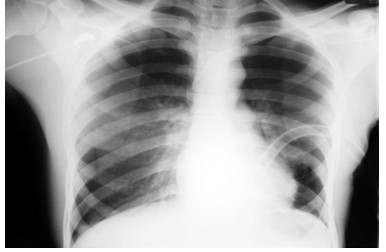
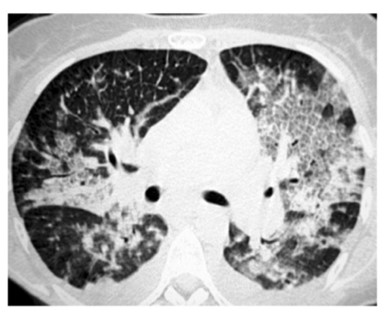
Spontaneous pneumothorax is a common clinical condition in respiratory medicine, typically managed through either conservative measures or pleural drainage. One of the recognized complications following drainage is re-expansion pulmonary edema (REPE), which is usually mild and self-limiting. However, in rare instances, REPE can manifest severely. This report describes a case of unilateral severe REPE that developed shortly after pleural drainage for a spontaneous pneumothorax, complicated by extensive pulmonary plasma leakage. The patient experienced a sudden and critical decline in both respiratory and circulatory status. Emergency management included prone and head-down positioning to optimize ventilationperfusion matching, aggressive fluid resuscitation, and initiation of mechanical ventilation. This clinical course highlights the potential for REPE to progress rapidly to life-threatening respiratory and hemodynamic failure. Clinicians should maintain a high index of suspicion for severe pulmonary re-expansion edema in patients who deteriorate shortly after seemingly successful pleural decompression. Early recognition and supportive interventions are vital for improving outcomes in such critical presentations. In this case report, we discuss such a challenging case, its management and further course we learnt to support our readers.
References
- 1. Cha K.C., Kim H., Ji H.J., Kwon W.C., Shin H. J., Cha Y.S., Lee K.H., Hwang S.O., Lee C.C., and Singer A.J., The frequency of reexpansion pulmonary edema after trocar and hemostat assisted thoracostomy in patients with spontaneous pneumothorax, Yonsei Medical Journal. (2013) 54, no. 1, 166–171, https:// doi.org/10.3349/ymj.2013.54.1.166, 84871348682, 23225814.
- 2. Haga T., Kurihara M., and Kataoka H., Risk for re-expansion pulmonary edema following spontaneous pneumothorax, Surgery Today. (2014) 44, no. 10, 1823–1827, https://doi. org/10.1007/s00595-013-0726-y, 2-s2.084920273843, 24065192.
- 3. Walter J.M., Matthay M.A., Gillespie C.T., and Corbridge T., Acute hypoxemic respiratory failure after large-volume thoracentesis. Mechanisms of pleural fluid formation and reexpansion pulmonary edema, Annals of the American Thoracic Society. (2016) 13, no. 3, 438–443, https://doi.org/10.1513/ AnnalsATS.201510-716CC, 2-s2.0-84989193403, 26963356.
- 4. Yoon J.S., Suh J.H., Choi S.Y., Kwon J.B., Lee B.Y., Lee S.H., Kim C.K., and Park C.B., Risk factors for the development of reexpansion pulmonary edema in patients with spontaneous pneumothorax, Journal of Cardiothoracic Surgery. (2013) 8, no. 1, https://doi.org/10.1186/17498090-8-164, 2-s2.0-84879474114.
- 5. Jørgensen A.H.R., Yao Y., Ghazanfar M. N., Ring H.C., and Thomsen S.F., Burden, predictors and temporal relationships of comorbidities in patients with hidradenitis suppurativa: a hospital-based cohort study, Journal of the European Academy of Dermatology and Venereology. (2020) 34, no. 3, 565–573, https://doi.org/10.1111/jdv.15904, 2-s2.085073781445, 31442338.
- 6. Sabat R., Jemec G.B.E., Matusiak Ł., Kimball A.B., Prens E., and Wolk K., Hidradenitis suppurativa, Nature Reviews. Disease Primers. (2020) 6, no. 1, https://doi.org/10.1038/ s41572-020-0149-1.
- 7. Beng S.T. and Mahadevan M., An uncommon life-threatening complication after chest tube drainage of pneumothorax in the ED, The American Journal of Emergency Medicine. (2004) 22, no. 7, 615–619, https://doi.org/10.1016/j. ajem.2004.09.005, 2-s2.0-12444288137, 15666274.
- 8. Yonis H., Bitker L., Aublanc M., Perinel Ragey S., Riad Z., Lissonde F., Louf-Durier A., Debord S., Gobert F., Tapponnier R., Guérin C., and Richard J.C., Change in cardiac output during Trendelenburg maneuver is a reliable predictor of fluid responsiveness in patients with acute respiratory distress syndrome in the prone position under protective ventilation, Critical Care. (2017) 21, no. 1, https://doi.org/10.1186/ s13054-017-1881-0, 2-s2.0-85037348703, 29208025.
- 9. Scholten E.L., Beitler J.R., Prisk G.K., and Malhotra A., Treatment of ARDS with prone positioning, Chest. (2017) 151, no. 1, 215–224, https://doi.org/10.1016/j.chest.2016.06.032, 2-s2.0-85009754234, 27400909.
Data Sharing Statement
There are no additional data available. All raw data and code are available upon request.
Funding
This research received no funding.
Author Contributions
All authors contributed significantly to the work and approve its publication.
Ethics Declaration
This article does not involve any human or animal subjects, and therefore does not require ethics approval.
Acknowledgements
We would like to express our gratitude to the patients, their families, and all those who have contributed to this study.
Conflicts of Interest
No conflicts of interest in this work.
About this article

Cite this article
Sahay A, Acharya S, Datta K. REPE after Spontaneous Pneumothorax Drainage. Ind J Emerg Med. 2025;11(4):297-300.
Licence:
Attribution-Share Alike 4.0 International (CC BY-SA 4.0)This license enables reusers to distribute, remix, adapt, and build upon the material in any medium or format for noncommercial purposes only, and only so long as attribution is given to the creator.
| Received | Accepted | Published |
|---|---|---|
| October 14, 2025 | November 14, 2025 | December 30, 2025 |
DOI: https://doi.org/10.21088/ijem.2395.311X.11425.16
Keywords
REPESpontaneous PneumothoraxRe-expansion Pulmonary EdemaSearch for Similar Articles
Similar Articles
- Inherited Thrombophilia as a Cause of Post-Partum Massive Pulmonary Embolism: A...
- ATAK Complex Presenting as Hypertensive Pulmonary Edema Following Meropenem-Indu...
- When Infection Triggers Thrombosis: A Case of Extensive DVT in a Young Male
- Case Report: Diagnostic Dilemma in 69-Year-Old Male with Radiating Right Shoulde...
- The Silent Gallbladder, The Slowing Heart: Cope’s Sign in Acute Calculous Cholec...
Article Level Metrics
Last UpdatedTuesday 20 October 2026, 13:57:05 (IST)
6082
Accesses
23
1017
00
Citations
NA
NA
NA
Download citation
Article Keywords
Keyword Highlighting
Highlight selected keywords in the article text.
Timeline
| Received | October 14, 2025 |
| Accepted | November 14, 2025 |
| Published | December 30, 2025 |
licence
Attribution-Share Alike 4.0 International (CC BY-SA 4.0)
This license enables reusers to distribute, remix, adapt, and build upon the material in any medium or format for noncommercial purposes only, and only so long as attribution is given to the creator.