Full Text (PDF)
Journal of Social Welfare and Management 16(2):p 69-74, May - Aug 2024. | DOI: https://doi.org/10.21088/jswm.0975.0231.16224.2
Original Article
A Comparative Study of Indirect Tax Revenue between Pre and Post GST Regime
Debasish Bera, Saoni Pal, Brajaballav Pal
Author Information
Licence:
Attribution-Non-commercial 4.0 International (CC BY-NC 4.0)This license enables reusers to distribute, remix, adapt, and build upon the material in any medium or format for noncommercial purposes only, and only so long as attribution is given to the creator.
Journal of Social Welfare and Management 16(2):p 69-74, May - Aug 2024. | DOI: https://doi.org/10.21088/jswm.0975.0231.16224.2
How Cite This Article:
Debasish Bera, Saoni Pal, Brajaballav Pal. A Comparative Study of Indirect Tax Revenue between Pre and Post GST Regime. J Soc Welfare Manag. 2024;16(2):69–74.Timeline
Received : April 03, 2024
Accepted : June 29, 2024
Published : August 30, 2024
Abstract
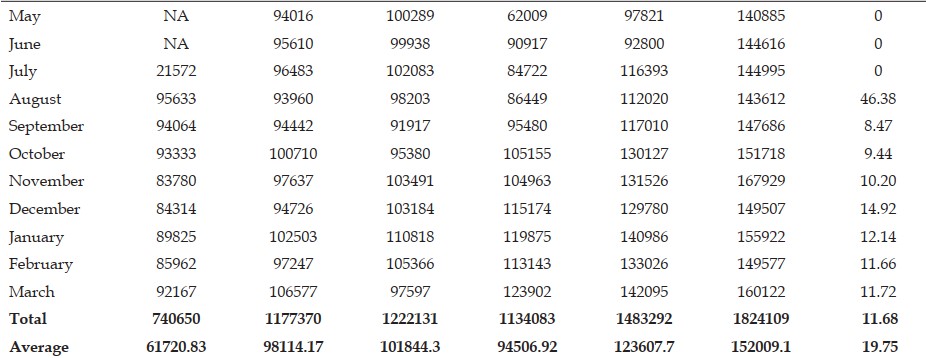
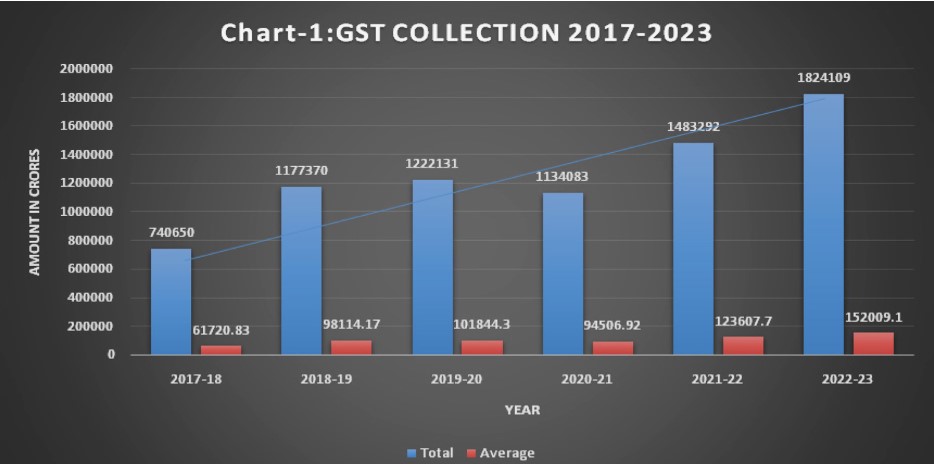
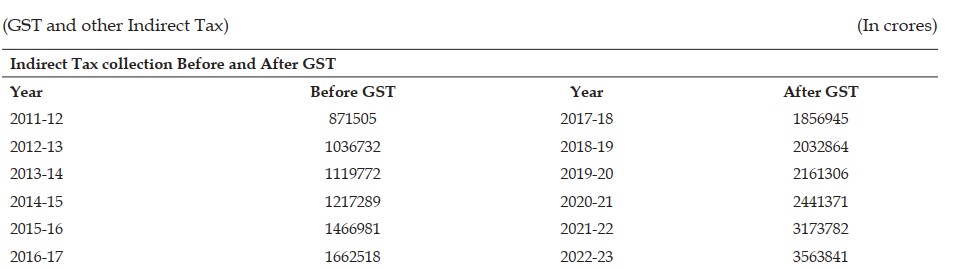
For the development of a nation, the Government levies taxes. The country may impose and collect taxes in exchange for the sale or purchase of goods and services. With the introduction of GST, a significant portion of the tax burden will be reduced, allowing different sectors to cut the price of their goods; a move that will benefit customers and eventually by lowering the cost of goods to the end users. It has been argued that after introduction of GST, indirect tax revenues have been increased. Accordingly, the study attempts to examine the influence of GST on indirect tax revenue in India by making a comparison of indirect tax revenue between before and after GST regime. For the purpose of our study, we have considered secondary data which have collected from budget documents of the Government of India that ranged from 2011-12 to 2022-23. In this respect, we have employed charts, tables and paired sample t-test. The empirical findings of the study reveal that indirect tax revenue has significantly increased after the introduction of GST.
References
- 1. Aamir, M., Qayyum, A., Nasir, A., Hussain, S., Khan, K. I., & Butt, S. (2011). Determinants of tax revenue: A comparative study of direct taxes and indirect taxes of Pakistan and India. International Journal of Business and Social Science, 2(19), 173-178
- 2. Choudhari, A. N., Jain, A. N., & Officer, J. S. (2019). The Comparative Study on Impact of GST Implementation on Value of Indian Rupees. International Multidisciplinary E- Research Journal, 207(A), 40-43
- 3. Gupta, V. M., & Rastogi, S. K. (2015). A Comparative Study of Central Government Taxes Revenue. International Research Journal of Commerce Arts and Science, 6(8), 88-96
- 4. https://www.gst.gov.in
- 5. Lourdunathan, F., & Xavier, P. (2017). A study on implementation of goods and services tax (GST) in India: Prospectus and challenges. International Journal of Applied Research, 3(1), 626-629.
- 6. Nayyar, A., & Singh, I. (2018). A comprehensive analysis of Goods and Services Tax (GST) in India. Indian Journal of Finance, 12(2), 57-71.
- 7. Rana, S. (2023). A comparative study of pre and post GST implications on agriculture with special reference to Harda district. International journal of Emerging Knowledge Studies (IJEKS), 02(09): 255-260.
- 8. Rupa, R. (2017). GST in India: An overview. International Education & Research Journal, 3(2), 88-89.
- 9. Shukla, S. K., Dwivedi, A., Gupta, P., & Mishra, N. (2022). A Comparative Study of Indirect Tax Revenue: Pre GST and Post GST. Journal of Positive School Psychology, 6(11), 787-797.
- 10. Singh, A. (2021). A comparative study of GST & vat in three consecutive terms: with special reference to pre & post GST implementation. International Journal of Management (IJM), 12(1): 1063-1069.
- 11. www. economictimes.indiatimes.com/topic/ GST
- 12. www. Gstindia.com
- 13. www.//en.wikipedia.org/wiki/Goods_and_ Services_Tax_(India).
Data Sharing Statement
There are no additional data available. All raw data and code are available upon request.
Funding
This research received no funding.
Author Contributions
All authors contributed significantly to the work and approve its publication.
Ethics Declaration
This article does not involve any human or animal subjects, and therefore does not require ethics approval.
Acknowledgements
We would like to express our gratitude to the patients, their families, and all those who have contributed to this study.
Conflicts of Interest
No conflicts of interest in this work.
About this article

Cite this article
Debasish Bera, Saoni Pal, Brajaballav Pal. A Comparative Study of Indirect Tax Revenue between Pre and Post GST Regime. J Soc Welfare Manag. 2024;16(2):69–74.
Licence:
Attribution-Non-commercial 4.0 International (CC BY-NC 4.0)This license enables reusers to distribute, remix, adapt, and build upon the material in any medium or format for noncommercial purposes only, and only so long as attribution is given to the creator.
| Received | Accepted | Published |
|---|---|---|
| April 03, 2024 | June 29, 2024 | August 30, 2024 |
DOI: https://doi.org/10.21088/jswm.0975.0231.16224.2
Keywords
TaxIndirect taxGoods and services tax (GST)taxation reformsSearch for Similar Articles
Similar Articles
- Electronic Publishing: A Powerful Tool in Academic Environment
- Natural Farming & the Concept of Recycle, Reuse through Case Studies
- From Home to the Gig: Empowering Women in Thoothukudi District of Tamil Nadu sta...
- Determinants of FinTech Adoption: An Analysis of Perceptual and Behavioural Infl...
- The Illusion of Prestige: Pay-and-Take Awards and the Glorified Profile Culture...
Article Level Metrics
Last UpdatedSunday 25 October 2026, 15:58:33 (IST)
3550
Accesses
14
300
00
Citations
NA
NA
NA
Download citation
Article Keywords
Keyword Highlighting
Highlight selected keywords in the article text.
Timeline
| Received | April 03, 2024 |
| Accepted | June 29, 2024 |
| Published | August 30, 2024 |
licence
Attribution-Non-commercial 4.0 International (CC BY-NC 4.0)
This license enables reusers to distribute, remix, adapt, and build upon the material in any medium or format for noncommercial purposes only, and only so long as attribution is given to the creator.