Full Text (PDF)
Indian Journal of Forensic Odontology 15(1):p 27-30, january-june 2022. | DOI: https://doi.org/10.21088/ijfo.0974.505X.15122.3
Review Article
Tongue Prints: An Emerging Forensic Tool
Riya Jain, Manisha Ahire, Akshay Trimukhe, Salma Tadvi, Deepak Sethia
Author Information
Licence:
Attribution-Non-commercial 4.0 International (CC BY-NC 4.0)This license enables reusers to distribute, remix, adapt, and build upon the material in any medium or format for noncommercial purposes only, and only so long as attribution is given to the creator.
Indian Journal of Forensic Odontology 15(1):p 27-30, january-june 2022. | DOI: https://doi.org/10.21088/ijfo.0974.505X.15122.3
How Cite This Article:
Riya Jain, Manisha Ahire, Akshay Trimukhe, et al./Tongue Prints: An Emerging Forensic Tool/ Indian Journal of Forensic Odontology. 2022;15(1):27–30.Timeline
Received : April 02, 2022
Accepted : May 30, 2022
Published : June 20, 2022
Abstract
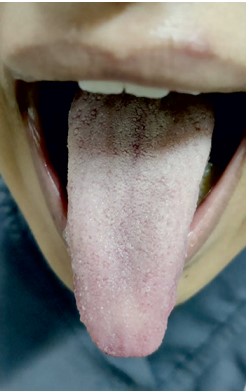
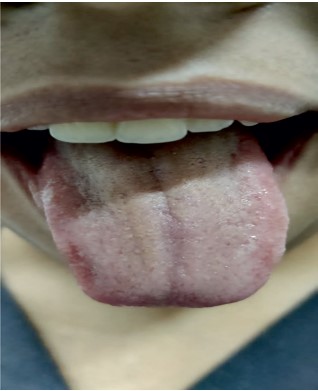
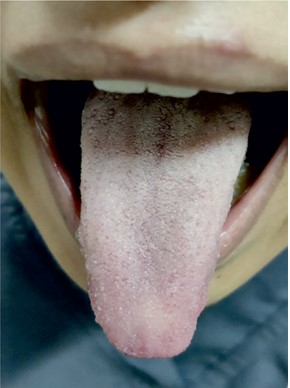
Biometric is a real time identification system using physical characteristics. The tongue can be used as a novel identification system and a potential forensic tool. Tongue prints can be captured either by clicking a photograph of the dorsum of the tongue or by obtaining an alginate impression. Tongue printing dates back to the era of traditional Chinese medicine. Tongue prints and their interpretation is also important in diagnosing cases of HIV, upper gastrointestinal problems, etc. Multiple studies have been performed to establish a universal classification of tongue prints. Still, there is a lack of availability of data about the population of different geographical locations. Hence, it also opens up new research avenues for upcoming researchers. Keywords: Tongue prints, biometric, identification, forensic odontology, tool. Key Messages: Tongue prints can be used as a reliable new technique for biometrics assessment because of their genetic independence, stability over time, and physical protection from the external environment. Hence, it also opens up new research avenues for upcoming researchers.
References
- 1. Saharan R, Meena D. Tongue Recognition and Detection. In: Pati B, Panigrahi CR, Misra S, Pujari AK, Bakshi S, editors. Progress in Advanced Computing and Intelligent Engineering [Internet]. Singapore: Springer Singapore; 2019 [cited 2022 Jul 19]. p. 49–59. (Advances in Intelligent Systems and Computing; vol. 713). Available from: http://link. springer.com/10.1007/978-981-13-1708-8_5
- 2. Jeddy N, Radhika T, Nithya S. Tongue prints in biometric authentication: A pilot study. J Oral Maxillofac Pathol 2017;21:176-.
- 3. Zhang DD, editor. Biometric Solutions: For Authentication in an E-world. Vol. 697. Germany: Springer Science and Business Media; 2012. pp.1–21. [Google Scholar].
- 4. Vijay P, Sharma S, Chandra S, Pardhe N, Singh P, Srivastava Y. A Study on Evaluation of Various Tongue Patterns in North Indian Population and a Working Classification System for These Tongue Print Patterns. Int Healthc Res J. 2019;3(2):76-79. doi: 10.26440/IHRJ/0302.05.521081.
- 5. Lo LC, Chen YF, Chen WJ, Cheng TL, Chiang JY. The study on the agreement between automatic tongue diagnosis system and traditional chinese medicine practitioners. Evid Based Complement Alternat Med 2012;2012:505063.
- 6. Bing Z, Hongcai W, editors. Diagnostics of Traditional Chinese Medicine. London: Singing Dragon; 2011. [Google Scholar].
- 7. Venkatesh S B, et al. Preliminary Study of Tongue Prints for Preliminary Study of Tongue Prints for Biometric Authentication, Shiraz E-Med Biometric Authentication, Shiraz E-Med J. Online ahead of Print ; 20(12):e96173.
- 8. Tongue prints: A novel biometric and potential forensic tool T. Radhika, Nadeem Jeddy, and S. Nithya.
- 9. Ismaila et al., Soft Computing: Two-Step Feature Extraction-Based Biometric Authentication System. International Journal of Emerging Technologies in Computational and Applied Sciences, 25(1), JuneAugust, 2018, pp. 22-27.
- 10. Zhi Liu, Jing-Qi Yan, David Zhang, Qun-Lin Tang; “A tongue-print image database for recognition”, in proceedings of the Sixth International Conference on Machine Learning and Cybernetics, Hong Kong, August 2007, pp. 19-22.
- 11. Stefanescu CL, Popa MF, Candea LS. Preliminary study on the tongue-based forensic identification. RJLM. 2014 Dec;22(4):263–6.
- 12. Jayan L, Bharanidharan R, Ramya R, Priyadharshini N, Kumar AR. Tongue morphometry: Evaluation of morphological variations in ethnic Tamil population. SRM J Res Dent Sci 2019;10:139-44.
- 13. A Novel Biometric System based on Hybrid Fusion Speech, Signature and Tongue Article in International Journal of Computer Applications June 2015 DOI: 10.5120/21082-3764 CITATIONS 8.
- 14. Assit.prof.Abdul-Wahab Sami Ibrahim and Rasha Jamal Hindi 2020 J. Phys.: Conf. Ser. 1530 012093.
- 15. Soft Computing: Two-Step Feature ExtractionBased Biometric Authentication System 1Ismaila W. Oladimeji, 1Babalola O. Richard, 2Ismaila Folasade. M., 1Ogunjimi Temitope O. 1Department of Computer Science and Engineering, Ladoke Akintola University of Technology, Ogbomoso, Nigeria, O.2Department of Computer Science Osun
- 16. Anastasi JK, Chang M, Quinn J, Capili B. Tongue inspection in TCM: observations in a study sample of patients living with HIV. Medical Acupuncture. 2014 Feb 1;26(1):15-22.
- 17. Kanawong R, Obafemi-Ajayi T, Ma T, Xu D, Li S, Duan Y. Automated tongue feature extraction for ZHENG classification in traditional Chinese medicine. Evidence-Based Complementary and Alternative Medicine. 2012 Jan 1;2012.
- 18. Luo M, Ni K, Jin Y, Yu Z, Deng L. Toward the identification of extra-oral TAS2R agonists as drug agents for muscle relaxation therapies via bioinformatics-aided screening of bitter compounds in traditional chinese medicine. Frontiers in physiology. 2019 Jul 16;10:861.
Data Sharing Statement
There are no additional data available. All raw data and code are available upon request.
Funding
This research received no funding.
Author Contributions
All authors contributed significantly to the work and approve its publication.
Ethics Declaration
This article does not involve any human or animal subjects, and therefore does not require ethics approval.
Acknowledgements
We would like to express our gratitude to the patients, their families, and all those who have contributed to this study.
Conflicts of Interest
No conflicts of interest in this work.
About this article

Cite this article
Riya Jain, Manisha Ahire, Akshay Trimukhe, et al./Tongue Prints: An Emerging Forensic Tool/ Indian Journal of Forensic Odontology. 2022;15(1):27–30.
Licence:
Attribution-Non-commercial 4.0 International (CC BY-NC 4.0)This license enables reusers to distribute, remix, adapt, and build upon the material in any medium or format for noncommercial purposes only, and only so long as attribution is given to the creator.
| Received | Accepted | Published |
|---|---|---|
| April 02, 2022 | May 30, 2022 | June 20, 2022 |
DOI: https://doi.org/10.21088/ijfo.0974.505X.15122.3
Keywords
Tongue printsbiometricidentificationforensic odontologytoolSearch for Similar Articles
Similar Articles
- Forensics in Orthodontics: A Narrative Review
- Forensic Identification Through CBCT Evaluation of Secondary Dentin, Root Canal...
- Reliability and Accuracy of Palatal Rugoscopy as a Tool for Gender Identificati...
- Training Indian Undergraduate Students in Dental Charting and Radiographic Comp...
- Use of Saliva Biomarkers and DNA Epigenetics in Forensic Identification: A Narr...
Article Level Metrics
Last UpdatedSaturday 17 October 2026, 10:42:50 (IST)
1937
Accesses
37
267
00
Citations
NA
NA
NA
Download citation
Article Keywords
Keyword Highlighting
Highlight selected keywords in the article text.
Timeline
| Received | April 02, 2022 |
| Accepted | May 30, 2022 |
| Published | June 20, 2022 |
licence
Attribution-Non-commercial 4.0 International (CC BY-NC 4.0)
This license enables reusers to distribute, remix, adapt, and build upon the material in any medium or format for noncommercial purposes only, and only so long as attribution is given to the creator.