Full Text (PDF)
International Journal of Practical Nursing 12(3):p 87-92, September - December 2024. | DOI: https://doi.org/10.21088 ijpn.2347.7083.12324.1
Original Article
To assess the Effectiveness of Planned Teaching on Knowledge Regarding Obstructive Sleep Apnoea Syndrome among Obese People
Author Information
Licence:
Attribution-Non-commercial 4.0 International (CC BY-NC 4.0)This license enables reusers to distribute, remix, adapt, and build upon the material in any medium or format for noncommercial purposes only, and only so long as attribution is given to the creator.
International Journal of Practical Nursing 12(3):p 87-92, September - December 2024. | DOI: https://doi.org/10.21088 ijpn.2347.7083.12324.1
How Cite This Article:
Sapna Chandankhede. To assess the Effectiveness of Planned Teaching on Knowledge Regarding Obstructive Sleep Apnoea Syndrome among Obese People. Int J Practical Nurs. 2024; 12(3):87-92.Timeline
Received : November 22, 2024
Accepted : December 21, 2024
Published : December 30, 2024
Abstract
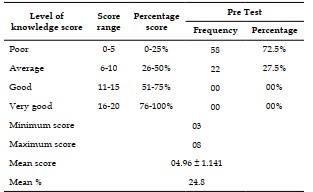
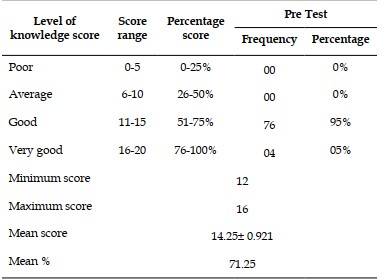
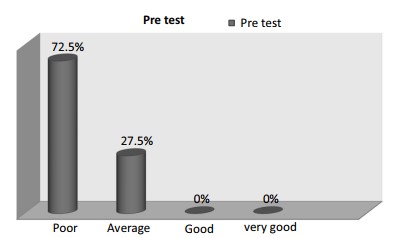
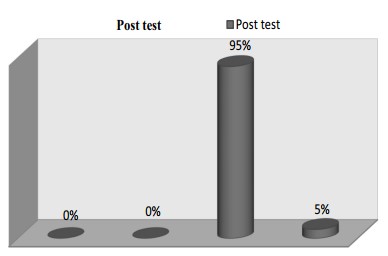
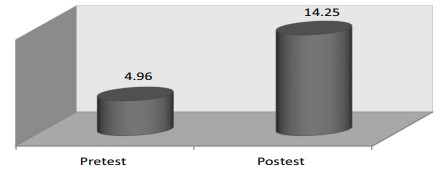
Background: Short sleep duration and poor quality of sleep, increasingly common in our modern society, have many effects on endocrine and metabolic function. Sleep is a major buffer for hormonal release, glucose regulation and cardiovascular function. Obstructive sleep apnoea syndrome (OSAS) is the most common sleep disorder being diagnosed. Obstructive sleep apnoea syndrome is a chronic condition that is characterized by repetitive upper airway obstructions resulting in intermittent hypoxia. Objectives: 1. To assess the existing knowledge regarding obstructive sleep apnoea syndrome among obese people. 2. To evaluate the effectiveness of planned teaching on knowledge regarding obstructive sleep apnoea syndrome among obese people. 3. To associate the knowledge scores with selected demographic variables. Material and Method: This study was based on interventional approach. In this study, 80 obese people are included. The setting of the study was selected area of Wardha. Result: The result shows that 58(72.5%) had poor level of knowledge score, 22(27.5%) of them had average level of knowledge score in pretest and in posttest none of them had poor and average level of knowledge, 76(95%) of them had good level of knowledge, 4(05%) of them had very good level of knowledge score. Hence planned teaching was effective, calculated ‘t’ value is more than tabulated value and calculated ‘p’ value was less than accepted level of p=0.05 thus H1 is statistically accepted. Conclusion: Hence it is concluded that planned teaching was found to be effective in improving the knowledge of obese people regarding obstructive sleep apnoea syndrome and obese people having increasing knowledge score after giving planned teaching.
References
- 1. Parish JM, Somers VK. Obstructive sleep apnoea and cardiovascular disease. Mayo Clin proc. 2004;79(8):1036 – 1046.
- 2. Peppard PE, Young T, Palta M, Skatrud J. Prospective study of the association between sleepdisordered breathing and hypertension. N Engl J Med. 2000; 342(19): 1378- 1384.
- 3. Bixler EO, vgontzas AN, Ten Have T, Tyson K, Kales A. Effects of age on sleep apnoea in men: I. Prevalence and severity Am J Respir Crit Care Med. 1998;157(1):144-148.
- 4. Jamie C.M. Lam & Mary S.M. Ip. Sleep & the metabolic syndrome.
- 5. Suresh K Sharma. Nursing research and statistics. Second Edition. Elesevier publication.
- 6. Polit. D. and Hungler B.P. Nursing research principles and methods. Philadelphia: Lippincott Company.
- 7. Mark Kohler. Risk factors and treatment for obstructive sleep apnoea amongst obese children and adults Current Opinion in Allergy and Clinical. Immunology 2009, 9:4–9 2009. Wolters Kluwer Health | Lippincott Williams & Wilkins 1528-4050.
- 8. Bharat Bhushan. Obstructive Sleep Apnea Is Independently Associated with the Metabolic Syndrome in Obese Asian Indians in Northern India. Metabolic Syndrome and Related Disorders vol. 8, no. 5 Original Articles.
Data Sharing Statement
There are no additional data available. All raw data and code are available upon request.
Funding
This research received no funding.
Author Contributions
All authors contributed significantly to the work and approve its publication.
Ethics Declaration
This article does not involve any human or animal subjects, and therefore does not require ethics approval.
Acknowledgements
We would like to express our gratitude to the patients, their families, and all those who have contributed to this study.
Conflicts of Interest
No conflicts of interest in this work.
About this article

Cite this article
Sapna Chandankhede. To assess the Effectiveness of Planned Teaching on Knowledge Regarding Obstructive Sleep Apnoea Syndrome among Obese People. Int J Practical Nurs. 2024; 12(3):87-92.
Licence:
Attribution-Non-commercial 4.0 International (CC BY-NC 4.0)This license enables reusers to distribute, remix, adapt, and build upon the material in any medium or format for noncommercial purposes only, and only so long as attribution is given to the creator.
| Received | Accepted | Published |
|---|---|---|
| November 22, 2024 | December 21, 2024 | December 30, 2024 |
DOI: https://doi.org/10.21088 ijpn.2347.7083.12324.1
Keywords
KnowledgeEffectivenessObstructive sleep apnoea syndromeHypoxiaSearch for Similar Articles
Similar Articles
- From Artificial Limbs to Intelligent Limbs: Advances in Sensory-Enabled Prosthet...
- Pilot Study to Evaluate the Effectiveness of Novel Designed Nebulizer (NDN) on P...
- Periodic Review of Benchmarks Contributing to Reduction of Healthcare Associated...
- Forensic Nursing
- Women Empowerment in Rural Community
Article Level Metrics
Last UpdatedTuesday 22 September 2026, 12:35:04 (IST)
1405
Accesses
4
195
00
Citations
NA
NA
NA
Download citation
Article Keywords
Keyword Highlighting
Highlight selected keywords in the article text.
Timeline
| Received | November 22, 2024 |
| Accepted | December 21, 2024 |
| Published | December 30, 2024 |
licence
Attribution-Non-commercial 4.0 International (CC BY-NC 4.0)
This license enables reusers to distribute, remix, adapt, and build upon the material in any medium or format for noncommercial purposes only, and only so long as attribution is given to the creator.