Full Text (PDF)
RFP Indian Journal of Medical Psychiatry 5(2):p 97-102, July-December 2022. | DOI: n.a
Review Article
The severity of Domestic Violence and its links to coping skills and Medication Compliance in Women with Mental Illnesses in Telangana
Koneru Kavya Sri, K Keeravani, Pramod Kumar Mallepally
Author Information
Licence:
Attribution-Non-commercial 4.0 International (CC BY-NC 4.0)This license enables reusers to distribute, remix, adapt, and build upon the material in any medium or format for noncommercial purposes only, and only so long as attribution is given to the creator.
RFP Indian Journal of Medical Psychiatry 5(2):p 97-102, July-December 2022. | DOI: n.a
How Cite This Article:
K Keeravani, Koneru Kavya Sri, Pramod Kumar Mallepally/The Severity of Domestic Violence and its Links to Coping Skills and Medication Compliance in Women with Mental Illnesses in Telangana/RFP Indian Journal of Medical Psychiatry. 2022;5(2):97–102.Timeline
Received : July 08, 2022
Accepted : August 20, 2022
Published : December 25, 2022
Abstract
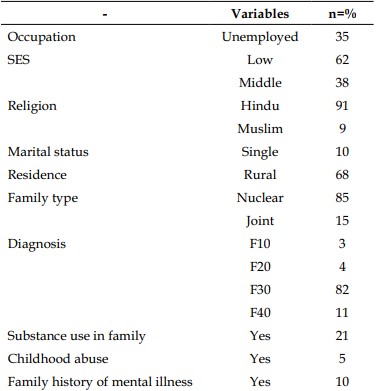
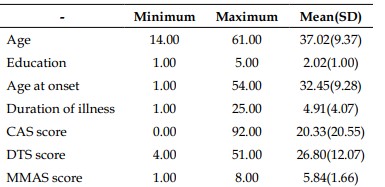
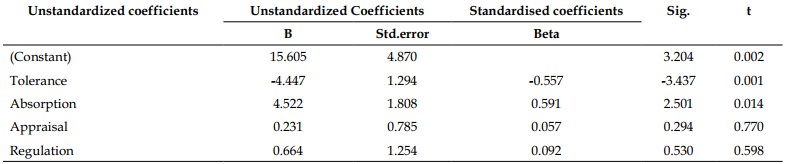
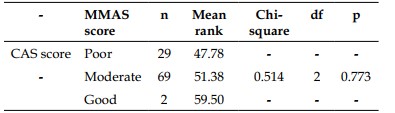
Domestic violence is widespread and has been linked to a number of mental health issues in all social classes. However, little research has been done on the severity of abuse among women who are mentally ill. The level of domestic violence frequently determines how much distress is felt. Abuse may be lessened by one's capacity for distress; this affects how severe the abuse is regarded to be. For women with mental illnesses, adherence behaviour to treatment may be influenced by the severity of maltreatment as well as distress tolerance. There is a dearth of research looking at these factors. In order to better understand the intensity of abuse, distress tolerance, and their relationship to medication adherence in women with mental illness, this study was conducted. This study was conducted in an outpatient setting at the psychiatry department of a tertiary care facility in Telangana. Following informed permission, 100 women with a mental illness who have been in remission for at least two months and are living in the community with family members following an episode of mental illness were purposively sampled in turn. Patients having a diagnoses of mental retardation, dementia, or psychotic symptoms were excluded due to dependability concerns. The initial evaluation of each participant involved the use of clinical and socio-demographic forms. Both the Composite Abuse Scale (CAS) and the Distress Tolerance Scale were used to gauge the intensity of the abuse and the amount of distress tolerance (DTS). Using the widely recognised Morisky Medication Adherence Scale, medication adherence status was evaluated (MMAS). Contrasting this sample with the general population, there was a high degree of abuse (mean 20.33, SD=20.55), as well as a high level of distress tolerance (mean 26.80, SD=12.07). The Tolerance (p=0.001) and Absorption (p=0.014) subscales of distress tolerance significantly positively correlated with scores in domestic abuse. There was no statistically significant correlation between domestic abuse scores and medication adherence. The results of this study allow us to draw the conclusion that women with mental illness experience a high amount of domestic abuse and have a higher threshold for discomfort. The perceived ability of the victim to bear emotional suffering is inversely correlated with the severity of domestic violence, while the amount of attention that is given to negative emotions is positively correlated. Due to the cross-sectional design and short sample size of the study, more data replication with a larger sample size and control group is required.
References
- 1. World health organization (WHO). Women’s Health and development, Violence against women: A Priority health issue, Geneva, Family and Reproductive health. World health organization, 1997:5.
- 2. International Institute for Population Sciences (IIPS) and Macro International. 2007. National Family Health Survey (NFHS-3), 2005–2006: India, Volume 1. Mumbai: IIPS.
- 3. Ferrari G, Agnew-Davies R, Bailey J et al. Domestic violence and mental health: a cross-sectional survey of women seeking help from domestic violence support services. Global Health Action 2016, 9:10.3402/gha.v9.29890, doi: 10.3402/ gha.v9.29890.
- 4. Ouellet-Morin I, Fisher HL, York-smith M, Fincham-Campbel S, Moffit TE, Arseneault L. Inmate partner violence and new onset depression: A longitudinal study of women’s childhood and adult histories of abuse. Depress Anxiet 2015, 32:316–324, doi: 10.1002/da.22347.
- 5. Ram D. Levels of abuse in mentally ill women and its relationship with health care behavior – An exploratory study. J Psychopathology 2017, 23:52–59.
- 6. Borah PK, Kundu AS, Mahanta J. Dimension and Sociodemographic Correlates of Domestic Violence: A study from Northeast India. Community Ment Health J 2017, 53:496–499, doi:10.1007/s10597-017-0112-0.
- 7. George J, Nair D, Premkumar NR, Saravanan N, Chinnakali P, Roy G. The prevalence of domestic violence and its associated factors among married women in a rural area of Puducherry, South India. J Family Med Prim Care 2016, 5:672–676, doi:10.4103/2249-4863.197309.
- 8. Dorahy MJ, Lewis C, Wolfe FAM. Psychological distress associated with domestic violence in Northern Ireland. Curr Psychol 2007, 25:295, https://doi.org/10.1007/BF02915237.
- 9. Kazantzis N, Flett RA, Long NR. Domestic violence, psychological distress, and physical illness among New Zealand women: results from a community-based sample. N Z J Psych 2000, 29:67–73.
- 10. Leyro TM, Zvolesnky MJ, Bernstein A. Distress tolerance and psychopathological symptoms and disorders: a review of the empirical literature among adults. Psychol Bull 2010, 136:576–600, doi: 10.1037/a0019712.
- 11. Simons JS, Gaher RM. The Distress Tolerance Scale: development and validation of a self-report measure. Motiv Emot 2005, 29:83–102, https://doi.org/10.1007/s11031-005-7955-3.
- 12. Brem MJ, Florimbio AR, Elmquist J, Shorey RC, Stuart GL. Antisocial traits, distress tolerance, and alcohol problems as predictors of intimate partner violence in men arrested for domestic violence. Psycho Viol 2018, 8:132–139, http://dx.doi.org/10.1037/vio0000088.
- 13. Ram D. Distress tolerance, psychosocial burden and its relationship with self-management of health in women with mental illness. J Psychopathology 2017, 23:4–11.
- 14. Shorey RC, Strauss C, Elmquis J. Distress Tolerance and Intimate Partner Violence among Men in Substance Use Treatment. J Fam Viol 2017, 32:317–324, doi:10.1007/s10896- 016-9843-x.
- 15. Sundbom LT, Bingefors K. The influence of symptoms of anxiety and depression on medication nonadherence and its causes: a population based survey of prescription drug users in Sweden. Patient preference adherence 2013, 7:805–811, doi: 10.2147/PPA.S50055.
- 16. Ali B, Green KM, Daughters SB, Lejuez CW. Distress tolerance interacts with circumstances, motivation, and readiness to predict substance abuse treatment retention. Addict Behav 2017, 73:99–104, doi: 10.1016/j.addbeh.2017.04.016.
- 17. Stene LE, Dyb G, Jacobsen GW, Schei B. Psychotropic drug use among women exposed to intimate partner violence: A population-based study. Scand J Publ Health 2010, 38(Suppl 5):88–95, doi: 10.1177/1403494810382815.
- 18. Trimble DD, Nava A, McFarlane J. Intimate partner violence and antiretroviral adherence among women receiving care in an urban South-eastern Texas HIV clinic. J Assoc Nurses AIDS Care 2013, 24:331–340, doi: 10.1016/j.jana.2013.02.006.
- 19. Sheehan DV, Lecrubier Y, Sheehan KH, Amorim P, Janavs J, Weiller E et al. The Mini-International Neuropsychiatric Interview (M.I.N.I.): the development and validation of a structured diagnostic psychiatric interview for DSM-IV and ICD-10. J Clin Psychiatry 1998, 59(Suppl 20):22–33, PMID: 9881538.
- 20. Hegarty K, Fracgp, Bush R, Sheehan M. The composite abuse scale: further development and assessment of reliability and validity of a multidimensional partner abuse measure in clinical settings. Violence Vict 2005, 20:529–547, PMID: 16248489.
- 21. Morisky DE, Ang A, Krousel-Wood M, Ward HJ. Predictive validity of a medication adherence measure in an outpatient setting. J Clin Hypertension (Greenwich) 2008, 10:348–354, PMID: 18453793.
- 22. UNICEF. Domestic violence against women and girls. Innocenti Digest 2000, 6:1–30.
- 23. O'Doherty L, Hegarty K, Ramsay J et al. Screening women for intimate partner violence in healthcare settings. Cochrane Database Syst Rev 2015, 7:CD007007, doi:10.1002/14651858. CD007007.
- 24. Aujla P, Sandhu HP, Gill R. Stress management techniques used by working women and nonworking women of Ludhiana City. Indian J Soc Res 2004, 45:47–58.
- 25. Gross JJ. The emerging field of emotion regulation: An integrative review. Rev Gen Psychol 1998, 2:271–299, http://dx.doi. org/10.1037/1089-2680.2.3.271.
- 26. Dale S, Cohen M, Weber K, Cruise R, Kelso G, Brody L. Abuse and Resilience in Relation to HAART Medication Adherence and HIV Viral Load Among Women with HIV in the United States. AIDS Patient Care STDs 2014, 28:3, 136–143, 10.1089/ apc.2013.0329.
- 27. Whetten K, Shirey K, Pence BW, Yao J, Thielman N, Whetten R et al. Trauma History and Depression Predict Incomplete Adherence to Antiretroviral Therapies in a Low Income Country. PLoS ONE 2013, 8:e74771, https://doi.org/10.1371/ journal. pone. 0074771.
- 28. Freire de Medeiros CM, Arantes EP, Tajra RD, Santiago HR, Carvalho AF, Libório AB. Resilience, religiosity and treatment adherence in hemodialysis patients: a prospective study. Psychol Health Med 2017, 22:570–577, doi: 10.1080/ 13548506.2016.1191658.
- 29. Burkhart PV, Sabaté E. Adherence to long-term therapies: evidence for action. J Nurs Scholarsh 2003, 35:207, PMID: 14562485.
- 30. Whittle J, Yamal J-M, Williamson JD, Ford CE, Probstfield JL, Beard BL et al. Clinical and demographic correlates of medication and visit adherence in a large randomized controlled trial. BMC Health Services Research 2016, 16:236, https://doi. org/10.1186/s12913-016-1471-x.
Data Sharing Statement
There are no additional data available. All raw data and code are available upon request.
Funding
This research received no funding.
Author Contributions
All authors contributed significantly to the work and approve its publication.
Ethics Declaration
This article does not involve any human or animal subjects, and therefore does not require ethics approval.
Acknowledgements
We would like to express our gratitude to the patients, their families, and all those who have contributed to this study.
Conflicts of Interest
No conflicts of interest in this work.
About this article

Cite this article
K Keeravani, Koneru Kavya Sri, Pramod Kumar Mallepally/The Severity of Domestic Violence and its Links to Coping Skills and Medication Compliance in Women with Mental Illnesses in Telangana/RFP Indian Journal of Medical Psychiatry. 2022;5(2):97–102.
Licence:
Attribution-Non-commercial 4.0 International (CC BY-NC 4.0)This license enables reusers to distribute, remix, adapt, and build upon the material in any medium or format for noncommercial purposes only, and only so long as attribution is given to the creator.
| Received | Accepted | Published |
|---|---|---|
| July 08, 2022 | August 20, 2022 | December 25, 2022 |
DOI: n.a
Keywords
Keywords: Domestic violence; Distress tolerance; Medication compliance; Mental illness.Domestic violenceDistress toleranceMedication complianceMental illnessKeywords: Domestic violence; Distress tolerance; Medication compliance; Mental illness.Search for Similar Articles
Article Level Metrics
Last UpdatedWednesday 21 October 2026, 09:45:23 (IST)
1331
Accesses
18
243
00
Citations
NA
NA
NA
Download citation
Article Keywords
Keyword Highlighting
Highlight selected keywords in the article text.
Timeline
| Received | July 08, 2022 |
| Accepted | August 20, 2022 |
| Published | December 25, 2022 |
licence
Attribution-Non-commercial 4.0 International (CC BY-NC 4.0)
This license enables reusers to distribute, remix, adapt, and build upon the material in any medium or format for noncommercial purposes only, and only so long as attribution is given to the creator.