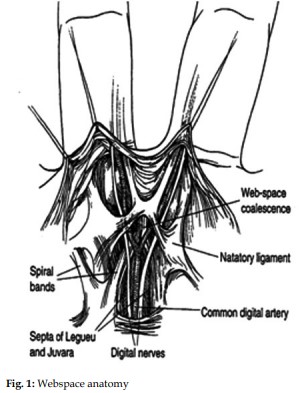
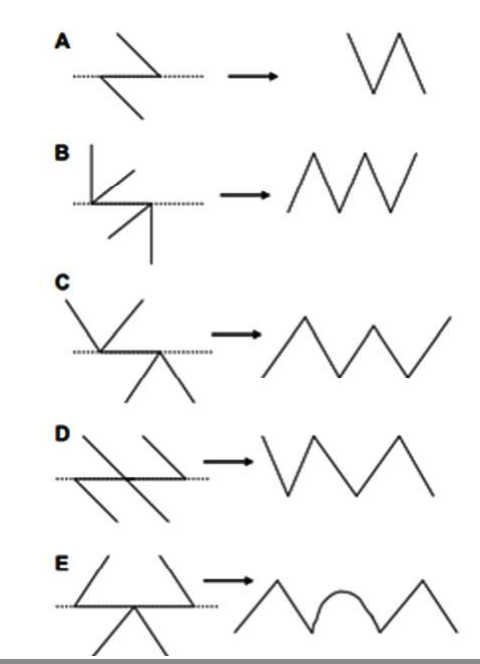
Variants of Z-plasties. (A) The classic 60-degree angle Z-plasty. (B) The 90-90 degree four-flap Z-plasty. (C) The 120- 120 degree four-flap Z-plasty. (D) The Z-plasty in series (E) Double-opposing Z-plasties (butterfly flap). The dotted line refers to the axis of contracture. The figures on the right reflect the appearance after flap rotation
Description: No description available.
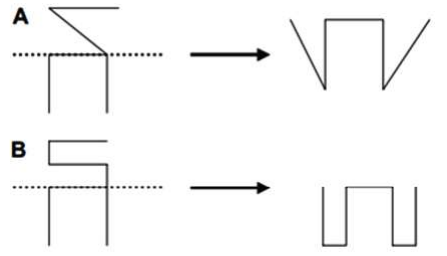
Three-flap rotation-advancement web-plasties. (A) Triangular flaps of tissue are rotated around the advanced rectangular flap. (B) Rectangular flaps of tissue are rotated around the rectangular flap. The flaps in (B) may be more tenuous and care should be taken in elevating these flaps in tissue that has previously been injured. The dotted line refers to the axis of contracture. The figures on the right reflect the appearance after flap rotation
Description: No description available.
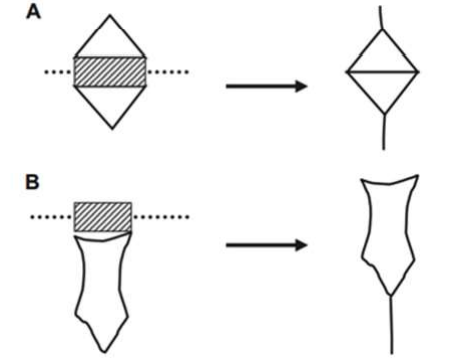
T V-Y advancement flaps. (A) Opposing V-Y islands as described by Savaci and coworkers