Full Text (PDF)
Journal of Forensic Chemistry and Toxicology 9(1):p 53-57, January – June 2023. | DOI: http://dx.doi.org/10.21088/jfct.2454.9363.9123.4
Case Report
Reperfusion Induced Fatal Hemorrhagic Myocardial Infarction: A Case Report
Abhishek Yadav, Gokul G, Abdul Raoof MP, Amar Ranjan, Manivel S
Author Information
Licence:
Attribution-Non-commercial 4.0 International (CC BY-NC 4.0)This license enables reusers to distribute, remix, adapt, and build upon the material in any medium or format for noncommercial purposes only, and only so long as attribution is given to the creator
Journal of Forensic Chemistry and Toxicology 9(1):p 53-57, January – June 2023. | DOI: http://dx.doi.org/10.21088/jfct.2454.9363.9123.4
How Cite This Article:
Gokul G, Raoof MP, Yadav A, Gupta SK, Chandran VA, Abilash S. Reperfusion induced fatal hemorrhagic myocardial infarction: a case report. J Forensic Chem Toxicol. 2023;9(1):53–57.Timeline
Received : October 11, 2022
Accepted : November 13, 2022
Published : June 30, 2023
Abstract
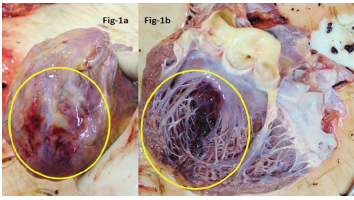
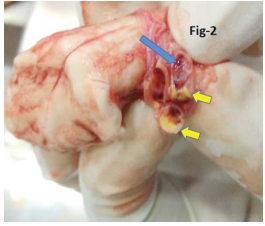
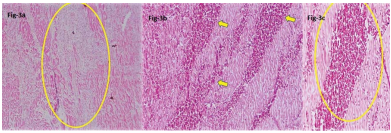
Sudden death due to coronary artery disease is the leading cause of death globally. Occlusive coronary artery disease results in ischemia of myocardial tissue and subsequent infarction. Various treatment modalities like blood thinners, percutaneous coronary intervention (PCI) etc are being employed in the treatment of acute myocardial infarction (MI). However, these modalities have their own limitations. In this case, reperfusion therapy resulted in hemorrhagic myocardial infarction (HMI) with a fatal outcome. An adult male with history of sudden collapse was brought to the emergency department, where he was declared as brought dead. He underwent reperfusion therapy and was on blood thinners, 4 days before the incident. On autopsy, we could find the features of hemorrhagic myocardial infarction grossly and the same was confirmed histopathologically. Though reperfusion injuries are commonly documented, deaths due to hemorrhagic myocardial Infarction, which is one of the rare complications of reperfusion therapy, are rarely reported. The important role of forensic pathologists in this case is to identify the rare causes, which led the patient to death during management of occlusive coronary artery disease.
References
- 1. Ambrosio G, Tritto I. Myocardial reperfusion injury. Eur Hear Journal, Suppl. 2002;4(B):1121–35.
- 2. Khan MA, Hashim MJ, Mustafa H, Baniyas MY, Al Suwaidi SKBM, AlKatheeri R, Alblooshi FMK, Almatrooshi MEAH, Alzaabi MEH, Al Darmaki RS, Lootah SNAH. Global Epidemiology of Ischemic Heart Disease: Results from the Global Burden of Disease Study. Cureus. 2020 Jul 23;12(7):e9349.
- 3. Piper HM, García-Dorado D, Ovize M. A fresh look at reperfusion injury. Cardiovasc Res. 1998 May;38(2):291-300.
- 4. Yellon DM, Hausenloy DJ. Myocardial reperfusion injury. N Engl J Med. 2007 Sep 13;357(11):1121-35.
- 5. Jayaraj JC , Davatyan K , Subramanian, S, Priya, J. Epidemiology of Myocardial Infarction. In: Pamukçu, B, editor. Myocardial Infarction [Internet]. London: IntechOpen; 2018 [cited 2022 Jul 01]. Available from: https://www.intechopen. com/chapt.
- 6. Robbins & Cotran Pathologic Basis of Disease, 10e: South Asia Edition, 2 Vol SET - 10th Edition [Internet]. [cited 2022 Jul 12]. Available from: https://www.elsevier.com/books/robbins-&- cotran-pathologic-basis-of-disease-10e-south-asiaedition-2-vol-set/978-81-312-6211-5.
- 7. Bresnahan GF, Roberts R, Shell WE, Ross J, Sobel BE. Deleterious effects due to hemorrhage after myocardial reperfusion. Am J Cardiol. 1974;33(1):82–6.
- 8. Lang TW, Corday E, Gold H, Meerbaum S, Rubins S, Costantini C, et al. Consequences of reperfusion after coronary occlusion. Effects on hemodynamic and regional myocardial metabolic function. Am J Cardiol. 1974;33(1):69–81.
- 9. Reimer KA, Lowe JE, Rasmussen MM, Jennings RB. The wavefront phenomenon of ischemic cell death. 1. Myocardial infarct size vs duration of coronary occlusion in dogs. Circulation. 1977;56(5):786–94.
- 10. Ovize M, Baxter GF, Di Lisa F, Ferdinandy P, GarciaDorado D, Hausenloy DJ, et al. Postconditioning and protection from reperfusion injury: Where do we stand: Position Paper from the Working Group of Cellular Biology of the Heart of the European Society of Cardiology. Cardiovasc Res. 2010;87(3):406–23.
- 11. Sreeniwas Kumar A, Sinha N. Cardiovascular disease in India: A 360 degree overview. Vol. 76, Medical Journal Armed Forces India. 2020. p. 1–3.
- 12. Helmuth RA, Wills ER, Aust C, Orr C. Status of the myocardium and infarct-related coronary artery in 19 necropsy patients with acute recanalization using pharmacologic (streptokinase, r-tissue plasminogen activator), mechanical (percutaneous transluminal coronary angioplasty) or combined typ. J Am Coll Cardiol. 1987;9(4):785–801.
- 13. Fujiwara H, Onodera T, Tanaka M, Wu DJ, Kawai C, Hamashima Y. A clinicopathologic study of patients with hemorrhagic myocardial infarction treated with selective coronary thrombolysis with urokinase. Circulation. 1986;73(4):749–57.
- 14. Lie JT, Lawrie GM, Morris GC, Winters WL. Hemorrhagic myocardial infarction associated with aortocoronary bypass revascularization. Am Heart J. 1978 Sep 1;96(3):295–302.
- 15. Oka S, Nakamura J, Kai T, Hoshino K, Watanabe K, Abe M, et al. An autopsy case report of extensive intramyocardial hemorrhage complicated with acute myocardial infarction. J Cardiol Cases [Internet]. 2020;22(3):121–4. Available from: https://doi.org/10.1016/j.jccase.2020.05.021.
- 16. Ochiai K, Shimada T, Murakami Y, Ishibashi Y, Sano K, Kitamura J, et al. Hemorrhagic Myocardial Infarction after Coronary Reperfusion Detected in Vivo by Magnetic Resonance Imaging in Humans: Prevalence and Clinical Implications. J Cardiovasc Magn Reson. 1999;1(3):247–56.
- 17. Hawranek M, Wróbel M, Nożyński J, Pres D, Gierlotka M, Trzeciak P, et al. Hemorrhagic Myocardial Infarction: Mortality Compared With STEMI Patients Treated With Percutaneous Coronary Intervention. J Am Coll Cardiol. 2016;68(4):426–7.
Data Sharing Statement
There are no additional data available
Funding
This research received no funding.
Author Contributions
All authors contributed significantly to the work and approve its publication.
Ethics Declaration
This article does not involve any human or animal subjects, and therefore does not require ethics approval
Acknowledgements
Information Not Provided
Conflicts of Interest
No conflicts of interest in this work.
About this article

Cite this article
Gokul G, Raoof MP, Yadav A, Gupta SK, Chandran VA, Abilash S. Reperfusion induced fatal hemorrhagic myocardial infarction: a case report. J Forensic Chem Toxicol. 2023;9(1):53–57.
Licence:
Attribution-Non-commercial 4.0 International (CC BY-NC 4.0)This license enables reusers to distribute, remix, adapt, and build upon the material in any medium or format for noncommercial purposes only, and only so long as attribution is given to the creator
| Received | Accepted | Published |
|---|---|---|
| October 11, 2022 | November 13, 2022 | June 30, 2023 |
DOI: http://dx.doi.org/10.21088/jfct.2454.9363.9123.4
Keywords
Occlusive coronary artery diseaseReperfusion therapyHemorrhagic Myocardial infarctionsudden deathSearch for Similar Articles
Similar Articles
- Lethal Poisoning Cases: The Poisoning Cases of India: A Review Study
- Deciphering the Secrets of Magic Pen Inks: A Review
- From Effluents to Exposure: Wastewater-Based Epidemiology in Occupational and En...
- Sub Standard and Falsified Drugs Toxicity: An Alarming Concern of Today
- Detection and Identification of Kerosene in Turpentine Oil: A Review
Article Level Metrics
Last UpdatedTuesday 21 July 2026, 23:42:46 (IST)
890
Accesses
3
94
00
Citations
NA
NA
NA
Download citation
Article Keywords
Keyword Highlighting
Highlight selected keywords in the article text.
Timeline
| Received | October 11, 2022 |
| Accepted | November 13, 2022 |
| Published | June 30, 2023 |
licence
Attribution-Non-commercial 4.0 International (CC BY-NC 4.0)
This license enables reusers to distribute, remix, adapt, and build upon the material in any medium or format for noncommercial purposes only, and only so long as attribution is given to the creator