Full Text (PDF)
RFP Indian Journal of Medical Psychiatry 6(1):p 9-14, January-June 2023. | DOI: NA
Original Article
Pattern of Psychiatry Referral and Psychiatry Morbidity in Patients Admitted in Intensive Care Unit of Tertiary Care Centre: A Hospital Based Cross-Sectional Study
Vishakh Biradar, Narayan R Mutalik
Author Information
Licence:
Attribution-Non-commercial 4.0 International (CC BY-NC 4.0)This license enables reusers to distribute, remix, adapt, and build upon the material in any medium or format for noncommercial purposes only, and only so long as attribution is given to the creator
RFP Indian Journal of Medical Psychiatry 6(1):p 9-14, January-June 2023. | DOI: NA
How Cite This Article:
Biradar V, Mutalik NR. Pattern of Psychiatry Referral and Psychiatry Morbidity in Patients Admitted In Intensive Care Unit of Tertiary Care Centre: A Hospital Based Cross-Sectional Study. RFP Ind Jr of Med Psy. 2023;6(1):9–14.Timeline
Received : March 29, 2023
Accepted : April 13, 2023
Published : June 30, 2023
Abstract
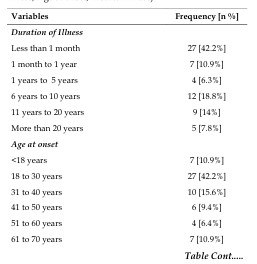
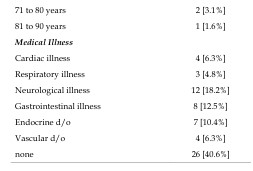
Context: The majority of patients hospitalised to intensive care units have psychiatric illness. For a variety of diseases, such as delirium, substance abuse, and other mental illnesses, psychiatry consultations are sought. The majority of research focuses on the psychological. morbidity among general hospital patients who have certain physical diseases. Determining the pattern of psychiatry referral and psychiatric morbidity in patients hospitalised in Intensive care units (ICU) is the goal of this study. Aim: To determine the Psychiatry Morbidity in patients admitted in Intensive Care Unit (ICU). Setting And Design: This is a cross sectional observational study conducted in HSK Hospital, Bagalkot. The study included all the consecutive patients referred from different intensive care unit top sychiatry department for consultation during the three months period from January 1, 2022 to 31st march 2022. Methods and material: Socio demo graphic details of study subjects were collected using a specially designed proforma. ICD-10 was used to diagnose the referred cases. Informed consent was taken from all the patients and/or relatives and also ethical clearance was obtained from the ethical committee of our college. Statistical Analysis Used: Data was collected and Tabulated using Microsoft excel. Frequency and Percentages were calculated for all qualitative measures. Mean and Standard deviation was calculated for quantitative measures Results: Among 64 patients, 73.4% were male [n=47] with a meanage of 41.92 ± 17.5 years, 40.6% had alcohol related disorders, 29.7% belonged to age group between 18 to 30 years, 12.5% of patients had comorbid neurological and gastrointestinal conditions. Conclusion: Psychiatric morbidity compounds the disability and suffering in medical patients, increases the consumption of medical resources, complicates the treatment and results in poorer outcome.
References
- 1. Brilli RJ, Spevetz A, Branson RD, Campbell GM, Cohen H, Dasta JF et al. Critical care delivery in the intensive care unit: defining clinical roles and the best practice model. Critical care medicine. 2001 Oct;29(10):2007-19.
- 2. Ely E, Gautam S, Margolin R, Francis J, May L, Speroff T et al. The impact of delirium in the intensive care unit on hospital length of stay. Intensive care medicine. 2001 Dec;27:1892-900.
- 3. Brigid L, Ayhan A. The stress response, psycho neuroimmunology, and stress among ICU patients. Dimens Crit Care Nurs. 2005;24(1):25–31.
- 4. Rashid M. Developing scales to evaluate staff perception of the effects of the physical environment on patient comfort, patient safety, patient privacy, family integration with patient care, and staff working conditions in adult intensive care units: a pilot study. Crit Care Nurs Q. 2007;30(3):271–83.
- 5. Hui X, Jian K, Gary H. Clinical review: the impact of noise on patients’ sleep and effectiveness of noise reduction strategies in intensive care units. Crit Care. 2009 April; 13(2):151–8.
- 6. Brown A, Cooper AF. The impact of a liaison psychiatry service on patterns of referral in a general hospital. The British Journal of Psychiatry. 1987 Jan;150(1):83-7.
- 7. Lloyd GG, Mayou RA. Liaison psychiatry or Psychological Medicine. Br J Psychiatry.2003 July;183[1]:5–7.
- 8. Levenson JL, Hamer RM, Rossiter LF. Relation of psychopathology in general medical inpatients to use and cost of services. Am J Psychiatry. 1990 November; 147(11):1498–503.
- 9. Strain JJ. Consultation-liaison Psychiatry. In: Sadock BJ, Sadock VA. Kaplan and Sadock’s Comprehensive Textbook of Psychiatry. 7th edition. Lippincott Williams and Wilkins Philadelphia 2000; 1876-87.
- 10. Saravay SM, Steinberg MD, Weinschel B, Pollack S, Alovis N. Psychological comorbidity and length of stay in the general hospital. Am J Psychiatry.1991 March;148(3):324–9.
- 11. Poudel R, Belbase M. Prevalence and nature of psychiatric referrals from Intensive Care Unit of a teaching hospital. Journal of Psychiatrists' Association of Nepal.2018 Jun 28;7(1):57-62.
- 12. Nongmeikapam M, Reddy M, Chandrakumar RS, Narayan JS. Psychiatric morbidity in intensive care unit patients. Annals of Indian Psychiatry. 2018 Jul;2(2):125.
- 13. Sim K, Rajasoorya C, Lam KN, Chew LS, Chan YH. High prevalence of psychiatric morbidity in a medical intensive care unit. Singapore medical journal.2001 Nov;42(11):522-5.
- 14. Devasagayam D, Clarke D. Evaluation of consultation–liaison psychiatry referrals from a critical care unit of an outer suburban hospital. Australasian Psychiatry. 2016 Apr;24(2):168-72.
- 15. Bhogale GS, Nayak RB, Dsouza M, Chate SS, Banahatti MB. A cross-sectional descriptive study of prevalence and nature of psychiatric referrals from intensive care units in a multispecialty hospital. Indian Journal of Psychological Medicine. 2011 Jul;33(2):167-71.
- 16. Marik P, Mohedin B. Alcohol-related admissions to an inner city hospital intensive care unit. Alcohol and Alcoholism. 1996 Jul;31(4):393-6.
- 17. Mohan D, Chopra A, Ray R, Sethi H. Alcohol consumption in India: A cross sectional study. In: Demers A, Room R, Bourgault C (eds). Surveys of drinking patterns and problems in seven developing countries. Geneva: World Health Organization; 2001:103–14.
- 18. Mohan D, Sharma HK, Darshan S, Sundaram KR, Neki JS. Prevalence of drug abuse in young rural males in Punjab. Indian J Med Res.1978;68:689–94.
- 19. Varma VK, Singh A, Singh S, Malhotra A. Extent and pattern of alcohol use and alcohol related problems in North India. Indian J Psychiatr.1980;22:331–7.
- 20. Chakravarthy C. Community workers estimate of drinking and alcohol-related problems in rural areas. Indian J Psychol Med 1999;13:49–56.
- 21. Adityanjee, Mohan D, Wig NN. Alcohol-related problems in the emergency room of an Indian general hospital. Australian and New Zealand journal of psychiatry.1989 Jan;23(2):274-8.
- 22. Sanjush Baby, Manju.P.Haridas, K.F.Yesudas. Psychiatric diagnosis in attempted suicide. Calicut Medical Journal. 2006; 4[3].e2.
- 23. Qusar MS, Morshed NM, Kader MA, Azad MA, Uddin MA, Shaikh MA. Psychiatric morbidity of suicide attempt patients requiring ICU intervention. Journal of Medicine. 2010;11(1):7-11.
- 24. Indrayan A, Wysocki MJ, Kumar R, Chawla A, Singh N. Estimates of the years-of-life lost due to top nine causes of death in rural areas of major states of India in 1995. National Medical Journal of India. 2002;15(1):7-13.
- 25. Venkoba Rao A. Suicide in India. In: The Consolation of psychiatry-selected writings of Dr. A Venkoba Rao. In: Parvathi Devi S, Editor. Mumbai: 58th ANCIPS; 2006. p. 206-14.
- 26. Morandi A, Jackson JC, Wesley Ely E. Delirium in the intensive care unit. International Review of Psychiatry. 2009 Jan 1;21(1):43-58.
- 27. Bergeron N, Dubois MJ, Dumont M, Dial S, Skrobik Y. Intensive Care Delirium Screening Checklist: evaluation of a new screening tool. Intensive care medicine. 2001 May;27(5):859-64.
- 28. Milbrandt EB, Deppen S, Harrison PL, Shintani AK, Speroff T, Stiles RA et al. Costsassociated with delirium in mechanically ventilated patients. Critical care medicine. 2004 Apr 1;32(4):955-62.
- 29. Lin SM, Liu CY, Wang CH, Lin HC, Huang CD, Huang PY et al.The impact of delirium on the survival of mechanically ventilated patients. Critical care medicine. 2004 Nov 1;32(11):2254-9.
- 30. MacLullich AM, Beaglehole A, Hall RJ, Meagher DJ. Delirium and long-term cognitive impairment. International Review of Psychiatry. 2009 Jan 1;21(1):30-42.
- 31. Shdaifat SA, Al Qadire M. Anxiety and depression among patients admitted to intensive care. Nursing in critical care. 2022 Jan;27(1):106-12.
- 32. Rothenhäusler HB, Ehrentraut S, Kapfhammer HP. Changes in patterns of psychiatric referral in a German general hospital: Results of a comparison of two 1-year surveys 8 years apart. Gen Hosp Psychiatry 2001;23:205-14
Data Sharing Statement
There are no additional data available.
Funding
This research received no funding
Author Contributions
All authors contributed significantly to the work and approve its publication
Ethics Declaration
This article does not involve any human or animal subjects, and therefore does not require ethics approval
Acknowledgements
Information Not Provided
Conflicts of Interest
No conflicts of interest in this work
About this article

Cite this article
Biradar V, Mutalik NR. Pattern of Psychiatry Referral and Psychiatry Morbidity in Patients Admitted In Intensive Care Unit of Tertiary Care Centre: A Hospital Based Cross-Sectional Study. RFP Ind Jr of Med Psy. 2023;6(1):9–14.
Licence:
Attribution-Non-commercial 4.0 International (CC BY-NC 4.0)This license enables reusers to distribute, remix, adapt, and build upon the material in any medium or format for noncommercial purposes only, and only so long as attribution is given to the creator
| Received | Accepted | Published |
|---|---|---|
| March 29, 2023 | April 13, 2023 | June 30, 2023 |
DOI: NA
Keywords
Consultation Liaison PsychiatryIntensive Care UnitPsychiatry referralPsychiatry Morbidity.Search for Similar Articles
Similar Articles
- Relationship Between Mmitral Valve Prolapse and Panic Disorder
- Late-Onset Mania in a 73-Year-Old Male: A Case Report
- Internet Derived Information Obstruction Treatment (IDIOT) Syndrome and its Impa...
- Multivariable Regression Analysis of Depression, Anxiety and Stress in Male Alco...
- A Study to Evaluate the Effectiveness of Supportive Psychotherapy among the Elde...
Article Level Metrics
Last UpdatedMonday 07 September 2026, 04:41:43 (IST)
903
Accesses
11
155
00
Citations
NA
NA
NA
Download citation
Article Keywords
Keyword Highlighting
Highlight selected keywords in the article text.
Timeline
| Received | March 29, 2023 |
| Accepted | April 13, 2023 |
| Published | June 30, 2023 |
licence
Attribution-Non-commercial 4.0 International (CC BY-NC 4.0)
This license enables reusers to distribute, remix, adapt, and build upon the material in any medium or format for noncommercial purposes only, and only so long as attribution is given to the creator