Full Text (PDF)
Ophthalmology and Allied Sciences 10(1):p 13-19, January - April 2024. | DOI: https://doi.org/10.21088/oas.2454.7816.10124.2
Original Article
Ocular Muscle Balance Disorders and Associated Refractive status in School Children and Young Adults
Vaibhav Kanduri, Anupama Raju Taklikar, Aisha Nikhat, Meghana N.
Author Information
Licence:
Attribution-Non-commercial 4.0 International (CC BY-NC 4.0)This license enables reusers to distribute, remix, adapt, and build upon the material in any medium or format for noncommercial purposes only, and only so long as attribution is given to the creator.
Ophthalmology and Allied Sciences 10(1):p 13-19, January - April 2024. | DOI: https://doi.org/10.21088/oas.2454.7816.10124.2
How Cite This Article:
Anupama Raju Taklikar, Vaibhav Kanduri, Aisha Nikhat, et al. Ocular Muscle Balance Disorders and Associated Refractive status in School Children and Young Adults. Ophthalmol Allied Sci. 2024;10(1):13–19.Timeline
Received : December 27, 2023
Accepted : April 13, 2024
Published : April 30, 2024
Abstract
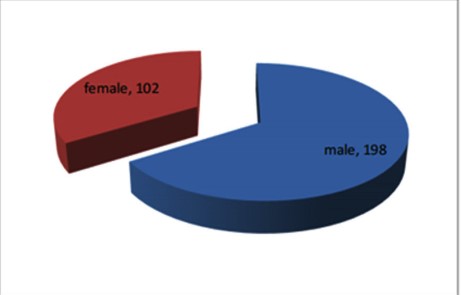
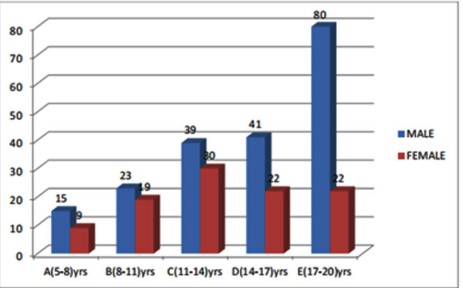
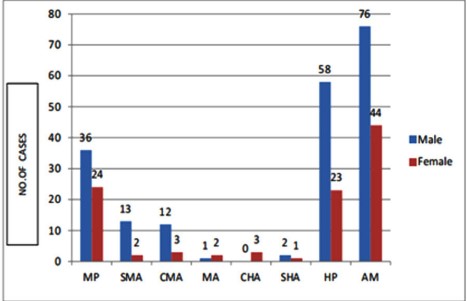
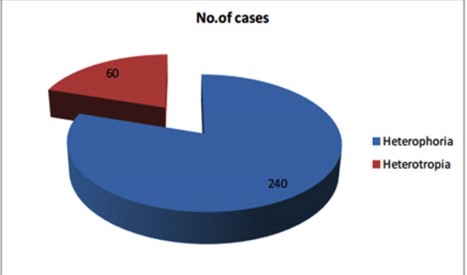
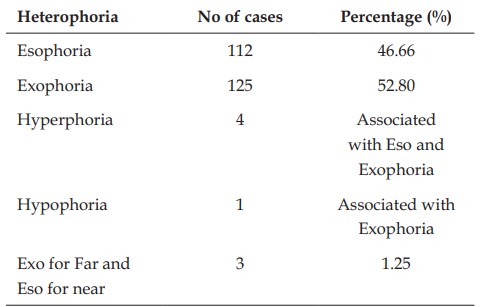
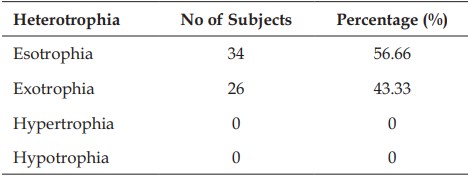
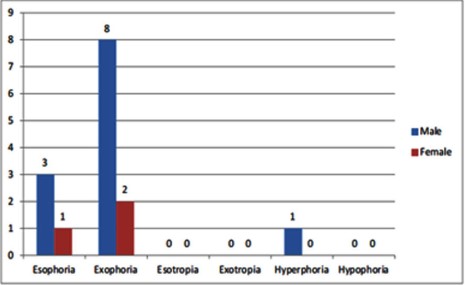
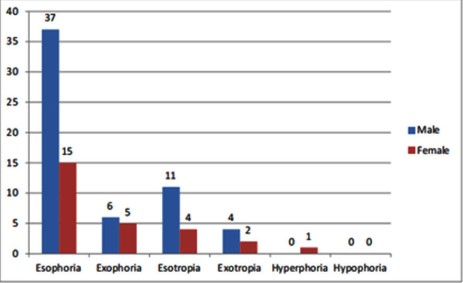
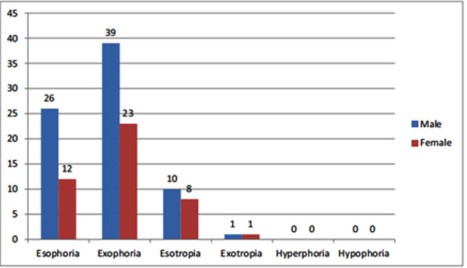
Introduction: The Human race is supreme in hierarchy of animal kingdom by the acquisition of Binocular Single Vision 1 (BSV). It is important to have normal ocular muscle balance to have normal BSV. Any muscle balance disorder may lead to squint or amblyopia. Ocular muscle balance disorders shows an association with refractive error. Most of this research has focused on myopia. But hyperopia and astigmatism are also being examined in our study. Methodology: A Prospective study conducted over period of 1 year 300 subjects were included 150 were selected from OPD and rest 150 by screening 1875 students of various schools in Raichur District who had vision less than 6\6 or with 6\6 vision and as the no pic symptoms. Visual Acuity was measured. Fund us examination, Squint evaluation and Type of squint was noted. AC/A ratio was calculated. Binocular Vision was assessed. Those who needed treatment were treated by spectacles ororthoptic exercises. Correlation was made between ocular muscle imbalance and refraction. Results: The prevalence of refractive errors was 8% with mallet of emaleratio 1.9:1. Highest were between 17-20 yrs. Heterophori as were the most common Type of ocular muscle balance disorders (80%) followed by heterotropias (20%). Exophoria was highest (52.8%) followed by esophoria (46.6%). Strong association was noted between myopia and exophoria 43 out of 60 (p=0.042). Cases of mixed astigmatism were observed having esophoria for near and exophoria for far. Significant association was noted between hypermetropia and convergent squint (67 out of 81). Conclusion: Myopia is mainly associated with divergent squint, Hypermetropia with convergent squint. Mixed astigmatism associated with exophoria for far, esophoria fornear.
References
- 1. Pradeep Sharma. Strabismus simplified. 2nd edition 2012: CBS Publishers and distributors.1:1
- 2. Braddick O, et al: cortical binocularity in infants. Nature 1980; 288:363-65.
- 3. Birch EF, GwiazdaJ, and Held R: Stereoacuity development of crossed and uncrossed disparities in human infants. Vision Res 1982; 22:507.
- 4. David Abrams, Duke Elder’s Practice of refraction 10th Edi; (2002)1:3, 147-49, 12,45-70
- 5. Surendar singh Eye diseases among primary school children: Indian journal of ophthal, 1974;22;111
- 6. Panda a. SK Angra. Eye disease in school children. Indian journal of pediatrics 1985; 52:289-91.
- 7. Dr. Lahane Tatyarao Pundikarao, Dr. P.P, Dr. R.P., Eye disease in urban school children in Mumbai, India, proceedings of AIOC2004; 614-616.
Data Sharing Statement
There are no additional data available. All raw data and code are available upon request.
Funding
This research received no funding.
Author Contributions
All authors contributed significantly to the work and approve its publication.
Ethics Declaration
This article does not involve any human or animal subjects, and therefore does not require ethics approval.
Acknowledgements
We would like to express our gratitude to the patients, their families, and all those who have contributed to this study.
Conflicts of Interest
No conflicts of interest in this work.
About this article

Cite this article
Anupama Raju Taklikar, Vaibhav Kanduri, Aisha Nikhat, et al. Ocular Muscle Balance Disorders and Associated Refractive status in School Children and Young Adults. Ophthalmol Allied Sci. 2024;10(1):13–19.
Licence:
Attribution-Non-commercial 4.0 International (CC BY-NC 4.0)This license enables reusers to distribute, remix, adapt, and build upon the material in any medium or format for noncommercial purposes only, and only so long as attribution is given to the creator.
| Received | Accepted | Published |
|---|---|---|
| December 27, 2023 | April 13, 2024 | April 30, 2024 |
DOI: https://doi.org/10.21088/oas.2454.7816.10124.2
Keywords
Refractive errorsHeterophoriaHeterotropiaSearch for Similar Articles
Similar Articles
- Factors Leading to Subnormal Vision after Small Incision Cataract Surgery
- Incidence of Rhegmatogenous Retinal Detachment and the Course of Posterior Vitre...
- Raktamokshana in Utsangini
- Heart Attack: An Insight Review in the Indian Context
- Awareness and Knowledge of Eye Donation among Nursing Students of a Tertiary Car...
Article Level Metrics
Last UpdatedTuesday 13 October 2026, 03:55:03 (IST)
1472
Accesses
3
139
00
Citations
NA
NA
NA
Download citation
Article Keywords
Keyword Highlighting
Highlight selected keywords in the article text.
Timeline
| Received | December 27, 2023 |
| Accepted | April 13, 2024 |
| Published | April 30, 2024 |
licence
Attribution-Non-commercial 4.0 International (CC BY-NC 4.0)
This license enables reusers to distribute, remix, adapt, and build upon the material in any medium or format for noncommercial purposes only, and only so long as attribution is given to the creator.