Full Text (PDF)
International Journal of Neurology and Neurosurgery 15(3):p 83-90, July-September 2023. | DOI: http://dx.doi.org/10.21088/ijnns.0975.0223.15323.2
Original Article
Neuropharmacological Evaluation of Methanolic Extract of Lagenaria Siceraria Standley Fruits
R.P. Prajapati null, M.V. Kalaria
Author Information
Licence:
Attribution-Non-commercial 4.0 International (CC BY-NC 4.0)This license enables reusers to distribute, remix, adapt, and build upon the material in any medium or format for noncommercial purposes only, and only so long as attribution is given to the creator.
International Journal of Neurology and Neurosurgery 15(3):p 83-90, July-September 2023. | DOI: http://dx.doi.org/10.21088/ijnns.0975.0223.15323.2
How Cite This Article:
Prajapati RP, Kalaria MV, Parmar SK. Neuropharmacological Evaluation of Methanolic Extract of Lagenaria siceraria Standley Fruits. International Journal of Neurology and Neurosurgery. 2023;15(3):83-90.Timeline
Received : September 30, 2023
Accepted : November 02, 2023
Published : December 30, 2023
Abstract
Context: Lagenaria siceraria (Molina) Standley (LS), commonly known as ‘bottle gourd’ (English), possesses several medicinal properties; little is known about its action as nerve tonic.
Objective: The purpose of the study was to evaluate the neuropharmacological activities of methanolic extract of Lagenaria siceraria (Molina) Standley fruits (MLSF) using several experimental (animal behavioral) models.
Materials and Methods: Adult Wistar albino rats were subjected to behavior despair and elevated plus maze (EPM) tests. Thiopental induced sedation and rotarod tests were conducted on Swiss albino mice.
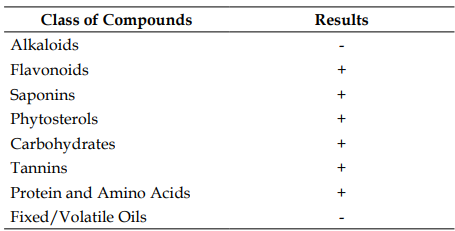
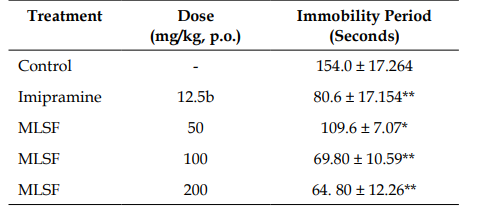
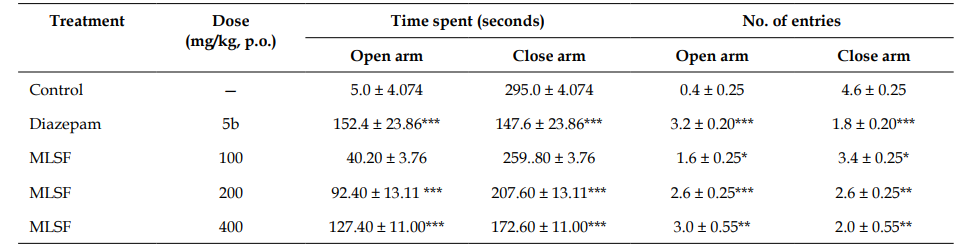
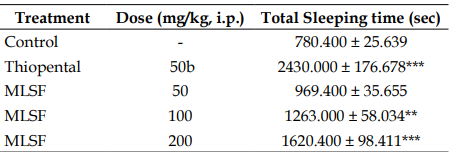
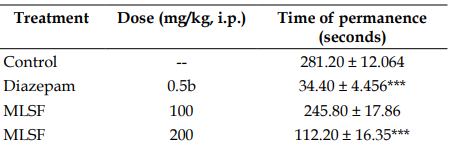
Results and Discussion: The effects of MLSF on anxiety, depression, thiopental induced sleeping time, and rotarod performance were evaluated. The anxiolytic activity of MLSF (100, 200 and 400 mg/kg) per os (p.o.) was characterized by increased time spent and number of entries in open arms in the EPM paradigm as compared to control group (p < 0.001). The MLSF (50,100, and 200mg/kg, p.o.) showed dose dependent significant reduction in duration of immobility (p < 0.01) in behavior despair test. The MLSF at the doses 50 and 100 mg/kg, i.p. was found to produce a significant reduction in motor coordination (p<0.001) and prolongation of thiopental induced sleeping time (p<0.001). The phytochemical screening revealed the presence of flavonoids, saponins and sterols in fruits.
Conclusion: The results of the study for the first time show that the plant possesses anxiolytic, anti-depressant and sedative like activities confirming the traditional claims. Future research should focus on the isolation and identification of the phytoconstituents responsible for activities of LS.
References
- 1. WHO. (1999). WHO Director-General unveils new global strategies for mental health. Press Release WHO/99-67. http://www.who.int/infpr-1999/en/pr99-67.html.
- 2. Mora S, Nillian R, Lungenstrassb H, Morian G, Herrera-Ruiz M, Tortoriello T. (2006). The hydroalcoholic extract of Salvia elegans induces anxiolytic and antidepressant like effects in rats. J Ethnopharmacol 106: 76-81.
- 3. Zhang ZJ. (2004). Therapeutic effects of herbal extracts and constituents in animal models of psychiatric disorders. Life Sciences 75: 1659-1699.
- 4. Rahman ASH. (2003). Bottle Gourd (Lagenaria siceraria)—a vegetable for good health. Nat Prod Rad 2(5): 249-250.
- 5. Shinrajan VV and Balachandra I. (1996) Ayurvedic Drugs and their plant source, Oxford and IBH Publishers, New Delhi, India, pp 176-177.
- 6. Kirtikar KR. (2001) Indian medicinal Plants, Oriental Enterprises, Dehradun, India. pp 722-723.
- 7. Chopra RN, Chopra IC, Verma BS. (1992) Supplement of Glossary of Indian Medicinal plants, Council of Scientific and Industrial Research, New Delhi, India, pp 51.
- 8. Rahman ASH. (2003). Bottle Gourd (Lagenaria siceraria)—a vegetable for good health. Nat Prod Rad 2(5): 249-250. [Duplicate of #4]
- 9. Baranowska MK and Cisowski W. (1994) High Performance Liquid Chromatographic determination of Flavone C-glycosides in some species of the Curcubiraceae family. J Chromato A 675: 240-243.
- 10. Duke JA. (1999) Handbook of Phytochemical and Constituents of Grass herbs and other economic plants, CRC press, Boco, Raton, FL, pp 98-119.
- 11. Trease EG, Evans WC. (2008). Textbook of Pharmacognosy. 15th edn, New Delhi, India: Alden Press, pp 539-541.
- 12. Sonja S and Hermann S. (2000) Analysis of Curcubitacins in medicinal Plants by HPLC-MS. Phytochem Analysis 11: 121.
- 13. Khandelwal KR. (2006). Preliminary phytochemical screening. Practical Pharmacognosy. 6th ed. Nirali Prakashan, Pune, India, pp 149-153.
- 14. Litchfield JT, Wilcoxon F. (1949). A simplified method of evaluating dose-effect experiments. J Pharmacol Exp Ther 96: 99-113.
- 15. Emamghoreishi M, Khasaki M, Aazam MF. (2005). Coriandrum sativum: Evaluation of its anxiolytic effect in the elevated plus-maze. J Ethnopharmacol 96: 365-370.
- 16. Porsolt RD, Anton G, Blavet N, Jalfre M. (1978a). Behavioral despair in rats: A new model sensitive to antidepressant treatments. Eur J Pharmacol 47: 379-391.
- 17. Detke MJ, Lucki I, Rickels M. (1995). Active behaviours in the rat forced swimming test differentially produced by serotonergic and noradrenergic antidepressants. Psychopharmacology 121: 66-72.
- 18. Padovan CM, Guimaraes FS. (2004). Antidepressant-like effects of NMDA-receptors antagonist injected into the dorsal hippocampus of rats. Pharmacol Biochem Behav 77: 15-19.
- 19. Calil CM, Marcondes FK. (2006). The comparison of immobility time in experimental rat swimming models. Life Sci 7: 1712-1719.
- 20. Bhattamisra SK, Khanna VK, Agrawal AK, Singh PN, Singh SK. (2008). Antidepressant activity of standardised extract of Marsilea minuta Linn. J Ethnopharmacol 117: 51-57.
- 21. Sukma M, Chaiyo C, Murakami Y, Tohda M, Matsumoto K, Watanabe H. (2002). CNS inhibitory effects of barakol, a constituent of Cassia siamea Lamk. J Ethnopharmacol 83: 87-94.
- 22. Ibarrola MC, Ibarrola DA, Montalbetti Y, Kennedy ML, Heinichen O, Campuzano M, Tortoriello J, Wasowski C, Marder M, De Lima TC, Mora S. (2006). The anxiolytic like effects of Aloysia polystachya (Griseb.) Moldenke (Verbenaceae) in mice. J Ethnopharmacol 105: 400-408.
- 23. Hogg S. (1996). A review of the validity and variability of the elevated plus maze as an animal model of anxiety. Pharmacol Biochem Behav 54: 21-30.
- 24. Rodgers RJ, Cao BJ, Dalvi A, Holmes A. (1997). Animal models of anxiety: An ethological perspective. Braz J Med Biol Res 30: 289-304.
- 25. Dawson GR, Tricklebank MD. (1995). Use of the elevated plus maze in the search for novel anxiolytic agents. Trends Pharmacol Sci 16: 33-36.
- 26. Pellow S, File SE. (1986). Anxiolytic and anxiogenic drug effects on exploratory activity in an elevated plus-maze: A novel test of anxiety in the rat. Pharmacol Biochem Behav 24: 525-529.
- 27. Emamghoreishi M, Khasaki M, Aazam MF. (2005). Coriandrum sativum: Evaluation of its anxiolytic effect in the elevated plus-maze. J Ethnopharmacol 96: 365-370. [Duplicate of #15]
- 28. Zwanzger P, Rupprecht R. (2005). Selective GABAergic treatment for panic? Investigations in experimental panic induction and panic disorder. J Psychiatry Neurosci 30: 167-175.
- 29. Wolfman C, Viola H, Paladini A, Dajas F, Medina JH. (1994). Possible anxiolytic effects of chrysin, a central benzodiazepine receptor ligand isolated from Passiflora coerulea. Pharmacol Biochem Behav 47: 1-4.
- 30. M, Roman-Ramos R, Zamilpa A, Tortoriello J, Jimenez-Ferrer JE. (2008). Flavonoids from Tilia americana with anxiolytic activity in plus-maze test. J Ethnopharmacol 118: 312-317. (Note: The first author
- 31. Losi G, Puia G, Garzon, Vuono MC, Baraldi M. (2004). Apigenin modulates GABAergic and glutamatergic transmission in cultured cortical neurons. Eur J Pharmacol 502: 41-46.
- 32. Porsolt RD, Bertin A, Jalfre M. (1978b). “Behavioral despair” in rats and mice: Strain differences and the effects of imipramine. Eur J Pharmacol 51: 291-294.
- 33. Anisman H, Matheson K. (2005). Stress, depression, and anhedonia: Caveats concerning animal models. Neurosci Biobehav Rev 29: 525-546.
- 34. Matthews K, Christmas D, Swan J, Sorrell E. (2005). Animal models of depression: Navigating through the clinical fog. Neurosci Biobehav Rev 29: 503-513.
- 35. Naughton M, Mulrooney JB, Leonard BE. (2000). A review of the role of serotonin receptors in psychiatric disorders. Hum Psychopharmacol 15: 397-415.
- 36. Butterweck V, Jurgenliemk G, Nahrstedt A, Winterhoff H. (2000). Flavonoids from Hypericum perforatum show antidepressant activity in the forced swimming test. Planta Med 66: 3-6.
- 37. Deakin JFW. (1983). Role of serotogenic system in escape, avoidance and other behaviors. In: Cooper SJ, ed. Theory in Psychopharmacology. London: Academic Press, pp 149-193.
- 38. Lloyd KG, Zivkovic B, Scatton B, Morselli PL, Bartholoni G. (1989). The GABAergic hypothesis of depression. Prog Neuropsychopharmacol Biol Psychiatry 13: 341-351.
- 39. N’Gouemo P, Nguemby-Bina C, Baldy-Moulinier M. (1994). Some neuropharmacological effects of an ethanolic extract of Maprounea africana in rodents. J Ethnopharmacol 43: 161-166.
- 40. Capasso A, De Feo V, De Simone F, Sorrentino L. (1996). Pharmacological effects of aqueous extract from Valeriana adscendeus. Phytother Res 10: 309-312.
- 41. Baranowska MK and Cisowski W. (1994) High Performance Liquid Chromatographic determination of Flavone C-glycosides in some species of the Curcubiraceae family. J Chromato A 675: 240-243. [Duplicate of #9]
- 42. Librowaski P, Czarapki R, Mendyk A, Jastrzebska M. (2000). Influence of new monoterpene homologous of GABA on the CNS activity in mice. Pol J Pharmacol 52: 317-321.
Data Sharing Statement
There are no additional data available. All raw data and code are available upon request.
Funding
This research received no funding.
Author Contributions
Whether all authors contributed significantly to the work and approve its publication.
Ethics Declaration
This article does not involve any human or animal subjects, and therefore does not require ethics approval.
Acknowledgements
We would like to express our gratitude to the patients, their families, and all those who have contributed to this study.
Conflicts of Interest
The authors report no conflicts of interest in this work.
About this article

Cite this article
Prajapati RP, Kalaria MV, Parmar SK. Neuropharmacological Evaluation of Methanolic Extract of Lagenaria siceraria Standley Fruits. International Journal of Neurology and Neurosurgery. 2023;15(3):83-90.
Licence:
Attribution-Non-commercial 4.0 International (CC BY-NC 4.0)This license enables reusers to distribute, remix, adapt, and build upon the material in any medium or format for noncommercial purposes only, and only so long as attribution is given to the creator.
| Received | Accepted | Published |
|---|---|---|
| September 30, 2023 | November 02, 2023 | December 30, 2023 |
DOI: http://dx.doi.org/10.21088/ijnns.0975.0223.15323.2
Keywords
AnxietyBehavior despair testLagenaria sicerariaDepressionElevated plus mazeMotor coordinationNeuropharmacologySearch for Similar Articles
Similar Articles
- Intramedullary Capillary Hemangioma of Conus Medullaris: Case Report and Review...
- Atypical Miller Fisher Syndrome
- Therapeutic Potential of Passiflora incarnata in the Management of Neurological...
- Central or Axial Atlantoaxial Dislocation: Redefining Instability at the Craniov...
- Assessment of Neurocognitive Functions in Post-Acute Stroke Patients Undergoing...
Article Level Metrics
Last UpdatedTuesday 29 September 2026, 08:43:48 (IST)
2210
Accesses
23
272
00
Citations
NA
NA
NA
Download citation
Article Keywords
Keyword Highlighting
Highlight selected keywords in the article text.
Timeline
| Received | September 30, 2023 |
| Accepted | November 02, 2023 |
| Published | December 30, 2023 |
licence
Attribution-Non-commercial 4.0 International (CC BY-NC 4.0)
This license enables reusers to distribute, remix, adapt, and build upon the material in any medium or format for noncommercial purposes only, and only so long as attribution is given to the creator.