Full Text (PDF)
New Indian Journal of Surgery 15(2):p 59-61, April - June 2024 2024. | DOI: https://doi.org/10.21088/nijs.0976.4747.15224.1
Original Article
Investigating the Healing Potential of Topical Phenytoin for Therapeutic Treatment in Thermal Burns
Ravi Kumar Chittoria, Karthikeyan null, Jacob Antony Chakiath, Kanav Gupta, Padmalakshmi Bharathi Mohan
Author Information
Licence:
Attribution-Non-commercial 4.0 International (CC BY-NC 4.0)This license enables reusers to distribute, remix, adapt, and build upon the material in any medium or format for noncommercial purposes only, and only so long as attribution is given to the creator.
New Indian Journal of Surgery 15(2):p 59-61, April - June 2024 2024. | DOI: https://doi.org/10.21088/nijs.0976.4747.15224.1
How Cite This Article:
Karthikeyan, Ravi Kumar Chittoria, Jacob Antony Chakiath et al. Investigating the Healing Potential of Topical Phenytoin for Therapeutic Treatment in Thermal Burns. New Indian J Surg. 2024; 15(2):59-61.Timeline
Received : May 06, 2024
Accepted : June 10, 2024
Published : June 30, 2024
Abstract
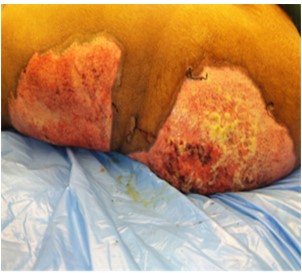
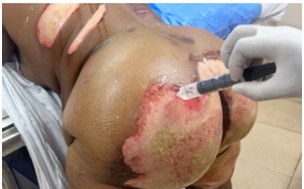
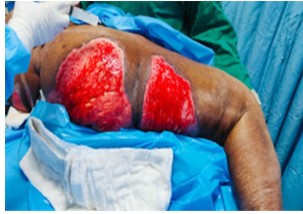
Thermal burn injuries impose significant physical and psychological distress, particularly in under developed regions. Facilitating early wound healing is paramount to mitigate ensuing complications. Phenytoin, easily accessible, has emerged as a potential agent for expediting wound recovery. This study endeavours to assess the therapeutic efficacy of topical phenytoin in second and third-degree burn injuries. The research involved a 70-year-old female with thermal burns affecting both gluteal regions. Intravenous phenytoin solution was topically applied every two days. Data collection encompassed demographic details, tissue culture findings, wound discharge, pain intensity, granulation tissue formation, and wound contraction. Self-inflicted burns predominated the cases examined. Despite initial colonization with pathogenic bacteria, phenytoin treatment did not impede wound healing. Following 2-4 sessions, a significant reduction in wound discharge and pain relief was observed. Digital planimetry demonstrated progressive wound contraction across all cases. In conclusion, topical phenytoin application demonstrated efficacy in promoting wound contraction, reepithelialization, and alleviating pain, thereby expediting wound healing. Furthermore, some cases exhibited a bacteriostatic effect. Nevertheless, further rigorous trials are imperative to validate these findings.
References
- 1. Meritt HH, Putnam TJ. Sodium diphenyl hydantoinate in the treatment of convulsive disorders. JAMA. 1938;111:1068–73.
- 2. Silverman AK, Fairley J, Wong RC. Cutaneous and immunologic reactions to phenytoin. J Am Acad Dermatol. 1988;18:721–41.
- 3. Bethedsa MD. ASHP drug information 2001. Vol. 3. American Society of Health System Pharmacists; 2001. pp. 78–79
- 4. el Zayat SG. Preliminary experience with topical phenytoin in wound healing in a war zone. Mil Med. 1989;154:178–80.
- 5. Rhodes RS, Heyneman CA, Culbertson VL, Wilson SE, Phatak HM. Topical phenytoin treatment of stage II decubitus ulcers in the elderly. Ann Pharmacother. 2001;35:675–81.
- 6. Simpson GM, Kunz E, Slafta J. Use of sodium diphenylhydantoin in treatment of leg ulcers. N Y State J Med. 1965;65:886–8.
- 7. Modaghegh S, Salehian B, Tavassoli M, Djamshidi A, Rezai AS. Use of phenytoin in healing of war and non-war wounds. A pilot study of 25 cases. Int J Dermatol. 1989;28:347–50.
- 8. Pendse AK, Sharma A, Sodani A, Hada S. Topical phenytoin in wound healing. Int J Dermatol. 1993;32:214–7.
- 9. Lodha SC. New application of an old drug: topical phenytoin for burns. J Burn Care Rehabil. 1991;12:96.
- 10. Ramalingam A, Saravana K, Sekar A. A study of topical phenytoin sodium in diabetic foot ulcer healing. Ann Int Med Den Res. 2017;3:SG43–8.
Data Sharing Statement
There are no additional data available. All raw data and code are available upon request.
Funding
This research received no funding.
Author Contributions
All authors contributed significantly to the work and approve its publication.
Ethics Declaration
This article does not involve any human or animal subjects, and therefore does not require ethics approval.
Acknowledgements
We would like to express our gratitude to the patients, their families, and all those who have contributed to this study.
Conflicts of Interest
No conflicts of interest in this work.
About this article

Cite this article
Karthikeyan, Ravi Kumar Chittoria, Jacob Antony Chakiath et al. Investigating the Healing Potential of Topical Phenytoin for Therapeutic Treatment in Thermal Burns. New Indian J Surg. 2024; 15(2):59-61.
Licence:
Attribution-Non-commercial 4.0 International (CC BY-NC 4.0)This license enables reusers to distribute, remix, adapt, and build upon the material in any medium or format for noncommercial purposes only, and only so long as attribution is given to the creator.
| Received | Accepted | Published |
|---|---|---|
| May 06, 2024 | June 10, 2024 | June 30, 2024 |
DOI: https://doi.org/10.21088/nijs.0976.4747.15224.1
Keywords
Topical phenytoin therapyRegenerative therapyWound managementSearch for Similar Articles
Similar Articles
- Laparoscopic Repair of Large Recurrent Bochdalek Hernia: Case Report with Review...
- A Retrospective Evaluation of Superior Efficacy in Irrigation and Flushing of Sa...
- Implementation of Enhanced Recovery After Surgery (ERAS) Protocols in Elective C...
- Accuracy of TIRADS Classification in the Risk Stratification of Thyroid Swelling...
- Case Series Analysis of Medical Expulsive Therapy in Ureteric Calculi
Article Level Metrics
Last UpdatedSunday 25 October 2026, 05:51:21 (IST)
7554
Accesses
9
807
00
Citations
NA
NA
NA
Download citation
Article Keywords
Keyword Highlighting
Highlight selected keywords in the article text.
Timeline
| Received | May 06, 2024 |
| Accepted | June 10, 2024 |
| Published | June 30, 2024 |
licence
Attribution-Non-commercial 4.0 International (CC BY-NC 4.0)
This license enables reusers to distribute, remix, adapt, and build upon the material in any medium or format for noncommercial purposes only, and only so long as attribution is given to the creator.