Full Text (PDF)
Journal of Microbiology and Related Research 12(1):p 40-49, Jan. June 2026. | DOI: 10.21088/jmrr.2395.6623.12126.5
Review Article
Fungal Therapeutic Enzymes as Emerging Strategies for Pancreatic Lipase Inhibition and the Management of Obesity and Metabolic Disorders
Ramalingappa, , Mohammed Asif Killedar
Author Information
Licence:
Attribution-Non-commercial 4.0 International (CC BY-NC 4.0)This license enables reusers to distribute, remix, adapt, and build upon the material in any medium or format for noncommercial purposes only, and only so long as attribution is given to the creator.
Journal of Microbiology and Related Research 12(1):p 40-49, Jan. June 2026. | DOI: 10.21088/jmrr.2395.6623.12126.5
How Cite This Article:
Mohammed Asif Killedar, Ramalingappa. Fungal Therapeutic Enzymes as Emerging Strategies for Pancreatic Lipase Inhibition and the Management of Obesity and Metabolic Disorders. J Microbiol Relat Res. 2026; 12(1): 40–49.Timeline
Received : January 31, 2026
Accepted : March 20, 2026
Published : June 30, 2026
Abstract
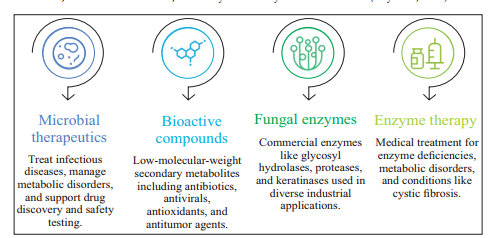
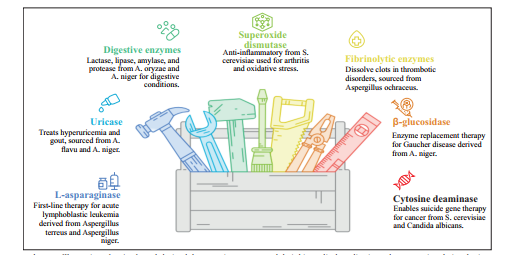
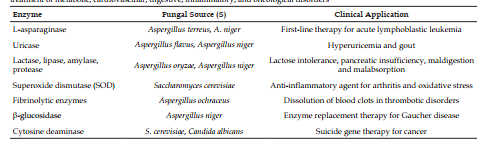
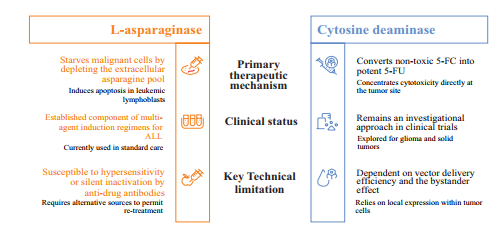
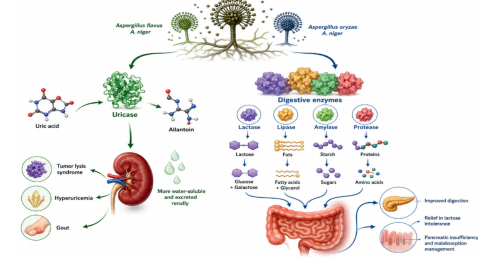
Obesity and its metabolic complications are a growing global health burden, pushing the search for safer, more effective treatments. This review looks at fungalderived therapeutic enzymes and endophytic fungi as sustainable resources for new treatments, particularly pancreatic lipase inhibitors for metabolic disease. It covers the pharmaceutical relevance of fungi like Aspergillus niger, A. oryzae, A. flavus, and Saccharomyces cerevisiae, which produce enzymes used in oncology, metabolic and digestive disorders, inflammation, thrombosis, and enzyme replacement therapy. Particular attention goes to pancreatic lipase inhibitors and fungal bioactive metabolites as anti-obesity agents that reduce dietary fat absorption with fewer side effects than current synthetic drugs. The review also examines how fungal secondary metabolites are biosynthesized and regulated, including biosynthetic gene clusters, metabolic engineering, heterologous expression, and protein engineering used to boost enzyme production and stability. Enzymes like L-asparaginase, uricase, lactase, lipase, β-glucosidase,superoxide dismutase, cytosine deaminase, and fibrinolytic enzymes are discussed by mechanism, application, and clinical status. Manufacturing topics fermentation, downstream processing, GMP, immunogenicity, and regulation round out the picture. Despite ongoing challenges in stability and scale-up, advances in synthetic biology and precision fermentation continue to position fungal biotechnology as a sustainable platform for treating obesity, cancer, and other chronic diseases.
References
- 1. Belmatoug, N., Burlina, A., Giraldo, P., Hendriksz, C. J., Kuter, D. J., Mengel, E., and Pastores, G. M. (2011). Gastrointestinal disturbances and their management in miglustat-treated patients. Journal of inherited metabolic disease, 34(5), 991-1001.
- 2. Craik, C. S., Page, M. J., & Madison, E. L. (2011). Proteases as therapeutics. Biochemical Journal, 435(1), 1-16.
- 3. Dhankhar, R., Gupta, V., Kumar, S., Kapoor, R. K., and Gulati, P. (2020). Microbial enzymes for deprivation of amino acid metabolism in malignant cells: biological strategy for cancer treatment. Applied Microbiology and Biotechnology, 104(7), 2857-2869.
- 4. El-Gendi, H., Saleh, A. K., Badierah, R., Redwan, E. M., El-Maradny, Y. A., and El-Fakharany, E. M. (2021). A comprehensive insight into fungal enzymes: Structure, classification, and their role in mankind’s challenges. Journal of Fungi, 8(1), 23.
- 5. Fouillaud M., and Dufosse, L. (2022). Microbial secondary metabolism and biotechnology. Microorganisms, 10(1), 123.
- 6. Gulyamova, T., Yoldosheva, M., Abdulmyanova, L., Ruzieva, D., Ishimov, U., Mamarakhimov, O., and Yusupov, U. (2026). Identification of pancreatic lipase inhibiting endophytic secondary metabolites of Aspergillus fischeri VO1R. In BIO Web of Conferences (Vol. 228, p. 07001). EDP Sciences.
- 7. Gupta, M., Saxena, S., Bansal, P., & Goyal, D. (2025). Promising pancreatic lipase inhibitory activity of a novel tetrapeptide isolated from endophytic Fusarium incarnatum. World Journal of Microbiology and Biotechnology, 41(6), 178.
- 8. Gurung, N., Ray, S., Bose, S., and Rai, V. (2013). A broader view: microbial enzymes and their relevance in industries, medicine, and beyond. BioMed research international, 2013(1), 329121.
- 9. Hanee, U., Killedar, M. A., Sowmya, K. L., & Ramalingappa, B. (2025). The Ecological and Medicinal Significance of Agaricus bisporus: Phytochemical Insights into Its Role in Nutrient Cycling and Health Promotion, International Journal of Pure Applied Bioscience. 13(1), 8-19. doi: http://dx.doi.org/10.18782/2582-2845.9152
- 10. Hani, U., Killedar, M. A., & Sowmya, K. L., & B, Ramalingappa. (2025). Integrated Biochemical, Antioxidant, and Structural Characterization of Pleurotus ostreatus from the Moist Forest Regions of Karnataka, India. International Journal of Innovative Research in Technology (IJIRT). https://doi.org/doi.org/10.64643/ IJIRTV12I5-185784-459
- 11. Kapoor, D., Bhardwaj, S., Landi, M., Sharma, A., Ramakrishnan, M., & Sharma, A. (2020). The impact of drought in plant metabolism: How to exploit tolerance mechanisms to increase crop production. Applied sciences, 10(16), 5692. .
- 12. Katoch, M., Paul, A., Singh, G., & Sridhar, S. N. C. (2017). Fungal endophytes associated with Viola odorata Linn. as bioresource for pancreatic lipase inhibitors. BMC Complementary and Alternative Medicine, 17(1), 385.
- 13. Killedar, M. A., & Ramalingappa, B. (2024). Navigating the Global Obesity a Global Catastrophe: The Role of Pancreatic Lipase Inhibition and Endophytic Fungi in Developing Innovative Therapeutics for Metabolic Health. Journal of Microbiology and Related Research, 10(2), 81-88. DOI: http:// dx.doi.org/10.21088/jmrr.2395.6623.10224.5
- 14. Killedar, m. A., & ramalingappa, b. Recent research in medical diagnostics by using microfluidics and new biosensor invention. Contemporary Trends in Chemical, Pharmaceutical and Life Sciences Volume I Editors: Dr. Bassa Satyannarayana and Mr. Mukul Machhindra Barwant ISBN: 978-93- 95847-69-8, 1.49 JMRR / Volume 12 Number 1 / Janua
- 15. Killedar, M. A., Sowmya, K. L., & Ramalingappa, B. (2024). Collection, extraction and phytochemical analysis of Indian borage leaves (Plectranthus amboinicus). International Journal of Plant Pathology and Microbiology, 4(2), 52-56. DOI: https://doi. org/10.22271/27893065.2024.v4.i2a.93
- 16. Lott, J. A., & Lu, C. J. (1991). Lipase isoforms and amylase isoenzymes: assays and application in the diagnosis of acute pancreatitis. Clinical chemistry, 37(3), 361-368.
- 17. Meghwanshi, G. K., Kaur, N., Verma, S., Dabi, N. K., Vashishtha, A., Charan, P. D., ... & Kumar, R. (2020). Enzymes for pharmaceutical and therapeutic applications. Biotechnology and applied biochemistry, 67(4), 586-601.
- 18. Patil, S., Patil, M., Maheshwari, V. L., & Patil, R. H. (2022). Pancreatic lipase (PL) inhibitors from medicinal plants and their potential applications in the Management of Obesity. In Natural Products as Enzyme Inhibitors: An Industrial Perspective (pp. 153-167). Singapore: Springer Nature Singapore.
- 19. Ramalingappa, B., Sowmya, K. L., & Killedar, M. A. (2024). Morphology, Qualitative Phytochemical Analysis and Antimicrobial Activities of Ramaria botrytis from Davangere, Karnataka, India. KAVAKA: Mycological Society of India-MSI, 60(4), 58-63. DOI: 10.36460/Kavaka/60/4/2024/58-63
- 20. Roy, R., Dutta, S., and Dutta, A. K. (2026). Fungal Secondary Metabolites in Cancer Therapy. In Advances in Fungal Secondary Metabolites: Bioactive Attributes and Biotechnological Potential of Industrial Interest: Exploring Bioactive Compounds and Their Biotechnological Potential Cham: Springer Nature Switzerland (pp. 49-65).
- 21. Singh, A., and Negi, P. S. (2025). Biotechnological application of healthpromising bioactive compounds. In Biotechnological Intervention in Production of Bioactive Compounds: Biosynthesis, Characterization and Applications (pp. 73-94). Cham: Springer Nature Switzerland.
- 22. Sowmya, K. L., Killedar, M. A. and Ramalingappa, B., (2025). Study of Pharmacological and Therapeutic Potential of Neem Leaves (Azadirachta Indica) 6(7), 3522-3529. https://doi.org/10.55248/ gengpi.6.0725.25141
- 23. Stajich, J. E., Berbee, M. L., Blackwell, M., Hibbett, D. S., James, T. Y., Spatafora, J. W., and Taylor, J. W. (2009). The fungi. Current Biology, 19(18), R840–R845.
- 24. Waldorf, A. R., & Polak, A. (1983). Mechanisms of action of 5-fluorocytosine. Antimicrobial agents and chemotherapy, 23(1), 79-85.
Data Sharing Statement
There are no additional data available. All raw data and code are available upon request.
Funding
This research received no funding.
Author Contributions
All authors contributed significantly to the work and approve its publication.
Ethics Declaration
This article does not involve any human or animal subjects, and therefore does not require ethics approval.
Acknowledgements
We would like to express our gratitude to the patients, their families, and all those who have contributed to this study.
Conflicts of Interest
No conflicts of interest in this work.
About this article

Cite this article
Mohammed Asif Killedar, Ramalingappa. Fungal Therapeutic Enzymes as Emerging Strategies for Pancreatic Lipase Inhibition and the Management of Obesity and Metabolic Disorders. J Microbiol Relat Res. 2026; 12(1): 40–49.
Licence:
Attribution-Non-commercial 4.0 International (CC BY-NC 4.0)This license enables reusers to distribute, remix, adapt, and build upon the material in any medium or format for noncommercial purposes only, and only so long as attribution is given to the creator.
| Received | Accepted | Published |
|---|---|---|
| January 31, 2026 | March 20, 2026 | June 30, 2026 |
DOI: 10.21088/jmrr.2395.6623.12126.5
Keywords
Fungal Therapeutic EnzymeEndophytic FungiPancreatic Lipase InhibitorsSecondary MetabolitesMetabolic DisordersPharmaceutical BiotechnologySearch for Similar Articles
Similar Articles
- Vitiligo: A Comprehensive Review
- Seaweed-Derived Bioplastics: A Sustainable Alternative to Petroleum Based Plasti...
- Antibiogram of Bacterial Isolates from Critical Care Patients in Sharda Hospital...
- Prevalence and Antimicrobial Resistance Patterns of Staphylococcus aureus Isolat...
- Bacteriology of Burn Wound Infections and their Antibiogram
Article Level Metrics
Last UpdatedSaturday 17 October 2026, 13:02:39 (IST)
1831
Accesses
26
223
00
Citations
NA
NA
NA
Download citation
Article Keywords
Keyword Highlighting
Highlight selected keywords in the article text.
Timeline
| Received | January 31, 2026 |
| Accepted | March 20, 2026 |
| Published | June 30, 2026 |
licence
Attribution-Non-commercial 4.0 International (CC BY-NC 4.0)
This license enables reusers to distribute, remix, adapt, and build upon the material in any medium or format for noncommercial purposes only, and only so long as attribution is given to the creator.