Full Text (PDF)
Journal of Forensic Chemistry and Toxicology 8(2):p 63-69, july-december 2022. | DOI: https://doi.org/10.21088/jfct.2454.9363.8222.6
Original Article
FTIR Characterization and Physico-chemical Studies of Honey Samples in Kanpur Nagar
Nand Lal, Anuradha Tiwari, Kiran Singh, Brijesh Nanvi, Neelam Pal
Author Information
Licence:
Attribution-Non-commercial 4.0 International (CC BY-NC 4.0)This license enables reusers to distribute, remix, adapt, and build upon the material in any medium or format for noncommercial purposes only, and only so long as attribution is given to the creator.
Journal of Forensic Chemistry and Toxicology 8(2):p 63-69, july-december 2022. | DOI: https://doi.org/10.21088/jfct.2454.9363.8222.6
How Cite This Article:
Anuradha Tiwari, Nand Lal, Kiran Singh, et al./FTIR Characterization and Physico-chemical Studies of Honey Samples in Kanpur Nagar/J Forensic Chemistry Toxicol. 2022;8(2):63–69.Timeline
Received : May 25, 2022
Accepted : June 27, 2022
Published : December 25, 2022
Abstract
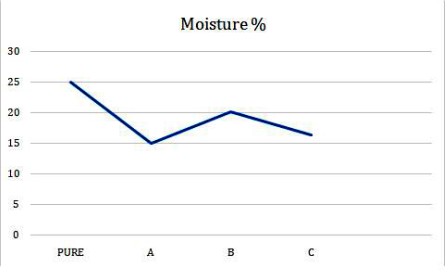
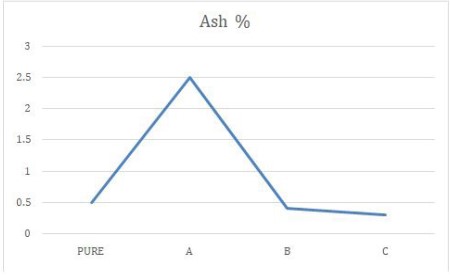
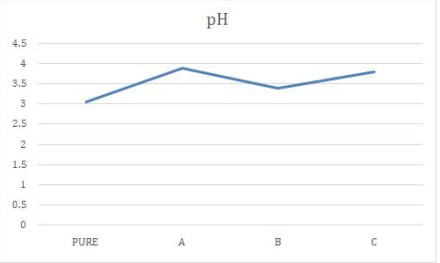
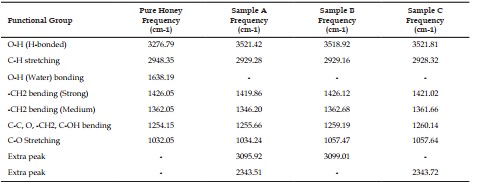
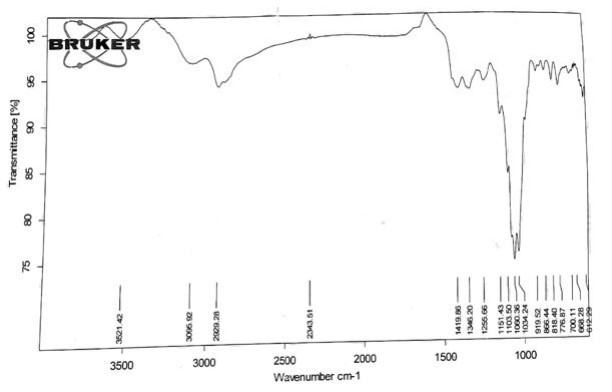
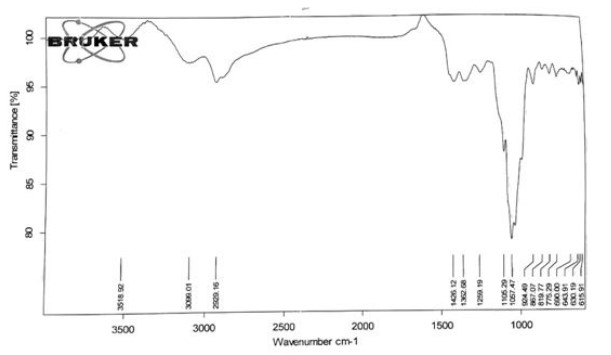
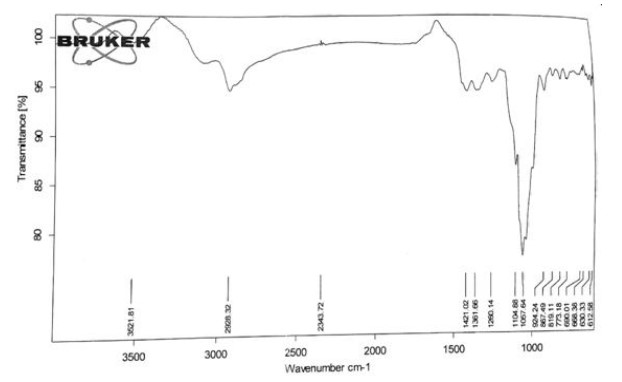
Honey is a valuable food entity that gains a lot of attention due to its potential benefits for health and its uses to sweeten foods. It contains about 60% invert sugar and appreciable amounts of maltose and sucrose. In this study, the Physico-chemical characteristics of pure and adulterated honey samples were investigated. The grade and limitation of adulteration of the honey samples also were checked. The moisture, ash and pH were carried out. The Fourier Transform Infrared Spectroscopy (FTIR) of different samples were analyzed. The result of FTIR spectroscopy provides reliable results.
References
- 1. Sharbt, M.N.A. and S.A. Abdel- Fattah. (1994),”Honeybees production” Bulletin from technology transfer components (In Arabic) Ministry of Agric and land Reclamation.
- 2. Saeed Samarghandian, Tahereh Farkhondeh, and Fariborz Samini Honey and Health: A Review of Recent Clinical Research Pharmacognosy Res. 2017 Apr-Jun; 9(2): 121–127.
- 3. Stefan Bogdonov, Brenda Massel, Bruce Robert D Arcy (1999), International regulatory standards: review of the work of the International Honey Commission. Mitteilungen aus dem Gebiete der Lebensmitteluntersuchung und Hygiene 90(1):108– 125.
- 4. USDA International regulatory standards: review of the work of the International Honey Commission. Mitteilungen aus dem Gebiete der Lebensmitteluntersuchung und Hygiene 90(1): USDA Washington DC.
- 5. Definition of Honey and Honey Products, Approved by the National Honey Board June 15, 1996, Updated September 27,2003.
- 6. Ahmed, Jasim, S.T. Prabhu, G.S.V. Raghavan, M.Ngadi (2007), “ Physico- chemical , rheological, calorimetric and dielectric behavior of selected Indian honey” Journal of food engineering, vol 79, 1207-1213.
- 7. White J W, Composition of Honey, A comprehensive survey, Heinemann Edition: London 1975, pp 157- 206
- 8. Siddoqui I R, The sugar of honey advances in carbohydrate chemistry and biochemistry, 1970, pp 285-309
- 9. OféliaAnjos, Maria Graça Campos, Pablo Contreras Ruiz, Paulo Antunes Application of FTIR-ATR spectroscopy to the quantification of sugar in honey Food Chemistry, Volume 169, 15 February 2015, Pages 218-223
- 10. S.M. Abdel – Aal, H.M.Ziena, M.M.Youssef, Adultration of honey with high fructose corn syrup:detection by different method.48(2),1993,209-212.
- 11. Codex Alimentarius. 2001 Revised codex standard for honey.(no. CODEX STAN 12-1981, Rev.1 (1987),Rev.2 (2001).
- 12. SHC, Yeow, Tee Suan Chin, Jian Ai Yeow, KS Tan, Consumer purchase intentions and honey related products. Enterpreneurship vision 2020: Innovation development stainability and economic growth.
- 13. AOAC. Association of Official Analytical Chemists, 16th ed., (1999). Official Methods of Analysis, Washington, DC
- 14. Bagdanov, S. (1989). Determination of pinocembrin in honey using HPLC. Journal of Apicultural Research, 28(1), 55-58.
- 15. Steeg, E., & Montag, A.(1988). Quantitative Bes timmungAromatischerCarbonsauren in Honig. Zeitschrift fur LebensmittelUntersuchung and Forschung, 187, 115-120.
- 16. Mateo, R., & Bosch Reig. F. (1997). Sugar profile of Spanish unifloral honeys. Food Chemistry, 60(1),33- 41.
- 17. Terrab, A., Recamales, A.F., Hernandez, D., Heredia, F.J.,Characterisation of Moroccan Food Chem. 2004, 88, 537.
- 18. K.Hemalatha, P.Satyanarayana Elementary analysis of different floral honey of east Godavari dist. Andhra Predesh, IOSR Journal of environmental science and toxicology and food technology 9(12),2015,56-60.
- 19. M.V. Balasubramanyam, Chemical characteristics of multifloral wild and apiary honey from western ghat of Karnataka. The bioscan 6(3),2011,467-469.
- 20. Lidija SVEČNJAK, Nikola BILIŠKOV, Dragan BUBALO, Domagoj BARIŠIĆ, Application of Infrared Spectroscopy in Honey Analysis Agriculturae Conspectus Scientific, Vol. 76 (2011) No. 3 (191-195
Data Sharing Statement
There are no additional data available. All raw data and code are available upon request.
Funding
This research received no funding.
Author Contributions
All authors contributed significantly to the work and approve its publication.
Ethics Declaration
This article does not involve any human or animal subjects, and therefore does not require ethics approval.
Acknowledgements
We would like to express our gratitude to the patients, their families, and all those who have contributed to this study.
Conflicts of Interest
No conflicts of interest in this work.
About this article

Cite this article
Anuradha Tiwari, Nand Lal, Kiran Singh, et al./FTIR Characterization and Physico-chemical Studies of Honey Samples in Kanpur Nagar/J Forensic Chemistry Toxicol. 2022;8(2):63–69.
Licence:
Attribution-Non-commercial 4.0 International (CC BY-NC 4.0)This license enables reusers to distribute, remix, adapt, and build upon the material in any medium or format for noncommercial purposes only, and only so long as attribution is given to the creator.
| Received | Accepted | Published |
|---|---|---|
| May 25, 2022 | June 27, 2022 | December 25, 2022 |
DOI: https://doi.org/10.21088/jfct.2454.9363.8222.6
Keywords
HoneyMoistureTotal ashpHSearch for Similar Articles
Similar Articles
- Post Mortem Examination of COVID-19 Deceased and Collection Preservation of Spec...
- A Guide to Forensic Photography: An Indispensable Tool in Modern Forensic Medici...
- Evaluation of Total Carotenoids in Chilly: A Guide to Forensic Examination of Ch...
- "Masseur": A Therapist or Sexual Abuser?
- Sudden Death Due to 5-Fluorouracil-Induced Cardiotoxicity in a Case of Esophagea...
Article Level Metrics
Last UpdatedSaturday 17 October 2026, 12:58:47 (IST)
2003
Accesses
5
180
00
Citations
NA
NA
NA
Download citation
Article Keywords
Keyword Highlighting
Highlight selected keywords in the article text.
Timeline
| Received | May 25, 2022 |
| Accepted | June 27, 2022 |
| Published | December 25, 2022 |
licence
Attribution-Non-commercial 4.0 International (CC BY-NC 4.0)
This license enables reusers to distribute, remix, adapt, and build upon the material in any medium or format for noncommercial purposes only, and only so long as attribution is given to the creator.