Full Text (PDF)
Journal of Microbiology and Related Research 8(2):p 45-49, July-December 2022. | DOI: https://doi.org/10.21088/jmrr.2395.6623.8222.2
Original Article
Evaluation of the Efficacy of Bacterial Collagenase in Wound Healing
Vijay Prabha, Sofica Rana, Thomson Soni, Aditi Chauhan
Author Information
Licence:
Attribution-Non-commercial 4.0 International (CC BY-NC 4.0)This license enables reusers to distribute, remix, adapt, and build upon the material in any medium or format for noncommercial purposes only, and only so long as attribution is given to the creator.
Journal of Microbiology and Related Research 8(2):p 45-49, July-December 2022. | DOI: https://doi.org/10.21088/jmrr.2395.6623.8222.2
How Cite This Article:
Sofica Rana, Thomson Soni, Aditi Chauhan, et. al./Evaluation of the Efficacy of Bacterial Collagenase in Wound Healing/J Microbiol Relat Res. 2022;8(2): 45–49.Timeline
Received : August 06, 2022
Accepted : September 05, 2022
Published : December 25, 2022
Abstract
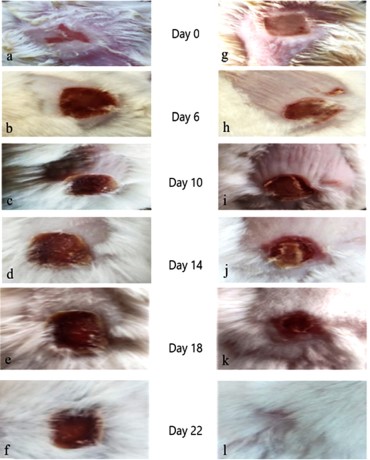
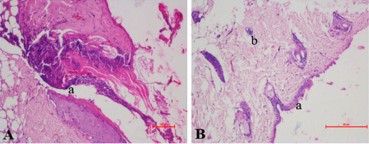
Introduction: The peptides resulting from the collagen degradation by collagenases have wide range of applications including wound healing. However, most of the wound healing studies involve collagenase obtained from anaerobic and pathogenic microorganisms thus increasing the production cost of the same. Methodology: Earlier in our laboratory, collagenase was isolated and purified from aerobic, non-pathogenic Bacillus altitudinis and it has shown excellent activity in vitro. Thus, the present study was carried out to evaluate the wound healing potential of collagenase isolated and purified from Bacillus altitudinis in murine model. For this, male mice were divided in to 2 groups viz. test group (n=6) and control group (n=6) and burn wound was created on the dorsal side of each mouse with the help of a heated brass bar after exposing the skin. In case of test group purified collagenase (10µg/100 µl) was applied on the burn wound while phosphate buffered saline (100 µl) was applied in case of control group for 5 consecutive days. On day 6th the mice (n =3) were sacrificed from each group and wound biopsies were collected for histopathological examinations Results: Histopathological examinations showed the absence of epithelium in control group whereas in test group initial signs of regeneration of epidermis were observed. The wound recovery when examined visually and by calculating wound area by using calliper the result showed that the wound was fully recovered. Conclusion: Purified collagenase can be used as therapeutic measure in burn wound healing.
References
- 1. Duarte, A. S., Correia, A., & Esteves, A. C. (2016). Bacterial collagenases–a review. Critical Reviews in Microbiology, 42(1), 106-126.
- 2. Kim, M., Hamilton, S. E., Guddat, L. W., & Overall, C. M. (2007). Plant collagenase: unique collagenolytic activity of cysteine proteases from ginger. Biochimica et Biophysica Acta (BBA)- General Subjects, 1770(12), 1627-1635.
- 3. Raskovic, B., Bozovic, O., Prodanovic, R., Niketic, V., &Polovic, N. (2014). Identification, purification and characterization of a novel collagenolytic serine protease from fig (Ficus carica var. Brown Turkey) latex. Journal of bioscience and bioengineering, 118(6), 622-627.
- 4. Eckhard, U., Huesgen, P. F., Brandstetter, H., & Overall, C. M. (2014). Proteomic protease specificity profiling of clostridial collagenases reveals their intrinsic nature as dedicated degraders of collagen. Journal of proteomics, 100, 102-114.
- 5. Alipour, H., Raz, A., Djadid, N. D., Rami, A., & Mahdian, S. M. A. (2014). Codon optimization of Col H gene encoding Clostridium histolyticum collagenase to express in Escherichia coli (No. e754v1). PeerJPrePrints.
- 6. Van Beeck, A., Van den Broek, M., Michielsen, M., Didden, K., Vuylsteke, K., &Verstreken, F. (2017). Efficacy and safety of collagenase treatment for Dupuytren's disease: 2-year follow-up results. Hand surgery and rehabilitation, 36(5), 346-349.
- 7. Harris, M. A. (2015). Advanced Problem Solving in the Biotherapeutics Industry: Parameters influencing the delivery of a novel cell therapy product and exploration of a new method for determining activity of Clostridium histolyticum collagenase, a wound debridement enzyme.
- 8. World Health Organization. Burns. Geneva: World Health Organization; 2014.
- 9. Church, D., Elsayed, S., Reid, O., Winston, B., & Lindsay, R. (2006). Burn wound infections. Clinical microbiology reviews, 19(2), 403-434.
- 10. Klasen, H. J. (2000). Historical review of the use of silver in the treatment of burns. I. Early uses. Burns, 26(2), 117-130.
- 11. Chauhan, A., & Prabha, V., (2017). Production and partial purification of collagenase from Bacillus sp. Isolated from soil sample. International Journal of Advanced Research and Development, 2(5), 60-65.
- 12. Mohindra, A., Chauhan, A., & Prabha, V. (2020). Purification and characterization of collagenase from Bacillus altitudinis. JMRR, 45.
- 13. Kumari, S., Harjai, K., & Chhibber, S. (2009). Efficacy of bacteriophage treatment in murine burn wound infection induced by Klebsiella pneumoniae. Journal of Microbiology and Biotechnology, 19(6), 622-628.
- 14. Abood, A., Salman, A. M., El-Hakim, A. E., AbdelAty, A. M., & Hashem, A. M. (2018). Purification and characterization of a new thermophilic collagenase from Nocardiopsisdassonvillei NRC2aza and its application in wound healing. International journal of biological macromolecules, 116, 801-810.
- 15. Giangreco, A., Jensen, K. B., Takai, Y., Miyoshi, J., & Watt, F. M. (2009). Necl2 regulates epidermal adhesion and wound repair. Development, 136(20), 3505-3514.
- 16. Riley, K. N., & Herman, I. M. (2005). Collagenase promotes the cellular responses to injury and wound healing in vivo. Journal of burns and wounds,4.
- 17. Lauto, A., Mawad, D., Barton, M., Gupta, A., Piller, S. C., & Hook, J. (2010). Photochemical tissue bonding with chitosan adhesive films. Biomedical engineering online, 9(1), 47.
- 18. Sen, C. K., Gordillo, G. M., Roy, S., Kirsner, R., Lambert, L., Hunt, T. K., ... &Longaker, M. T. (2009). Human skin wounds: a major and snowballing threat to public health and the economy. Wound repair and regeneration, 17(6), 763-771.
- 19. Ramundo, J., & Gray, M. (2008). Enzymatic wound debridement. Journal of Wound Ostomy & Continence Nursing, 35(3), 273-280.
- 20. Chen, A. M., Chen, L. M., Vaughan, A., Sreeraman, R., Farwell, D. G., Luu, Q., ... & Vijayakumar, S. (2011). Tobacco smoking during radiation therapy for head-and-neck cancer is associated with unfavorable outcome. International Journal of Radiation Oncology* Biology* Physics, 79(2), 414- 419.
- 21. Kirshen, C., Woo, K., Ayello, E. A., &Sibbald, R. G. (2006). Debridement: a vital component of wound bed preparation. Advances in skin & wound care, 19(9), 506-517.
- 22. Ramundo, J., & Gray, M. (2009). Collagenase for enzymatic debridement: a systematic review. Journal of Wound Ostomy & Continence Nursing, 36(6S), S4-S11.
- 23. Manka, S. W., Carafoli, F., Visse, R., Bihan, D., Raynal, N., Farndale, R. W., ... & Nagase, H. (2012). Structural insights into triple-helical collagen cleavage by matrix metalloproteinase 1. Proceedings of the National Academy of Sciences, 109(31), 12461-12466.
- 24. Yamatogi, R. S., Rahal, S. C., Granjeiro, J. M., Taga, R., Cestari, T. M., & Lima, A. F. D. M. (2005). Histologia da associação de membranasbiológicas de origem bovina implantadas no subcutâneo de ratos. Ciência Rural, 35(4), 837-842.
- 25. Durmus, A. S., Han, M. C., & Yaman, I. (2009). Comperative evaluation of collagenase and silver sulfadiazine on burned wound healing in rats. Firat Universitesi Saglik Bilimleri Veteriner Dergisi, 23(3), 135-139.
Data Sharing Statement
There are no additional data available. All raw data and code are available upon request.
Funding
This research received no funding.
Author Contributions
All authors contributed significantly to the work and approve its publication.
Ethics Declaration
This article does not involve any human or animal subjects, and therefore does not require ethics approval.
Acknowledgements
We would like to express our gratitude to the patients, their families, and all those who have contributed to this study.
Conflicts of Interest
No conflicts of interest in this work.
About this article

Cite this article
Sofica Rana, Thomson Soni, Aditi Chauhan, et. al./Evaluation of the Efficacy of Bacterial Collagenase in Wound Healing/J Microbiol Relat Res. 2022;8(2): 45–49.
Licence:
Attribution-Non-commercial 4.0 International (CC BY-NC 4.0)This license enables reusers to distribute, remix, adapt, and build upon the material in any medium or format for noncommercial purposes only, and only so long as attribution is given to the creator.
| Received | Accepted | Published |
|---|---|---|
| August 06, 2022 | September 05, 2022 | December 25, 2022 |
DOI: https://doi.org/10.21088/jmrr.2395.6623.8222.2
Keywords
CollegenaseBacillus altitudinisBurn woundMouse modelHistopathological examinationSearch for Similar Articles
Similar Articles
- Blood Metagenomic Sequence Analysis for Evaluation of Chronic Systemic Infection...
- Clinical Identification & Anti-fungal Susceptibility of Candida Species by Vitek...
- Preparation of Organic Compost from Kitchen Waste and its Efficiency: Managing W...
- Leprosy Pathophysiology, Clinical Features and Management
- Unusual Presentation of Cysticercosis: A detailed Case Report
Article Level Metrics
Last UpdatedThursday 10 September 2026, 18:25:44 (IST)
1342
Accesses
4
175
00
Citations
NA
NA
NA
Download citation
Article Keywords
Keyword Highlighting
Highlight selected keywords in the article text.
Timeline
| Received | August 06, 2022 |
| Accepted | September 05, 2022 |
| Published | December 25, 2022 |
licence
Attribution-Non-commercial 4.0 International (CC BY-NC 4.0)
This license enables reusers to distribute, remix, adapt, and build upon the material in any medium or format for noncommercial purposes only, and only so long as attribution is given to the creator.