Full Text (PDF)
Physiotherapy and Occupational Therapy Journal 17(1):p 9-14, January - March 2024. | DOI: https://doi.org/10.21088/potj.0974.5777.17124.2
Original Article
Effectiveness of Ultrasound and Kinesio-taping Techniques versus Laser in Pain Relief in Plantar Fasciitis Patients along with Passive Stretching Exercises
Author Information
Licence:
Attribution-Non-commercial 4.0 International (CC BY-NC 4.0)This license enables reusers to distribute, remix, adapt, and build upon the material in any medium or format for noncommercial purposes only, and only so long as attribution is given to the creator.
Physiotherapy and Occupational Therapy Journal 17(1):p 9-14, January - March 2024. | DOI: https://doi.org/10.21088/potj.0974.5777.17124.2
How Cite This Article:
Mohammed Aslam. Effectiveness of Ultrasound and Kinesio-taping Techniques versus Laser in Pain Relief in Plantar Fasciitis Patients along with Passive Stretching Exercises. Physio Ther Occup Ther J 2024;17(1): 09-14.Timeline
Received : January 21, 2024
Accepted : March 14, 2024
Published : March 30, 2024
Abstract
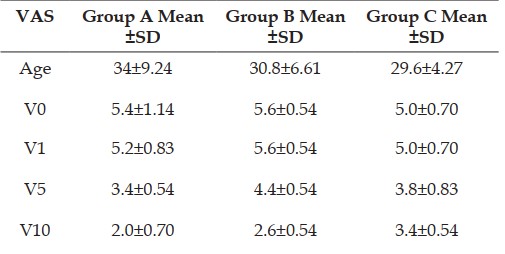
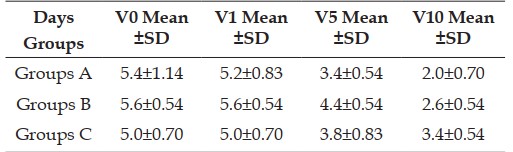
Background: Plantar fasciitis is one of the most common musculoskeletal disorders of foot. The pain and discomfort associated with this condition has a dramatic impact on physical mobility and function. Treatment of this condition is usually conservative; however, review of literature revealed no clinical studies demonstrating the efficacy of any targeted treatment for this condition. Methods: The subjects were examined according to the evaluation Performa. If they were found to be eligible for study. An informed consent form was taken. The subjects were assigned in to three different groups. In all three groups pre treatment session included assessment of pain, according to VAS before the application of any treatment. This was a comparative study which included 45 subjects with plantar fasciitis, who were randomly divided into three groups. Subjects in group I had 15 patients received ultrasound, passive stretching exercises and kineso taping while subjects in group II had 15 patients received laser, passive stretching exercises, while subjects in Group III had 15 patients received passive stretching only. Patients were evaluated at the 1st day, 5th day and on 10th day using VAS (visual analogue scale) for pain intensity. Results: A statistically significant difference in improvement was noted within the groups and between the groups in terms of visual analogue (p0.05). Conclusion: The results of this study suggest that Ultrasound and passive stretching, when clubbed with Kinesio Taping method, do have significantly better effect on pain relief in plantar fasciitis especially from day one itself, when compared with other two groups. Pain reduced in all three groups but methods used in group one much more effective in reducing pain in plantar fasciitis patients.
References
- 1. Roxas M. Plantar fasciitis: diagnosis and therapeutic considerations. Alternative medicine review. 2005; 10(2):83-93.
- 2. McPoil TG, Martin RL, Cornwall MW, Wukich DK, Irrgang JJ, Godges JJ. Heel Pain -Plantar Fasciitis: Clinical Practice Guidelines Linked to the International Classification of Functioning, Disability, and Health from the Orthopaedic Section of the American Physical Therapy Association. J Orthop Sports Phys Ther. 2008; 38(4):2-18.
- 3. Lemont H, Ammirati K, Usen N. Plantar Fasciitis: A Degenerative Process (Fascoisis) Without Inflammation. J Am Podiatr Med Assoc.2003; 93(3):234-37.
- 4. Simon J. Bartold. Plantar heel pain syndrome: overview and management. Journal of Bodywork and Movement Therapies.2004; 214- 226.
- 5. Charles Cole, Craig Seto, Gazewood J. Plantar Fasciitis: Evidence-Based Review of Diagnosis and Therapy. Am Fam Physician. 2005; 72(11):2237-2242.
- 6. Goff JD, Crawford R. Diagnosis and treatment of plantar fasciitis. Am Fam Physician. 2011; 84(6):676-682.
- 7. Stuber K, Kristmanson K. Conservative therapy for plantar fasciitis: a narrative review of randomized controlled trials. J Can Chiropr Assoc. 2006; 50(2):118-133.
- 8. Martin RB, Davenport TE, Reischl SF, Mcpoil TG, Matheson JW, Wukich DK etal. Heel Pain -Plantar Fasciitis: Revision 2014 Clinical Practice Guidelines Linked to the International Classification of Functioning, Disability, and Health from the Orthopaedic Section of the American Physical Therapy Association. J Orthop Sports Phys Ther. 2014; 44(11).
- 9. Kase K, Wallis J, Kase T. Clinical therapeutic applications of the kinesio taping method. Tokyo, Japan: Ken Ikai Co Ltd; 2003.
- 10. Thelen MR, Dauber JA, Stoneman PD. The clinical efficacy of kinesio tape for shoulder pain. J Orthop Sports Phy Ther. 2008; 38(7):389- 395.
- 11. Daniel O’Sullivan. Utilization of Kinesio Taping for Fascia Unloading. Internatinal journal of Atheltic therapy and training. 2011; 16(4):21-27.
- 12. Bijur PE, Silver W, Gallagher J. Reliability of visual analogue scale for measurement of acute pain. Academic emergency medicine. 2001; 8(12):1153-1157.
- 13. Buck Willis, Angel Lopez, Andres Perez, Larry Sheridan, Stanley R Kalish. Pain Scale for Plantar Fasciitis. The Foot and Ankle Online Journal. 2009; 2(5):3.
- 14. Sabir N, Demir lenk S, Yagci B, Karabulut N, Cubukcu S. Clinical utility of sonography in diagnosing plantar fasciitis. J Ultrasound Med. 2005; 24(8):1041-8.
- 15. Mahowald S, Legge BD, Grady JF. Correlation between plantar fascia thickness and symptoms of plantar fasciitis. J Am Podiatr Med Assoc. 2011; 101(5):385-389.
- 16. Apeksha O, Lakshmiprabha R. Comparison of the effects of therapeutic ultrasound v/s myofascial release technique in treatment of plantar fasciitis. Indian Journal of Physiotherapy & Occupational Therapy. 2012; 6(2):13-16.
- 17. Benedict FD, Deborah AN, Daniel PM, Petra AG, Taryn TW, Gregory EW etal. Plantar Fascia-Specific Stretching Exercise Improves Outcomes in Patients with Chronic Plantar Fasciitis. J Bone Joint Surg.2006;88(8):1775-81.
- 18. Robertson V, Ward A, Low J, Reed A. Electrotherapy explained: principles and practise. 4th edition; 2005.
- 19. DiGiovanni BF, Nawoczenski DA, Lintal ME etal. Tissue specific plantar fascia stretching exercise enhances outcomes in patients with chronic heel pain. A prospective, randomized study. J Bone Joint Surg Am. 2003; 85-A: 1270- 77
- 20. Furey J. Plantar fasciitis: The painful heel syndrome. J Bone Joint Surg Am.1975;57:762-73.
Data Sharing Statement
There are no additional data available. All raw data and code are available upon request.
Funding
This research received no funding.
Author Contributions
All authors contributed significantly to the work and approve its publication.
Ethics Declaration
It is abonified work done by me and I have not taken any part of thesis from anywhere.
Acknowledgements
We would like to express our gratitude to the patients, their families, and all those who have contributed to this study.
About this article

Cite this article
Mohammed Aslam. Effectiveness of Ultrasound and Kinesio-taping Techniques versus Laser in Pain Relief in Plantar Fasciitis Patients along with Passive Stretching Exercises. Physio Ther Occup Ther J 2024;17(1): 09-14.
Licence:
Attribution-Non-commercial 4.0 International (CC BY-NC 4.0)This license enables reusers to distribute, remix, adapt, and build upon the material in any medium or format for noncommercial purposes only, and only so long as attribution is given to the creator.
| Received | Accepted | Published |
|---|---|---|
| January 21, 2024 | March 14, 2024 | March 30, 2024 |
DOI: https://doi.org/10.21088/potj.0974.5777.17124.2
Keywords
Plantar fasciitisKinesio tapeUltrasonographyPassive stretchingLaserSearch for Similar Articles
Similar Articles
- Clinical Commentary: Glenohumeral Internal Rotation Deficit (GIRD)
- A Study on Effectiveness of Mirror Therapy on Grip and Release Function of Hand...
- Effect of Q-angle on Static and Dynamic Balance in Older Population
- Effect of Bilateral Arm Training Versus Dual Task Training with Conventional The...
- To assess the Impact of Particular Spine Stabilization Exercises and Mckenzie Ap...
Article Level Metrics
Last UpdatedWednesday 25 November 2026, 09:00:40 (IST)
5379
Accesses
7
922
00
Citations
NA
NA
NA
Download citation
Article Keywords
Keyword Highlighting
Highlight selected keywords in the article text.
Timeline
| Received | January 21, 2024 |
| Accepted | March 14, 2024 |
| Published | March 30, 2024 |
licence
Attribution-Non-commercial 4.0 International (CC BY-NC 4.0)
This license enables reusers to distribute, remix, adapt, and build upon the material in any medium or format for noncommercial purposes only, and only so long as attribution is given to the creator.