Full Text (PDF)
International Physiology 13(1):p 7-14, Jan-June 2025. | DOI: https://doi.org/10.21088/ip.2347.1506.13125.1
Original Article
Effect of Short-Term Mental Stress on Cardiovascular Reactivity and Heart Rate Variability in Children of Hypertensive Parents.
Iqbal Alam, Nazneen null, Amina Sultan Zaidi, Salamah Imteyaz, Aleena Haider
Author Information
Licence:
Attribution-Non-commercial 4.0 International (CC BY-NC 4.0)This license enables reusers to distribute, remix, adapt, and build upon the material in any medium or format for noncommercial purposes only, and only so long as attribution is given to the creator.
International Physiology 13(1):p 7-14, Jan-June 2025. | DOI: https://doi.org/10.21088/ip.2347.1506.13125.1
How Cite This Article:
Iqbal Alam et al. Effect of Short-Term Mental Stress on Cardiovascular Reactivity and Heart Rate Variability in Children of Hypertensive Parents. Int. Phy. 2025; 13(1): 07–14.Timeline
Received : April 09, 2025
Accepted : April 28, 2025
Published : June 27, 2025
Abstract
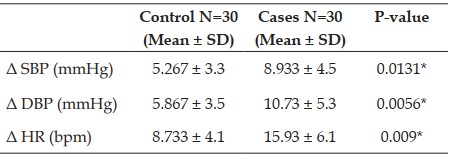
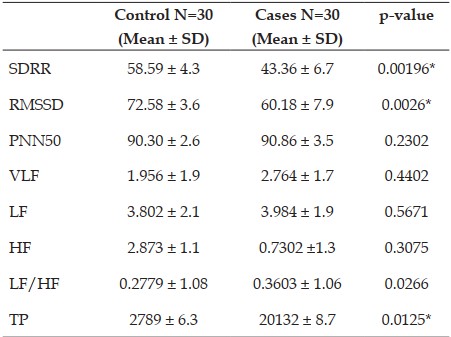
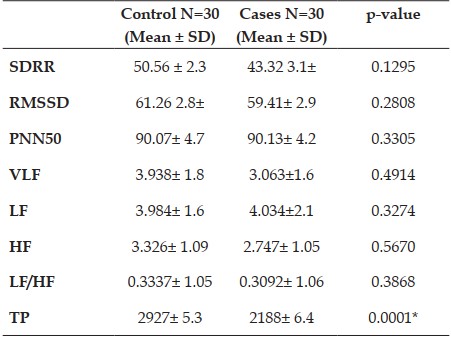
Background: Hypertension accounts for 13.5 million deaths worldwide every year and is one of the most prevalent risk factors for cardiovascular disease. Numerous studies suggest a significant link between cardiovascular reactivity to stress and the development of future hypertension. Most of the previous research has focused on hypertensive patients directly, aiming to predict their stress reactivity rather than exploring their offspring. So, in the present study, we attempted to find out whether there is an effect of acute mental stress on cardiovascular reactivity and changes in heart rate variability (HRV) in children of hypertensive parents. Material and Methods: This case-control study includes sixty participants from the general population, adhering to specific inclusion and exclusion criteria. Among these, 30 participants were young adults aged 18 to 22 years, with at least one parent diagnosed with essential hypertension according to JNC VII guidelines. Additionally, thirty control participants were selected, consisting of healthy young adults matched for age and sex, who are children of parents with no family history of hypertension. Acute mental stress was induced using problem-solving questions from the MENSA workout questionnaire. Cardiovascular reactivity and heart rate variability were assessed in resting, stress, and recovery stages. Continuous variables were expressed as mean ± Standard Deviation (S.D.). An unpaired t-test was employed to compare the means between the two groups. A p-value of less than 0.05 is considered significant. Results: Following acute mental stress, children in the hypertensive group exhibited a notable rise in cardiovascular reactivity (p-value≤0.005). In the heart rate variability test, a significant reduction in Total power (p-value≤0.005) was noted during the stress phase, while a substantial increase in low frequency (p-value≤0.005) occurred in the recovery phase. Conclusion: This study observed increased cardiovascular reactivity and decreased overall heart rate variability, indicating heightened sympathetic activity and diminished vagal tone in subjects prior to hypertension onset. The rising rates of childhood hypertension, coupled with increased cardiovascular reactivity and reduced heart rate variability, underscore the urgent need for primary preventive measures and targeted intervention strategies for this at-risk group
References
- 1. Roth G.A., Mensah G.A., Johnson C.O., Addolorato G., Ammirati E., Baddour L.M., et al. Global burden of cardiovascular diseases and risk factors, 1990–2019. J Am Coll Cardiol. (2020) 76(25): 2982–3021. doi: 10.1016/j.jacc.2020.11.010.
- 2. Kjeldsen S.E. Hypertension and cardiovascular risk: general aspects. Pharmacol Res. (2018) 129: 95–9. doi: 10.1016/j.phrs.2017.11.003
- 3. Chida Y., Steptoe A. Greater cardiovascular responses to laboratory mental stress are associated with poor subsequent cardiovascular risk status. Hypertension. (2010) 55(4): 1026–32. doi: 10.1161/Hypertension AHA.109.14662.
- 4. Stamler R., Stamler J., Riedlinger W.F., Algera G., Roberts R.H. Family (parental) history and prevalence of hypertension. Results of a nationwide screening program. JAMA. 1979; 241: 43–6
- 5. Feber J., Ahmed M. Hypertension in children: new trends and challenges. Clin Sci (Lond) 2010; 119(4): 151–61. doi: 10.1042/CS20090544.
- 6. Hsu, W.F., Kao, Y.W., Chen, M. et al. A reappraisal of the prevalence of pediatric hypertension through a nationwide database in Taiwan. Sci Rep 11, 4475 (2021).
- 7. Beauchaine, T.P., & Thayer, J.F. (2015). Heart rate variability as a transdiagnostic biomarker of psychopathology. International Journal of Psychophysiology, 98(2), 338–350.
- 8. Menkes M.S., Matthews K.A., Krantz D.S., et al. Cardiovascular reactivity to the cold pressor test as a predictor of hypertension. Hypertens. 1989; 14: 524– 30. 10.
- 9. Matthews K.A., Woodall K.L., Allen M.T. Cardiovascular reactivity to stress predicts future blood pressure status. Hypertens. 1993; 22: 479–85.
- 10. Steptoe A., Marmot M. Impaired cardiovascular recovery following stress predicts 3-year increases in blood pressure. J Hypertens. 2005; 23: 529–36.
- 11. Huang C.J., Webb H.E., Zourdos M.C., Acevedo E.O. Cardiovascular reactivity, stress, and physical activity. Front Physiol. 2013; 4: 314.
- 12. Gerra G., Zaimovic A., Mascetti G.G., Gardini S., Zambelli U., Timpano M., et al. Neuroendocrine responses to experimentallyinduced psychological stress in healthy humans. Psychoneuroendocrinology. 2001; 26(1): 91-107.
- 13. Chu B., Marwaha K., Sanvictores T., et al. Physiology, Stress Reaction. In: StatPearls Internet. Treasure Island (FL): StatPearls Publishing; 2025 Jan.
- 14. Hall M., Vasko R., Buysse D., Ombao H., Chen Q., Cashmere JD, Kupfer D., Thayer J.F. Acute stress affects heart rate variability during sleep. Psychosom Med. 2004 Jan-Feb; 66(1): 56-62.
- 15. Smeets P.A.M., Erkner A.C. de Graaf, Cephalic phase responses and appetite. Nutr. Rev. 68 (2010) 643-655.
- 16. Ebong I.A., Quesada O., Fonkoue I.T., Mattina D., Sullivan S., Oliveira G.M.M., Spikes T., Sharma J., Commodore Y., Ogunniyi M.O., Aggarwal N.R., Vaccarino V.; American College of Cardiology Cardiovascular Disease in Women Committee. The Role of Psychosocial Stress on Cardiovascular Disease in Women: JACC State-of-the-Art Review. J Am Coll Cardiol. 2024 Jul 16; 84(3): 298-314. doi: 10.1016/j.jacc.2024.05.016. PMID: 38986672; PMCID: PMC11328148.
- 17. Shaffer F., Ginsberg J.P. An Overview of Heart Rate Variability Metrics and Norms. Front Public Health. 2017 Sep 28; 5: 258. doi: 10.3389/ fpubh.2017.00258. PMID: 29034226; PMCID: PMC5624990.
- 18. Kim H.G., Cheon E.J., Bai D.S., Lee Y.H., Koo B.H.. Stress and Heart Rate Variability: A Meta-Analysis and Review of the Literature. Psychiatry Investig. 2018 Mar; 15(3): 235-245. doi: 10.30773/pi.2017.08.17. Epub 2018 Feb 28.
- 19. Billman G.E., Heart rate variability - a historical perspective. Front. Physiol. 2011; 2, 86.
- 20. Manoj P., Kim J.A., Kim S., Li T., Sewani M., Chelu M.G., Li N. Sinus node dysfunction: current understanding and future directions. Am J Physiol Heart Circ Physiol. 2023
- 21. Pham T., Lau Z.J., Chen S.H.A., Makowski D. Heart Rate Variability in Psychology: A Review of HRV Indices and an Analysis Tutorial. Sensors. 2021; 21(12):3998.
- 22. Machado, A.V., Pereira, M.G., Souza, G.G.L. et al. Association between distinct coping styles and heart rate variability changes to an acute psychosocial stress task. Sci Rep 11, 24025 (2021).
- 23. AD, PA, MRD, K PB. Effect of parental hypertension on heart rate variability. Natl J Physiol Pharm Pharmacol. 2024; 14(6): 1244-1246.
- 24. Wadoo, O.K., Sayeed, S.I., & Tramboo, M. R. (2021). Comparative study of heart rate variability in normotensive young adults with family history of hypertension. International Journal of Research in Medical Sciences, 9(2), 371–374.
- 25. Thayer J.F., Yamamoto S.S., Brosschot J.F. The relationship of autonomic imbalance, heart rate variability and cardiovascular disease risk factors. Int J Cardiol. 2010;141(2):122–31. doi: 10.1016/j.ijcard.2009.09.543
- 26. Weber C.S., Thayer J.F., Rudat M., et al. Salt-sensitive men show reduced heart rate variability, lower norepinephrine and enhanced cortisol during mental stress. J Hum Hypertens. 2008; 22(6): 423–31. doi: 10.1038/jhh.2008.11.
- 27. Premaraja R., Chandra S. Autonomic reactivity in normal healthy children of hypertensive’s. MedPulse – Journal of Physiology 2015; 1(1): 13-18.
- 28. Hamer M., Jones J., Boutcher S.H. Acute exercise reduces vascular reactivity to mental challenge in offspring of hypertensive families. J Hypertens. 2006 Feb; 24(2): 315-20. doi: 10.1097/01.hjh.0000200515.33194.38. PMID: 16508578.
Data Sharing Statement
There are no additional data available. All raw data and code are available upon request.
Funding
This research received no funding.
Author Contributions
All authors contributed significantly to the work and approve its publication.
Ethics Declaration
This article does not involve any human or animal subjects, and therefore does not require ethics approval.
Acknowledgements
We would like to express our gratitude to the patients, their families, and all those who have contributed to this study.
Conflicts of Interest
No conflicts of interest in this work.
About this article

Cite this article
Iqbal Alam et al. Effect of Short-Term Mental Stress on Cardiovascular Reactivity and Heart Rate Variability in Children of Hypertensive Parents. Int. Phy. 2025; 13(1): 07–14.
Licence:
Attribution-Non-commercial 4.0 International (CC BY-NC 4.0)This license enables reusers to distribute, remix, adapt, and build upon the material in any medium or format for noncommercial purposes only, and only so long as attribution is given to the creator.
| Received | Accepted | Published |
|---|---|---|
| April 09, 2025 | April 28, 2025 | June 27, 2025 |
DOI: https://doi.org/10.21088/ip.2347.1506.13125.1
Keywords
Hypertension • Cardiovascular reactivity • Heart rate variability • StressHypertensionCardiovascular reactivityHeart rate variabilityStressSearch for Similar Articles
Similar Articles
- Mechanisms of Myocardial Damage and Structural Remodeling Caused by Doxorubicin-...
- Impact of Sleep Deprivation on Human Physiology: A Review
- The Effect of a Brief Heart Rate Variability Biofeedback Session on Salivary Cor...
- Impact of Vitamin D Supplementation in Enhancing Pulmonary Function in Adults wi...
- Mona Bedi - Editiorial
Article Level Metrics
Last UpdatedThursday 30 July 2026, 23:34:46 (IST)
1511
Accesses
10
185
00
Citations
NA
NA
NA
Download citation
Article Keywords
Keyword Highlighting
Highlight selected keywords in the article text.
Timeline
| Received | April 09, 2025 |
| Accepted | April 28, 2025 |
| Published | June 27, 2025 |
licence
Attribution-Non-commercial 4.0 International (CC BY-NC 4.0)
This license enables reusers to distribute, remix, adapt, and build upon the material in any medium or format for noncommercial purposes only, and only so long as attribution is given to the creator.