Full Text (PDF)
Indian Journal of Biology 11(2):p 107-112, July - December 2024. | DOI: https://doi.org/10.21088/ijb.2394.1391.11224.6
Review Article
Deteriorated Manuscripts: Documentary Cultural Heritage Conserved by Using Indigenous Methods
Ravindra Goswami, Seema Bhadauria, Babulal Tanwar
Author Information
Licence:
Attribution-Non-commercial 4.0 International (CC BY-NC 4.0)This license enables reusers to distribute, remix, adapt, and build upon the material in any medium or format for noncommercial purposes only, and only so long as attribution is given to the creator.
Indian Journal of Biology 11(2):p 107-112, July - December 2024. | DOI: https://doi.org/10.21088/ijb.2394.1391.11224.6
How Cite This Article:
Goswami R, Bhadauria S, Tanwar B. Deteriorated Manuscripts: Documentary Cultural Heritage Conserved by Using Indigenous Methods. Indian J Biol. 2024;11(2):107-112.Timeline
Received : July 15, 2024
Accepted : August 13, 2024
Published : December 12, 2024
Abstract
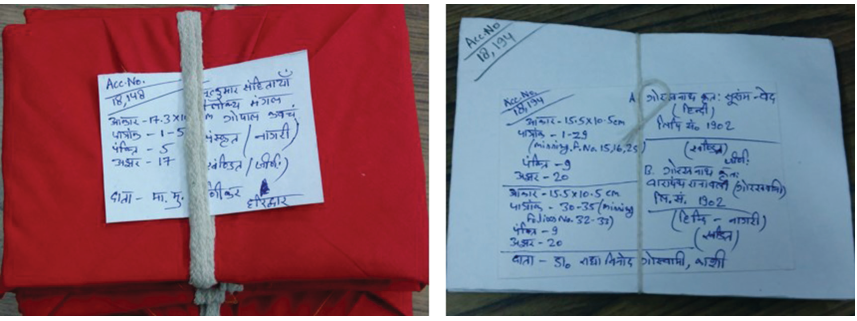
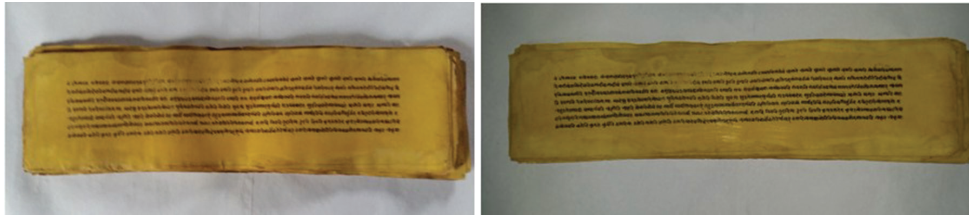
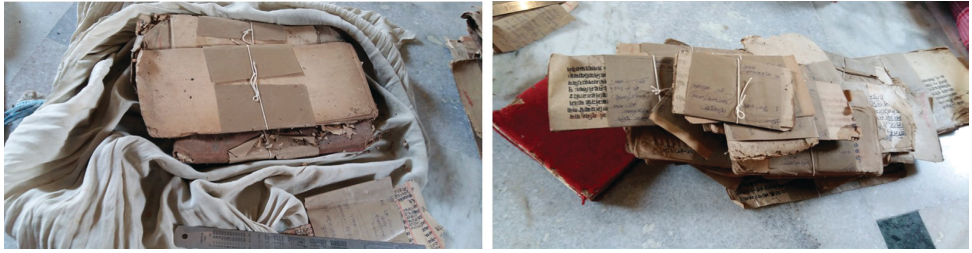
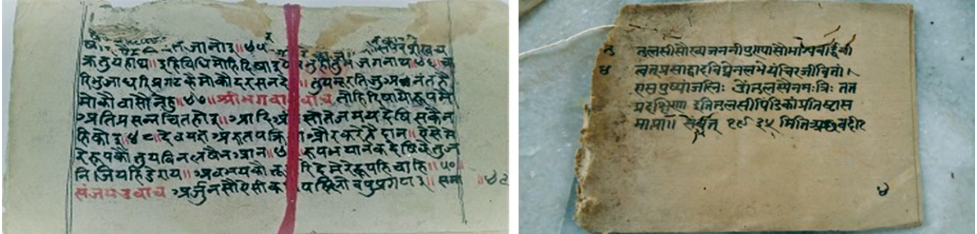
The whole world is filled with cultural heritage of all kinds generated by our ancestors. A large number of monuments, artefacts and manuscripts spread all over the world are finest examples of the artistic, scientific, architectural knowledge. These rich cultural heritages are a symbol of men’s cultural identity and continuity. Cultural heritage is unique and irreplaceable, which places the responsibility of preservation on the present generation. Deterioration is a loss of structural capacity with time by the action of the external agents or material leaching (Saiz and Laiz, 2000). The worldwide distribution of manuscripts contains rich intellectual diverse cultural heritage, which are the legacy of traditional wisdom and priceless Devine knowledge of thousand years back. Manuscripts are the important cultural heritages which often found neglected many parts around the world for decades. But more importantly manuscripts are needed to be conserve for safeguarding the records of the past history, culture and traditional knowledge. India possesses one of the largest collections of manuscripts comprising more than five million of manuscripts on different materials. Manuscripts are handwritten documents on paper, palm leaf, leather, textile or other materials written more than seventy-five years old that have significant historical, scientific or aesthetic value. There are several factors that deteriorate the manuscripts. The deterioration of heritage collection are reflected in the form of shrinkage, cracks, brittleness, warping, wear and tear, abrasion, bio-infestation, discoloration, holes, dirt and dust accumulation etc. The ravages of time, and extreme climatic conditions such as changes in temperature, humidity, intensity of light or even ignorance and most important biological agents, often destroyed priceless cultural property and records. It is therefore imperative that measures be taken at the earliest and in time to save and preserve these culture and heritage for posterity. This research paper contains an understanding of physical, chemical and biological agents, required to identify accurately so the proper conservation step can take to preserve this cultural heritage. “Cultural Heritage is an expression of the ways of living developed by a community and passed on from generation to generation.”
References
- 1. Agrawal. O.P, Conservation of Asian documents on paper and palm leaf, Pre-conference of WLIC 2006, Preservation and conservation in Asia National Diet Library, Tokyo, August 16 -17, 2006.
- 2. Baruah S., Rafique RF, Dutta J. Visible Light Photocatalysis by Tailoring Crystal Defected in Zinc Oxide Nanostructures. NANO. Vol 3. Pp. 399- 407. 2008.
- 3. Bakkali, F., Averbeck, S., Averbeck, D. and Idaomar, M. Biological effects of essential oils-A review. Food and Chem. Tox., Campden BRI, Gloucestershire UK Publication Vol. 46. Pp. 446-475. 2008.
- 4. Bhattacharyya, B. “Palm Leaf Manuscripts and other Preservation”, Indian Archives, Vol. 1(2), p. 233-34.
- 5. Boyaghchi, M.A. Scientific Elucidation for the Hanzal extract reported to be used by Iranian Artists in Making Old Paper Manuscripts. Journal of Conservation of Cultural Property, IASC publication, New Delhi, India. 38. Pp. 1-4. 2009.
- 6. Dutta, P. K. “Use of Neem Oil in Conservation,” Conservation of Cultural Property in India, Vol. 18(20), Pp. 98-100.
- 7. Farooq M, Hasan M, Gull F, Mycobial deterioration of stone monuments of Dharmarajika, Taxila, Journal of Microbiology & Experimentation, Vol. 2(1). Pp. 36-41. 2015.
- 8. Gupta, C. B. and Haider, S. H. (1995) “Conservation Practices in Ancient India”, Conservation of Cultural Property in India, Vol. 28, pp. 36-43. 1995.
- 9. Kalaskar, P.G., Zodpe, S.N. Biodeterioration of library resources and possible approaches for their control. International journal of applied research. Vol. 2(7). Pp. 25-33. 2016.
- 10. Nair M. V. (1985-87) “A New Method for Relaxing Brittle Palm Leaves”, Conservation of Cultural Property in India, Vol. 18-20, p. 1-4.
- 11. Nirmale, Vivek H et al. “Assessment of indigenous knowledge of coastal fisherfolk of Greater Mumbai and Sindhudurg districts of Maharashtra”, Indian Journal of Traditional Knowledge, Vol. 3(1), pp. 37- 50. 2004.
- 12. Patidar D. and Soni A. Indigenous material of preserving manuscripts in library. International Journal of Research in Library Science. Vol. 2(2). Pp. 183-187. 2016.
- 13. Parinitha, M. et al., “Ethno-botanical wealth of Bhadra wild life sanctuary in Karnataka”, Indian Journal of Traditional Knowledge, Vol. 3(1), pp. 51- 58. 2004.
- 14. Padhi, B. K. (1974) “Preservation of Palm Leaf Manuscripts in Orissa”, Conservation of Cultural Property in India, Vol. VII, p. 62-65.
- 15. Prasad, L. K. (1981-82) “Role of Neem Leaves in Protecting Textile Materials and Paper Document”, Conservation of Cultural Property in India, Vol. 14-15.
- 16. Rai, S. C. “Traditional ecological knowledge and community-based natural resource management in northeast India”, Journal of Mountain Science, Volume 4(3), pp. 248-258. 2007.
- 17. Ripka, K. Identification of micro-organisms on stone and mural paintings using molecular methods-Diplomarbeit zur Erlangung des Grades Magistra rerum naturalium an der Fakultät für Lebenswissenschaften der Universitat Wien, vorgelegt von durchgeführt am Institut für Mikrobiologie und Genetik der Universität Wien; Department Medizinische/ Pharmazeutische Chemie. Wien, 2005.
- 18. Suri, J. H. “Palm Leaf Manuscripts in Jaisalmir,” Indian Archives, Vol. 1-2, p. 235-236.
- 19. Sharama, B. R. N. “Pests and Pesticides in Archaeology and Archives’, Conservation of Cultural Property in India, Pp. 52-55. 1992.
- 20. Singh, L. Jeetendro et al., “Environmental Ethics in the Culture of Meeteis from North East India” in Song Sang-yong et al.(eds), Bioethics in Asia in the 21st Century, Christchurch: Eubios Ethics Institution. 1998.
- 21. Thiyam Satyabati Devi, Impact of Information Technology on the Societal Archive: A Case Study of Manipuri Manuscripts, International Information and Library Review, Vol.40 (3). Pp. 179-184. 2008.
Data Sharing Statement
There are no additional data available.
Funding
This research received no funding.
Author Contributions
All authors contributed significantly to the work and approve its publication.
Ethics Declaration
This article does not involve any human or animal subjects, and therefore does not require ethics approval.
Acknowledgements
I would like to extend my sincere gratefulness to Prof. Seema Bhadauria, Principal, Balwant Vidhyapeeth Rural Institute for his noble guidance, Prof. K.P. Singh Head of the Department, R.B.S. College, Agra (U.P.) and Director, Vrindavan Research Institute, Vrindavan, Mathura (U.P.) that have handed Lab installations for this exploration. Their generous benefactions have made it possible to conduct this study and have significantly contributed to its successful completion. They also give necessary exploration accoutrements, access to technical outfit, and the occasion to engage in precious exploration gests.
Conflicts of Interest
The authors report no conflicts of interest in this work.
About this article

Cite this article
Goswami R, Bhadauria S, Tanwar B. Deteriorated Manuscripts: Documentary Cultural Heritage Conserved by Using Indigenous Methods. Indian J Biol. 2024;11(2):107-112.
Licence:
Attribution-Non-commercial 4.0 International (CC BY-NC 4.0)This license enables reusers to distribute, remix, adapt, and build upon the material in any medium or format for noncommercial purposes only, and only so long as attribution is given to the creator.
| Received | Accepted | Published |
|---|---|---|
| July 15, 2024 | August 13, 2024 | December 12, 2024 |
DOI: https://doi.org/10.21088/ijb.2394.1391.11224.6
Keywords
DeteriorationManuscriptsCultural heritageConservationSearch for Similar Articles
Similar Articles
- Consumption and Utilization of Triticum aestivum Standing Crop by Mythimna separ...
- Effect of Carvacrol and Menthone as Insecticidal Tool on Red Flour Beetle, Tribo...
- Pteridophytes as Natural Scavengers of Soil Arsenic: From Physiological Foundati...
- Heterogenus expression of Cry 2Ax gene with his and fusion tags in E.coli and pr...
- A Comprehensive Ethnobotanical Survey of the Local Flora of Nawalgarh (Rajasthan...
Article Level Metrics
Last UpdatedTuesday 27 October 2026, 22:32:10 (IST)
2959
Accesses
28
375
00
Citations
NA
NA
NA
Download citation
Article Keywords
Keyword Highlighting
Highlight selected keywords in the article text.
Timeline
| Received | July 15, 2024 |
| Accepted | August 13, 2024 |
| Published | December 12, 2024 |
licence
Attribution-Non-commercial 4.0 International (CC BY-NC 4.0)
This license enables reusers to distribute, remix, adapt, and build upon the material in any medium or format for noncommercial purposes only, and only so long as attribution is given to the creator.