Full Text (PDF)
Indian Journal of Emergency Medicine 11(3):p 179-182, July -Sept 2025. | DOI: https://doi.org/10.21088/ijem.2395.311X.11325.7
Case Report
CO Poisoning Cured by HFNC
Hemant Kumar Rathi, Gaurav Chauhan, Kishalay Datta, Priya Govil
Author Information
Licence:
Attribution-Non-commercial 4.0 International (CC BY-NC 4.0)This license enables reusers to distribute, remix, adapt, and build upon the material in any medium or format for noncommercial purposes only, and only so long as attribution is given to the creator.
Indian Journal of Emergency Medicine 11(3):p 179-182, July -Sept 2025. | DOI: https://doi.org/10.21088/ijem.2395.311X.11325.7
How Cite This Article:
Rathi HK, Chauhan G, Datta K, et al. CO Poisoning Cured by HFNC. Ind J Emerg Med. 2025;11(3):179-182.Timeline
Received : May 10, 2025
Accepted : June 20, 2025
Published : September 30, 2025
Abstract
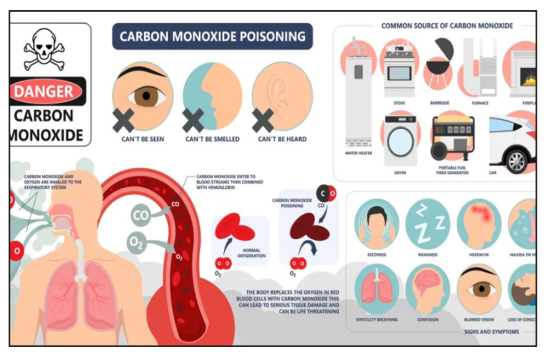
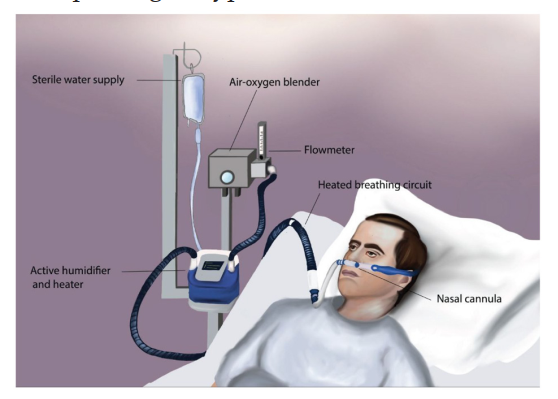
Carbon monoxide (CO) poisoning is a potentially life-threatening condition that typically requires prompt administration of high-concentration oxygen, most commonly delivered via a non-rebreather mask (NRB). While this method remains the standard of care, high-flow nasal cannula (HFNC) therapy has gained popularity as an effective alternative for oxygen delivery in various respiratory disorders. HFNC provides heated and humidified oxygen at high flow rates, which may offer physiological benefits such as improved oxygenation, reduced work of breathing, and enhanced patient comfort. This case report describes an innovative application of HFNC in the acute management of CO poisoning. The patient presented with elevated carboxy-haemoglobin levels and was successfully treated using HFNC rather than conventional NRB therapy. This case highlights the potential role of HFNC as a feasible and effective option in the treatment of CO poisoning and encourages further investigation into its utility in similar toxicological emergencies.
References
- 1. Hampson N.B. U.S. Mortality due to carbon monoxide poisoning, 1999–2014. accidental and intentional deaths. Ann Am Thorac Soc. 2016; 13(10): 1768-74.
- 2. Carbon monoxide exposures–United States, 2000–2009. MMWR. 2011; 60(30): 1014-7.
- 3. Department of Health and Social Care. 2023. https://www.gov.uk/government/news/ nhs-to-expand-services-to-keep-vulnerableout-of-hospital
- 4. Tomruk O., Karaman K., Erdur B., et al. A New promising treatment strategy for carbon monoxide poisoning: high flow nasal cannula oxygen therapy. Med Sci Monit. 2019;25:605-9.
- 5. Ozturan I.U., Yaka E., Suner S., et al. Determination of carboxyhemoglobin halflife in patients with carbon monoxide toxicity treated with high flow nasal cannula oxygen therapy. Clin Tox (Phila). 2019; 57(7): 617-23.
- 6. Hardy KR, Thom SR. Pathophysiology and treatment of carbon monoxide poisoning. J Toxicol Clin Toxicol. 1994; 32(6): 613-29.
- 7. Rose J.J., Wang L., Xu Q., et al. Carbon monoxide poisoning: pathogenesis, management, and future directions of therapy. Am J Respir Crit Care Med. 2017; 195(5): 596-606.
- 8. Peterson J.E., Stewart R.D. Absorption and elimination of carbon monoxide by inactive young men. Arch Environ Health. 1970; 21(2): 165-71.
- 9. Lenglet H., Sztrymf B., Leroy C.,et al.Humidified high flow nasal oxygen during respiratory failure in the emergency department: feasibility and efficacy. Respir Care. 2012; 57(11): 1873-8.
- 10. Parke R.L., Eccleston M.L., McGuinness S.P. The effects of flow on airway pressure during nasal high-flow oxygen therapy. Respir Care. 2011; 56(8): 1151-5.
- 11. Parke R.L., McGuinness S.P.. Pressures delivered by nasal high flow oxygen during all phases of the respiratory cycle. Respir Care. 2013; 58(10): 1621-4.
- 12. Sztrymf B., Messika J., Bertrand F., et al. Beneficial effects of humidified high flow nasal oxygen in critical care patients: a prospective pilot study. Intensive Care Med. 2011; 37(11): 1780-6.
- 13. Franklin D., Babl F.E., Schlapbach L.J., et al. A randomized trial of high-flow oxygen therapy in infants with bronchiolitis. N Engl J Med. 2018; 378(12): 1121-31.
Data Sharing Statement
There are no additional data available. All raw data and code are available upon request.
Funding
This research received no funding.
Author Contributions
All authors contributed significantly to the work and approve its publication.
Ethics Declaration
This article does not involve any human or animal subjects, and therefore does not require ethics approval.
Acknowledgements
We would like to express our gratitude to the patients, their families, and all those who have contributed to this study.
Conflicts of Interest
No conflicts of interest.
About this article

Cite this article
Rathi HK, Chauhan G, Datta K, et al. CO Poisoning Cured by HFNC. Ind J Emerg Med. 2025;11(3):179-182.
Licence:
Attribution-Non-commercial 4.0 International (CC BY-NC 4.0)This license enables reusers to distribute, remix, adapt, and build upon the material in any medium or format for noncommercial purposes only, and only so long as attribution is given to the creator.
| Received | Accepted | Published |
|---|---|---|
| May 10, 2025 | June 20, 2025 | September 30, 2025 |
DOI: https://doi.org/10.21088/ijem.2395.311X.11325.7
Keywords
CO poisoningCarbon MonoxideHFNCHigh flow nasal canulaSearch for Similar Articles
Similar Articles
- Covid 19 Vaccine: Associated Henoch Schonlein Purpura in Young Adult Female
- A Rare Case of Intolerance to Medically Approved Dose of Sildenafil Citrate in a...
- Acute Mesenteric Ischemia: An Unusual Cause of Hematemesis in a 48 Year Old Man
- Brachial Artery Pseudoaneurysm Related Causally to Iatrogenic Coagulopathy in a...
- Combination Therapy for Acute Management of Yellow Oleander Poisoning: A Case Re...
Article Level Metrics
Last UpdatedSaturday 05 September 2026, 19:04:50 (IST)
4074
Accesses
26
922
00
Citations
NA
NA
NA
Download citation
Article Keywords
Keyword Highlighting
Highlight selected keywords in the article text.
Timeline
| Received | May 10, 2025 |
| Accepted | June 20, 2025 |
| Published | September 30, 2025 |
licence
Attribution-Non-commercial 4.0 International (CC BY-NC 4.0)
This license enables reusers to distribute, remix, adapt, and build upon the material in any medium or format for noncommercial purposes only, and only so long as attribution is given to the creator.