Full Text (PDF)
Indian Journal of Emergency Medicine 9(3):p 135-138, July-September 2023. | DOI: 10.21088/ijem.2395.311X.9323.17
Case Report
Cauda Equina Syndrome and the Adolescent Patient with Low Back Pain: A Case Report
Renaldo Pavrey, Farzin Vajifdar, Renaldo Pavrey
Author Information
Licence:
Attribution-Non-commercial 4.0 International (CC BY-NC 4.0)This license enables reusers to distribute, remix, adapt, and build upon the material in any medium or format for noncommercial purposes only, and only so long as attribution is given to the creator.
Indian Journal of Emergency Medicine 9(3):p 135-138, July-September 2023. | DOI: 10.21088/ijem.2395.311X.9323.17
How Cite This Article:
Vajifdar F, Pavrey R. Cauda Equina Syndrome and the Adolescent Patient with Low Back Pain: A Case Report. Indian J Emerg Med. 2023;9(3):135–8.Timeline
Received : April 17, 2023
Accepted : May 18, 2023
Published : May 09, 2023
Abstract
Low back pain is a common complaint in adults of all ages, and is being increasingly seen in children and adolescents. The lifetime occurrence of low back pain is around 59%.1 Mechanical low back pain is globally one of the most common presentations seen by the Emergency Physician.14 Most cases of low back pain treated in the
Emergency Department (ED) are not true emergencies, a notable exception being the Cauda Equina Syndrome (CES).
Owing to the low occurrence and low index of suspicion in the pediatric/adolescent age group, there may be a significant delay in diagnosis of Cauda Equina Syndrome. This is concerning, because delay in diagnosis and there by treatment, runs the risk of permanent neurological damage and disability. Unequivocally, the most common predictor of a favourable outcome in CES is early diagnosis.
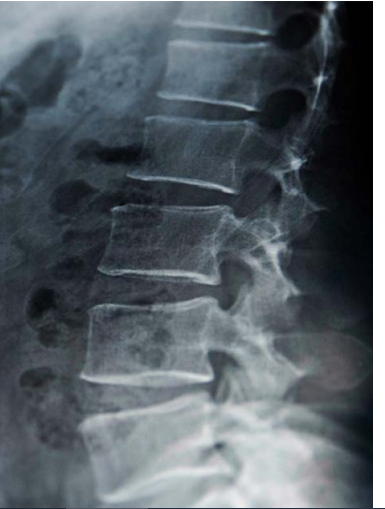
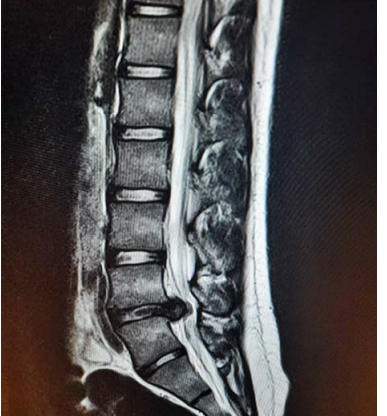
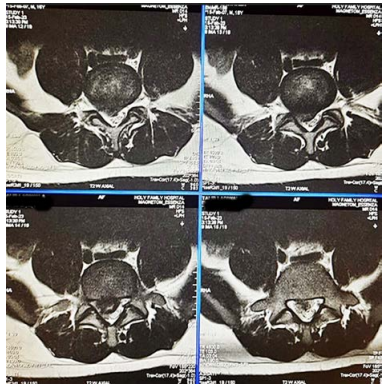
We present the case of a 16-year-old male who presented to the ED on three separate occasions complaining of low back pain. The patient had red flag signs during the second visit; however, the relevant history and clinical findings were not elicited at the time. On the third ED visit, a clinical diagnosis of CES was made and urgent magnetic resonance imaging of the lumbo-sacral spine revealed a large right para-central herniation of the L4-L5 disc indenting the right L5 nerve root.
Our aim in highlighting this case is two fold:
1. To make the Emergency Physician aware of the rare diagnosis of CES in this uncommon
age group.
2. To stress the importance of early recognition of red flag signs in CES which will lead to an early diagnosis, and thereby a favourable outcome.
References
- 1. GP online. Red flag symptoms: Back pain–Musculo skeletal Disorders. 2008. [cited 2025 Dec 2]. Available from: URL is needed for full Vancouver style.
- 2. Kennedy JG, Soffe KE, McGrath A, Stephens MM, Walsh MG, McManus F. Predictors of outcome in cauda equina syndrome. Eur Spine J. 1999 Aug 1;8(4):317-22.
- 3. Shapiro S. Cauda equina syndrome secondary to lumbar disc herniation. Neurosurgery. 1993 May;32(5):743-6; discussion 746-7.
- 4. Kostuik JP, Harrington I, Alexander D, Rand W, Evans D. Cauda equina syndrome and lumbar disc herniation. J Bone Joint Surg Am. 1986 Mar;68(3):386-91.
- 5. Hoeritzauer I, Wood M, Copley PC, Demetriades AK, Woodfield J. What is the incidence of cauda equina syndrome? A systematic review. J Neurosurg Spine. 2020 Feb 14:1-10.
- 6. Pellisé F, Balagué F, Rajmil L, Cedraschi C, Aguirre M, Fontecha C, et al. Prevalence of low back pain and its effect on health-related quality of life in adolescents. Arch Pediatr Adolesc Med. 2009;163(1):65.
- 7. Frymoyer JW, Pope MH, Clements JH, Wilder DG, MacPherson B, Ashikaga T. Risk factors in low-back pain. An epidemiological survey. J Bone Joint Surg Am. 1983;65:213–8.
- 8. Kumar R, Kumar V, Das N, Behari S, Mahapatra A. Adolescent lumbar disc disease: findings and outcome. Childs Nerv Syst. 2007;23(11):1295-9.
- 9. Dang L, Liu Z. A review of current treatment for lumbar disc herniation in children and adolescents. Eur Spine J. 2009;19(2):205-14.
- 10. Haidar R, Ghanem I, Saad S, Uthman I. Lumbar disc herniation in young children. Acta Paediatr. 2009.
- 11. Kim H, Green D. Adolescent back pain. Curr Opin Pediatr. 2008;20(1):37-45.
- 12. Micheli L. Back Pain in Young Athletes. Arch Pediatr Adolesc Med. 1995;149(1):15.
- 13. Premkumar A, Godfrey W, Gottschalk MB, Boden SD. Red flags for low back pain are not always really red: a prospective evaluation of the clinical utility of commonly used screening questions for low back pain. J Bone Joint Surg Am. 2018 Mar 7;100(5):368-74.
- 14. Hoy D, Bain C, Williams G, March L, Brooks P, Blyth F, et al. A systematic review of the global prevalence of low back pain. Arthritis Rheum. 2012;64:2028-37
Data Sharing Statement
There are no additional data available. All raw data and code are available upon request.
Funding
This research received no funding.
Author Contributions
All authors contributed significantly to the work and approve its publication.
Ethics Declaration
This article does not involve any human or animal subjects.
Acknowledgements
Information not provided.
Conflicts of Interest
The authors report no conflicts of interest in this work.
About this article

Cite this article
Vajifdar F, Pavrey R. Cauda Equina Syndrome and the Adolescent Patient with Low Back Pain: A Case Report. Indian J Emerg Med. 2023;9(3):135–8.
Licence:
Attribution-Non-commercial 4.0 International (CC BY-NC 4.0)This license enables reusers to distribute, remix, adapt, and build upon the material in any medium or format for noncommercial purposes only, and only so long as attribution is given to the creator.
| Received | Accepted | Published |
|---|---|---|
| April 17, 2023 | May 18, 2023 | May 09, 2023 |
DOI: 10.21088/ijem.2395.311X.9323.17
Keywords
Cauda Equina SyndromeLumbar Disc HerniationAdolescent Back Pain.Lumbar Disc HerniationAdolescent Back Pain.Search for Similar Articles
Similar Articles
- Covid 19 Vaccine: Associated Henoch Schonlein Purpura in Young Adult Female
- A Rare Case of Intolerance to Medically Approved Dose of Sildenafil Citrate in a...
- Acute Mesenteric Ischemia: An Unusual Cause of Hematemesis in a 48 Year Old Man
- Brachial Artery Pseudoaneurysm Related Causally to Iatrogenic Coagulopathy in a...
- Combination Therapy for Acute Management of Yellow Oleander Poisoning: A Case Re...
Article Level Metrics
Last UpdatedSaturday 05 September 2026, 19:25:22 (IST)
4074
Accesses
11
922
00
Citations
NA
NA
NA
Download citation
Article Keywords
Keyword Highlighting
Highlight selected keywords in the article text.
Timeline
| Received | April 17, 2023 |
| Accepted | May 18, 2023 |
| Published | May 09, 2023 |
licence
Attribution-Non-commercial 4.0 International (CC BY-NC 4.0)
This license enables reusers to distribute, remix, adapt, and build upon the material in any medium or format for noncommercial purposes only, and only so long as attribution is given to the creator.