Full Text (PDF)
Indian Journal of Dental Education 17(3):p 135-143, July- September 2024. | DOI: https://doi.org/10.21088/ijde.0974.6099.17324.4
Review Article
Caries Excavation: Current Concepts and Techniques
Ms. Ayesha, Krishna Priya Vellore, Mayuri Ganesh, Saigeeta K, Niharika Sowki
Author Information
Licence:
Attribution-Non-commercial 4.0 International (CC BY-NC 4.0)This license enables reusers to distribute, remix, adapt, and build upon the material in any medium or format for noncommercial purposes only, and only so long as attribution is given to the creator.
Indian Journal of Dental Education 17(3):p 135-143, July- September 2024. | DOI: https://doi.org/10.21088/ijde.0974.6099.17324.4
How Cite This Article:
Ayesha, Krishna Priya Vellore, Mayuri Ganesh et al. Caries Excavation: Current Concepts and Techniques. Ind J Dent Educ. 2024;17(3):135-143.Timeline
Received : June 13, 2024
Accepted : August 14, 2024
Published : August 08, 2024
Abstract
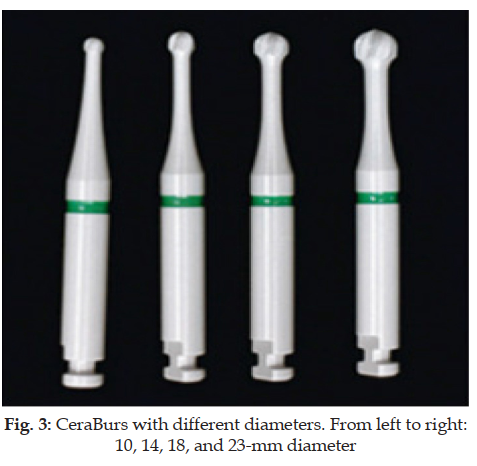
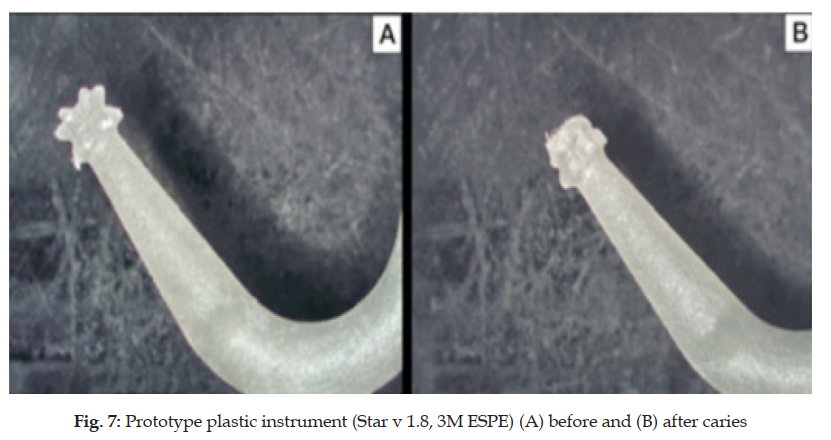
The advent of newer caries excavation technique has simplified the guidelines for cavity preparation enormously. The extent and shape of the caries lesion basically defines the design and extent of the present preparations, potentially slightly extended by bevelling the cavity margins in order to satisfy the fashionable concept of minimally invasive dentistry. New caries excavation techniques described by Ahmed AA et al., are introduced, like the utilization of plastic and ceramic burs, improved caries-disclosing dyes, enzymatic caries dissolving agents, caries-selective sono/air abrasion and laser ablation.1 They all aim to get rid of or help remove caries-infected tissue as selectively as possible, while being minimally invasive through maximum preservation of caries affected tissue. Each technique entails a selected caries-removal endpoint and produces residual dentin substrates of various natures and thus different receptiveness for adhesive procedures. New caries excavation techniques favor current situation of COVID-19 era since they are free of aerosol and infection control can be achieved.
References
- 1. Ahmed AA, Garcia-Godoy F, Kunzelmann KH. Self-limiting caries therapy with proteolytic agents. Am J Dent 2008;21:303-312.
- 2. Tyas MJ, Anusavice KJ, Frencken JE, Mount GJ. Minimal intervention dentistry: A review - FDI commission project. International Dental Journal 2000;50:1-12. 113.
- 3. Black GV. Cavity preparation. In: Black GV (ed). A work on operative dentistry. Chicago: Medico-Dental Publishing Company, 1908:105-116.
- 4. Alfano RR, Yao SS. Human teeth with and without dental caries studied by visible luminescent spectroscopy. J Dent Res 1981;60:120-122.
- 5. Yazici AR, Özgunaltay G, Dayangac B. A scanning electron microscopic study of different caries removal techniques on human dentin. Oper Dent 2002;27:360-366.
- 6. Allen KL, Salgado TL, Janal MN, Thompson V. Removing carious dentin using a polymer instrument without anesthesia versus a carbide bur with anesthesia. J Am Dent Assoc 2005;136:643-651.
- 7. Yip HK, Stevenson AG, Beeley JA. The specificity of caries detector dyes in cavity preparation. Br Dent J 1994;176:417-421.
- 8. Aoki A, Ishikawa I, Yamada T, Otsuki M, Watanabe H, Tagami J o Y, Yamamoto H. Comparison between Er:YAG laser and conventional technique for root caries treatment in vitro. J Dent Res 1998;77:1404-1414.
- 9. Armengol V, Jean A, Rohanizadeh R, Hamel H. Scanning electron microscopic analysis of diseased and healthy dental hard tissues after Er:YAG laser irradiation: In vitro study. J Endod 1999;25:543-546.
- 10. Arnold WH, Konopka S, Gaengler P. Qualitative and quantitative assessment of intratubular dentin formation in human natural carious lesions. Calcif Tiss Int 2001;69:268-273.
- 11. Bachmann L, Diebolder R, Hibst R, Zezell DM. Changes in chemical composition and collagen structure of dentine tissue after erbium laser irradiation. Spectrochim Acta A 2005;61:2634- 2639.
- 12. Banerjee A, Kidd EA, Watson TF. In vitro evaluation of five alternative methods of carious dentine excavation. Caries Res 2000;34:144-150.
- 13. Banerjee A, Kidd EA, Watson TF. Scanning electron microscopic observations of human dentine after mechanical caries excavation. J Dent 2000;28:179-186.
- 14. Banerjee A, Watson TF, Kidd EA. Dentine caries excavation: A review of current clinical techniques. Br Dent J 2000;188:476-482.
- 15. Yoshiyama M, Tay FR, Torii Y, Nishitani Y, Doi J, Itou K, Ciucchi B, Pashley DH. Resin adhesion to carious dentin. Am J Dent 2003;16:47-52.
- 16. Zheng L, Hilton JF, Habelitz S, Marshall SJ, Marshall GW. Dentin caries activity status related to hardness and elasticity. European J Oral Sci 2003;111:243-252.
- 17. Kleter GA, Damen JJM, Buijs MJ, Ten Cate JM. Modification of amino acid residues in carious dentin matrix. J Dent Res 1998;77:488-495.
- 18. Walsh LJ. The current status of laser applications in dentistry. Austr Dent J 2003;48:146-155.
- 19. Krause F, Braun A, Lotz G, Kneist S, Jepsen S, Eberhard J. Evaluation of selective caries removal in deciduous teeth by fluorescence feedback controlled Er:YAG laser in vivo. Clin Oral Invest 2008;12:209-215.
- 20. Kuboki Y, Ohgushi K, Fusayama T. Collagen biochemistry of the two layers of carious dentin. J Dent Res 1977;56:1233-1237.
Data Sharing Statement
There are no additional data available. All raw data and code are available upon request
Funding
This research received no funding.
Author Contributions
All authors contributed significantly to the work and approve its publication.
Ethics Declaration
This article does not involve any human or animal subjects, and therefore does not require ethics approval.
Acknowledgements
At the onset, I would like to express my gratitude to Dr. Krishna Priya Vellore, MDS, Professor and Head of the Department, Department of Pedodontics and Preventive Dentistry, Army College of Dental Sciences, Secunderabad, for her constant encouragement and support throughout my post graduate curriculum. I have been fortunate to have a guide who gave me the opportunity to explore and corrected me when I faltered. It has been a privilege to be a student of a teacher of your stature. I would like to acknowledge the faculty and staff of Department of Pedodontics and Preventive Dentistry, Dr. Mayuri Ganesh (Associate Professor), Dr. Saigeeta (Assistant Professor), Dr. Niharika Sowki (Assistant Professor).
Conflicts of Interest
The authors report no conflicts of interest in this work.
About this article

Cite this article
Ayesha, Krishna Priya Vellore, Mayuri Ganesh et al. Caries Excavation: Current Concepts and Techniques. Ind J Dent Educ. 2024;17(3):135-143.
Licence:
Attribution-Non-commercial 4.0 International (CC BY-NC 4.0)This license enables reusers to distribute, remix, adapt, and build upon the material in any medium or format for noncommercial purposes only, and only so long as attribution is given to the creator.
| Received | Accepted | Published |
|---|---|---|
| June 13, 2024 | August 14, 2024 | August 08, 2024 |
DOI: https://doi.org/10.21088/ijde.0974.6099.17324.4
Keywords
Minimal Invasive DentistryCaries excavation techniqueCeramic bursCariesdisclosing dyesEnzymatic caries-dissolving agentscaries-selective sono/air abrasionLaser ablationSearch for Similar Articles
Similar Articles
- One Step Apexification using PRF as Matrix and MTA Apical Barrier
- Infective Ulcers in the Oral Cavity: A Review
- Effect of COVID-19 Lockdown on Patients Undergoing Orthodontic Therapy in Distri...
- Wire Splinting: An Effective Management Approach for Lateral Luxation: A Clinica...
- Prosthodontics in Healthy Ageing and Longevity Medicine: A Critical Narrative R...
Article Level Metrics
Last UpdatedSunday 18 October 2026, 18:01:48 (IST)
3439
Accesses
23
611
00
Citations
NA
NA
NA
Download citation
Article Keywords
Keyword Highlighting
Highlight selected keywords in the article text.
Timeline
| Received | June 13, 2024 |
| Accepted | August 14, 2024 |
| Published | August 08, 2024 |
licence
Attribution-Non-commercial 4.0 International (CC BY-NC 4.0)
This license enables reusers to distribute, remix, adapt, and build upon the material in any medium or format for noncommercial purposes only, and only so long as attribution is given to the creator.