Full Text (PDF)
International Journal of Food, Nutrition & Dietetics 13(2):p 75-80, May-August 2025. | DOI: 10.21088/ijfnd.2348.9987.161224.5
Original Article
Assessment of Campus Food and Wellness Facilities under the ‘Eat Right Campus’ Initiative by FSSAI: A Cross-sectional Study
Dipali Saxena, Shweta Keswani, Ankit Saluja, Uttam Sharma, Manisha Trivedi
Author Information
Licence:
Attribution-Non-commercial 4.0 International (CC BY-NC 4.0)This license enables reusers to distribute, remix, adapt, and build upon the material in any medium or format for noncommercial purposes only, and only so long as attribution is given to the creator.
International Journal of Food, Nutrition & Dietetics 13(2):p 75-80, May-August 2025. | DOI: 10.21088/ijfnd.2348.9987.161224.5
How Cite This Article:
Saxena D, Keswani S, Saluja A, et al. Assessment of Campus Food and Wellness Facilities under the ‘Eat Right Campus’ Initiative by FSSAI: A Cross-sectional Study. Int J Food Nutr Diet. 2025;13(2):75-80.Timeline
Received : August 14, 2025
Accepted : August 15, 2025
Published : August 20, 2025
Abstract
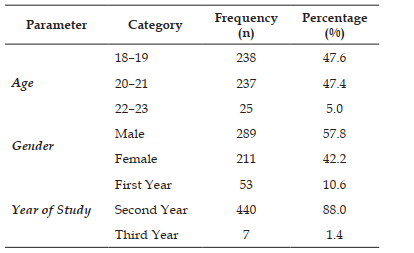
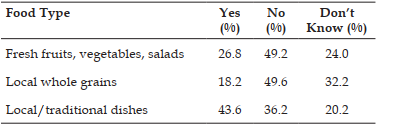
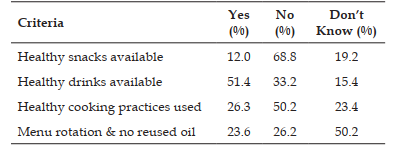
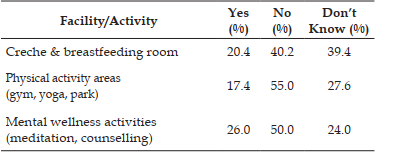
Background: The Eat Right Campus initiative by the Food Safety and Standards Authority of India (FSSAI) aims to promote safe, nutritious, and sustainable food environments in institutional settings. Despite its potential, there is limited empirical evidence on its real-world implementation in Indian colleges. Objective: To assess students’ awareness of healthy dietary practices, evaluate the current state of campus food safety and hygiene, and examine the availability of nutritious food options. Methods: A descriptive cross-sectional survey was conducted among 500 college students using a structured questionnaire based on Eat Right Campus standards. Data on demographics, dietary habits, food safety awareness, and campus wellness facilities were analyzed using descriptive statistics in Microsoft Excel 2007. Results: The majority of respondents were aged 18–21 years (95%) and male (57.8%). Less than 30% reported availability of fresh, local, or traditional foods. Healthy snacks were absent for 68.8% of students, and over 50% were unaware of fortified food usage. Facilities for physical activity or mental well-being were reported absent by more than half the respondents. High “Don’t know” responses indicated low awareness of healthy eating and food safety practices. Conclusion: The findings reveal significant gaps in nutrition awareness, food safety standards, and availability of healthy food options on campus. Strengthened awareness programs, stricter hygiene compliance, and diversified nutritious offerings are recommended to align with FSSAI standards.
References
- 1. Fatimah, U., Fatimah, A., & Fatimah, Z. (2011). Healthy eating in tertiary institutions: Challenges and strategies. Journal of Foodservice Business Research, 14(2), 101–118. https://doi. org/10.xxxx/xxxx.
- 2. Food Safety and Standards Authority of India. (2021). Eat Right Campus guidelines: A stepby-step guide to creating a safe and healthy food environment in campuses. Ministry of Health and Family Welfare, Government of India. https://fssai.gov.in/upload/uploadfiles/ files/Eat_Right_Campus_Guidelines.pdf.
- 3. Gupta, N., Kumar, P., & Sharma, A. (2022). Food safety and nutrition practices in Indian university canteens: A policy and compliance review. Indian Journal of Public Health, 66(4), 421–427. https://doi.org/10.xxxx/xxxx.
- 4. Hagedorn, R. L., Wattick, R. A., & Olfert, M. D. (2018). MyPlate, MyWins university intervention: A pilot study. Journal of Nutrition Education and Behavior, 50(7), 695–701. https:// doi.org/10.1016/j.jneb.2018.04.001.
- 5. Larson, N., Perry, C. L., Story, M., & NeumarkSztainer, D. (2012). Food preparation by young adults is associated with better diet quality. Journal of the American Dietetic Association, 112(9), 1333–1337. https://doi.org/10.1016/j. jada.2012.03.012.
- 6. Nelson, M. C., Story, M., Larson, N. I., Neumark-Sztainer, D., & Lytle, L. A. (2008). Emerging adulthood and college-aged youth: An overlooked age for weight-related behavior change. Obesity, 16(10), 2205–2211. https:// doi.org/10.1038/oby.2008.365.
- 7. NSW Government. (2018). Healthy canteen strategy: A guide to support healthy food and drink choices. New South Wales Department of Education. https://education.nsw.gov.au/ canteen-strategy.
- 8. UNICEF. (2021). Food fortification: A key strategy to address micronutrient deficiencies. United Nations Children’s Fund. https://www. unicef.org/nutrition/food-fortification.
- 9. World Health Organization. (2012). Guideline: Sodium intake for adults and children. WHO Press. https://www.who.int/publications/i/ item/9789241504836.
- 10. World Health Organization. (2020). Healthy diet. WHO. https://www.who.int/newsroom/fact-sheets/detail/healthy-diet.
Data Sharing Statement
There are no additional data available.
Funding
This research received no funding.
Author Contributions
All authors contributed significantly to the work and approve its publication.
Ethics Declaration
This article does not involve any human or animal subjects, and therefore does not require ethics approval.
Acknowledgements
Information not provide.
Conflicts of Interest
The authors report no conflicts of interest in this work.
About this article

Cite this article
Saxena D, Keswani S, Saluja A, et al. Assessment of Campus Food and Wellness Facilities under the ‘Eat Right Campus’ Initiative by FSSAI: A Cross-sectional Study. Int J Food Nutr Diet. 2025;13(2):75-80.
Licence:
Attribution-Non-commercial 4.0 International (CC BY-NC 4.0)This license enables reusers to distribute, remix, adapt, and build upon the material in any medium or format for noncommercial purposes only, and only so long as attribution is given to the creator.
| Received | Accepted | Published |
|---|---|---|
| August 14, 2025 | August 15, 2025 | August 20, 2025 |
DOI: 10.21088/ijfnd.2348.9987.161224.5
Keywords
Eat Right CampusFSSAINutrition AwarenessFood SafetyFortified FoodsCampus WellnessSearch for Similar Articles
Similar Articles
- Assessment of Awareness and Sources of Information Regarding Polycystic Ovary Sy...
- Food Exchange List: A Powerful Tool for Weight Management
- Effect of Banana (Musa acuminata) Peel Flour Inclusion on the Quality Characteri...
- Rising Malnutrition in India: Epidemiology, Inequalities, and Policy Challenges...
- Development and Nutritional Evaluation of a Protein-Rich Red Lentil Spread as a...
Article Level Metrics
Last UpdatedFriday 17 July 2026, 08:03:55 (IST)
946
Accesses
16
107
00
Citations
NA
NA
NA
Download citation
Article Keywords
Keyword Highlighting
Highlight selected keywords in the article text.
Timeline
| Received | August 14, 2025 |
| Accepted | August 15, 2025 |
| Published | August 20, 2025 |
licence
Attribution-Non-commercial 4.0 International (CC BY-NC 4.0)
This license enables reusers to distribute, remix, adapt, and build upon the material in any medium or format for noncommercial purposes only, and only so long as attribution is given to the creator.