Full Text (PDF)
Indian Journal of Emergency Medicine 12(1):p 19-22, Jan. March 2026. | DOI: https://doi.org/10.21088/ijem.2395.311X.12126.2
Original Article
Analysis of Factors Associated with In-hospital Cardiac Arrest Outcomes: Hospital Based Survey
Basava Kirana C.B., Shabbir Shekhli
Author Information
Licence:
Attribution-Non-commercial 4.0 International (CC BY-NC 4.0)This license enables reusers to distribute, remix, adapt, and build upon the material in any medium or format for noncommercial purposes only, and only so long as attribution is given to the creator.
Indian Journal of Emergency Medicine 12(1):p 19-22, Jan. March 2026. | DOI: https://doi.org/10.21088/ijem.2395.311X.12126.2
How Cite This Article:
Shekhli S, Kirana CB. Analysis of Factors Associated with in-hospital Cardiac Arrest Outcomes: Hospital-Based Survey. Indian J Emerg Med. 2026;12(1):19-22.Timeline
Received : September 15, 2025
Accepted : October 22, 2025
Published : March 20, 2026
Abstract
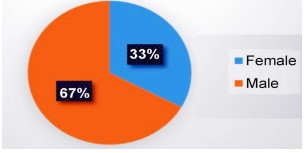
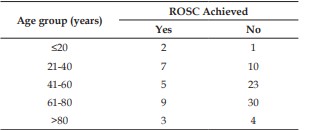
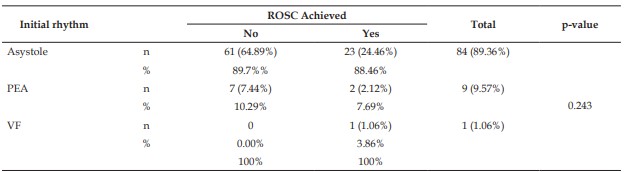
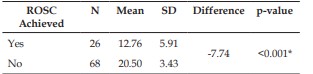
Background: Cardio-pulmonary resuscitation (CPR) is a critical life-saving intervention in cases of sudden cardiac arrest or respiratory failure. Despite its widespread use, survival rates after cardiac arrest vary significantly across different populations, largely influenced by factors such as healthcare infrastructure, resource availability, and training, especially when comparing developed and developing countries. Objectives: The aim of our study is to assess the effect of duration of cardiopulmonary resuscitation (CPR) and initial cardiac rhythm in predicting the return of spontaneous circulation (ROSC) in adults of in-hospital cardiac arrest. Methods: We conducted retrospective clinical record audit of 94 adult patients (age ≥18 years) between April 2025 and May 2025 who had cardiac arrest and received CPR in our hospital. Appropriate statistical analysis was conducted with SPSS software version 27 and p-value set significant if less than 0.05. Results: The mean age of patients was 58 ±10 years, male accounted 67.74%. Cardiac arrest is most common in elderly population and outcome is poor. Most common initial cardiac arrest rhythm was asystole (88.29%). We observed that there was no significant association between initial cardiac arrest rhythm and survival outcome (p=0.243). We also observed significant association between shorter duration of CPR in survival group (ROSC) of 21 to 40 years age group. Conclusion: In this study, we observed that there is an association between duration of CPR and return of spontaneous circulation. These findings highlight the importance of prompt and effective resuscitation efforts to optimize survival rates during cardiac arrest management.
References
- 1. Marijon E., Narayanan K., Smith K., Barra S, Basso C., Blom M.T., Crotti L., d’Avila A., Deo R, Dumas F., Dzudie A. The Lancet Commission to reduce the global burden of sudden cardiac death: a call for multidisciplinary action. The Lancet. 2023 Sep 9; 402(10405): 883-936.
- 2. Martinez B.V., Chimata R., Dedania N., Khosla S., Mayer S., Murthy V., Yeldandi V. The acceptability and impact of a pilot community hands-only cardiopulmonary resuscitation training program in India. Circulation. 2018 Nov 6; 138 (Suppl_2): A227-.
- 3. Panchal A.R., Bartos J.A., Cabañas J.G., et al. 2020 American Heart Association Guidelines for Cardiopulmonary Resuscitation and Emergency Cardiovascular Care. Circulation. 2020; 142(16_suppl_2): S366–S468.
- 4. Meaney P.A., Bobrow B.J., Mancini M.E., et al. Cardiopulmonary resuscitation quality: improving cardiac resuscitation outcomes both inside and outside the hospital. Circulation. 2013; 128(4): 417–35.
- 5. Roshana S., Kh B., Rm P., Mw M. Basic life support: knowledge and attitude of medical/ paramedical professionals. World J Emerg Med. 2012; 3(2): 141–5.
- 7. Pannu A., Kumar A., Tiwari A., et al. Epidemiology of in-hospital and out-ofhospital cardiac arrest in India: An analysis from the Indian Resuscitation Outcomes Consortium Registry. Indian J Crit Care Med. 2023; 27(1): 32–40.
- 8. Bhatnagar S., et al. Outcomes of in-hospital cardiac arrest in a tertiary care center in India. Indian J Crit Care Med. 2020; 24(8): 663–9.
- 9. Andersen L.W., Berg K.M., Saindon B.Z.,
- 10. et al. Time to epinephrine and survival after in-hospital cardiac arrest. JAMA. 2015; 314(8): 802–10.
- 11. Grunau B., Reynolds J.C., Scheuermeyer F.X., et al. Comparing chest compression fraction and outcomes between resuscitations with and without advanced airway management. Resuscitation. 2018; 122: 118–24.
- 12. Benjamin E.J., et al. Global burden of sudden cardiac death. Circ Res. 2019; 125(4): 517–39. 13. Wibrandt I., Norsted K., Schmidt H., Schierbeck J. Predictors for outcome among cardiac arrest patients: the importance of initial cardiac arrest rhythm versus time to return of spontaneous circulation, a retrospective cohort study. BMC emergency medicine. 2015 Feb 4; 15(1): 3.
- 14. Cheema M.A., Ullah W., Abdullah H.M., Haq S., Ahmad A., Balaratna A. Duration of inhospital cardiopulmonary resuscitation and its effect on survival. Indian heart journal. 2019 Jul 1; 71(4): 314-9.
Data Sharing Statement
There are no additional data available. All raw data and code are available upon request.
Funding
This research received no funding.
Author Contributions
All authors contributed significantly to the work and approve its publication.
Ethics Declaration
This article does not involve any human or animal subjects, and therefore does not require ethics approval.
Acknowledgements
We would like to express our gratitude to the patients, their families, and all those who have contributed to this study.
Conflicts of Interest
The authors report no conflicts of interest in this work.
About this article

Cite this article
Shekhli S, Kirana CB. Analysis of Factors Associated with in-hospital Cardiac Arrest Outcomes: Hospital-Based Survey. Indian J Emerg Med. 2026;12(1):19-22.
Licence:
Attribution-Non-commercial 4.0 International (CC BY-NC 4.0)This license enables reusers to distribute, remix, adapt, and build upon the material in any medium or format for noncommercial purposes only, and only so long as attribution is given to the creator.
| Received | Accepted | Published |
|---|---|---|
| September 15, 2025 | October 22, 2025 | March 20, 2026 |
DOI: https://doi.org/10.21088/ijem.2395.311X.12126.2
Keywords
In-hospital cardiac arrestCardiac arrest outcomesCPRDefibrillationHospital protocolsSurvival ratesSearch for Similar Articles
Similar Articles
- Inherited Thrombophilia as a Cause of Post-Partum Massive Pulmonary Embolism: A...
- ATAK Complex Presenting as Hypertensive Pulmonary Edema Following Meropenem-Indu...
- When Infection Triggers Thrombosis: A Case of Extensive DVT in a Young Male
- Case Report: Diagnostic Dilemma in 69-Year-Old Male with Radiating Right Shoulde...
- The Silent Gallbladder, The Slowing Heart: Cope’s Sign in Acute Calculous Cholec...
Article Level Metrics
Last UpdatedFriday 16 October 2026, 05:41:18 (IST)
5977
Accesses
37
1015
00
Citations
NA
NA
NA
Download citation
Article Keywords
Keyword Highlighting
Highlight selected keywords in the article text.
Timeline
| Received | September 15, 2025 |
| Accepted | October 22, 2025 |
| Published | March 20, 2026 |
licence
Attribution-Non-commercial 4.0 International (CC BY-NC 4.0)
This license enables reusers to distribute, remix, adapt, and build upon the material in any medium or format for noncommercial purposes only, and only so long as attribution is given to the creator.