Full Text (PDF)
Indian Journal of Emergency Medicine 8(3):p 81-85, july-september 2022. | DOI: https://doi.org/10.21088/ijem.2395.311X.8322.8
Case Report
A Rare Disorder: Hypokalemia Induced Paralysis
Aisvarya Kapoor, Pallavi Verma, Kishalay Datta, Uzma Khanam
Author Information
Licence:
Attribution-Non-commercial 4.0 International (CC BY-NC 4.0)This license enables reusers to distribute, remix, adapt, and build upon the material in any medium or format for noncommercial purposes only, and only so long as attribution is given to the creator.
Indian Journal of Emergency Medicine 8(3):p 81-85, july-september 2022. | DOI: https://doi.org/10.21088/ijem.2395.311X.8322.8
How Cite This Article:
Pallavi Verma, Aisvarya Kapoor, Kishalay Datta, et. al./A Rare Disorder: Hypokalemia Induced Paralysis/Indian J Emerg Med 2022;8(3):81–85.Timeline
Received : March 11, 2022
Accepted : April 14, 2022
Published : September 25, 2022
Abstract
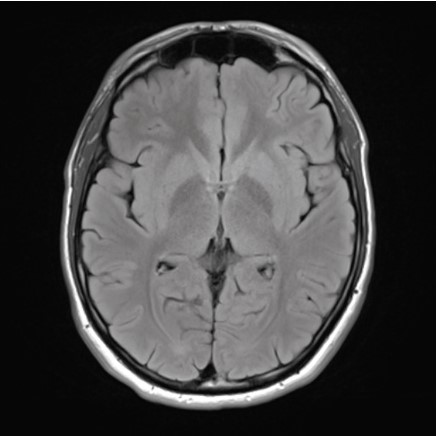
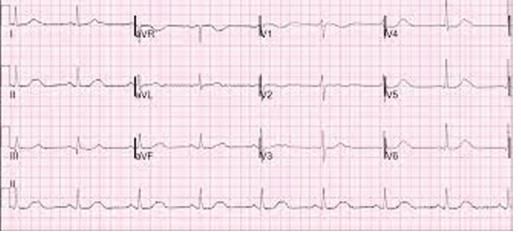
Hypokalemic (Induced) Periodic Paralysis is a rare group of disorders that can cause sudden onset of flaccid paralysis. Here we present a case of 41 year old female who presented to the ED complaining of severe flaccid paralysis in both lower & upper limbs since morning. Initially, she was treated as a stroke alert patient and had head scans which showed no acute pathologic changes. Laboratory evaluation revealed a markedly low potassium level. The patient's paralysis resolved after potassium correction and she was discharged with no neurologic deficits. Although rare, Periodic Paralysis must be differentiated from other causes of weakness and paralysis so that the proper treatment can be initiated quickly.
References
- 1. Fontaine B, Vale-Santos J, Jurkat-Rott K, Reboul J, Plassart E, Rime CS, Elbaz A, Heine R, Guimaraes J, Weissenbach J, et al. Mapping of the hypokalaemic periodic paralysis (HypoPP) locus to chromosome 1q31-32 in three European families. Nat Genet. 1994;6:267–272. doi: 10.1038/ng0394-267. [PubMed] [CrossRef] [Google Scholar]
- 2. Jurkat-Rott K, Lerche H, Lehmann-Horn F. Skeletal muscle channelopathies. J Neurol. 2002;249:1493–1502. doi: 10.1007/s00415-002- 0871-5. [PubMed] [CrossRef] [Google Scholar]
- 3. Lin SH, Lin YF, Chen DT, Chu P, Hsu CW, Halperin ML. Laboratory tests to determine the cause of hypokalemia and paralysis. Arch Intern Med. 2004;164:1561–1566. doi: 10.1001/archinte.164.14.1561. [PubMed] [CrossRef] [Google Scholar]
- 4. Kelley DE, Gharib H, Kennedy FP, Duda RJ, Jr, McManis PG. Thyrotoxic periodic paralysis. Report of 10 cases and review of electromyographic findings. Arch Intern Med. 1989;149:2597–2600. doi: 10.1001/archinte.149.11.2597. [PubMed] [CrossRef] [Google Scholar]
- 5. Wang W, Jiang L, Ye L, Zhu N, Su T, Guan L, Li X, Ning G. Mutation screening in Chinese hypokalemic periodic paralysis patients. Mol Genet Metab. 2006;87:359–363. doi: 10.1016/j. ymgme.2005.10.020. [PubMed] [CrossRef] [Google Scholar]
- 6. Okinaka S, Shizume K, Iino S, Watanabe A, Irie M, Noguchi A, Kuma S, Kuma K, Ito T. The association of periodic paralysis and hyperthyroidism in Japan. J Clin Endocrinol Metab. 1957;17:1454–1459. [PubMed] [Google Scholar]
- 7. Shizume K, Shishiba Y, Kuma K, Noguchi S, Tajiri J, Ito K, Noh JY. Comparison of the incidence of association of periodic paralysis and hyperthyroidism in Japan in 1957 and 1991. Endocrinol Jpn. 1992;39:315–318. [PubMed] [Google Scholar]
- 8. Saeian K, Heckerling PS. Thyrotoxic periodic paralysis in a hispanic man. Arch Intern Med. 1988;148:708. doi: 10.1001/archinte.148.3.708. [PubMed] [CrossRef] [Google Scholar]
- 9. Kung AW. Clinical review: Thyrotoxic periodic paralysis: a diagnostic challenge. J Clin Endocrinol Metab. 2006;91:2490–2495. doi: 10.1210/jc.2006-0356. [PubMed] CrossRef] [Google Scholar]
- 10. Tassone H, Moulin A, Henderson SO. The pitfalls of potassium replacement in thyrotoxic periodic paralysis: a case report and review of the literature. J Emerg Med. 2004;26:157–161. doi: 10.1016/j.jemermed.2003.05.004. [PubMed] [CrossRef] [Google Scholar]
- 11. Ogawa T, Kamikubo K. Hypokalemic periodic paralysis associated with hypophosphatemia in a patient with hyperinsulinemia. Am J Med Sci. 1999;318:69–72. doi: 10.1097/00000441-199907000-00012. [PubMed] [CrossRef] [Google Scholar]
- 12. Cannon SC. An expanding view for the molecular basis of familial periodic paralysis. Neuromuscul Disord. 2002;12:533–543. doi: 10.1016/S0960-8966(02)00007-X. [PubMed] [CrossRef] [Google Scholar]
Data Sharing Statement
There are no additional data available. All raw data and code are available upon request.
Funding
This research received no funding.
Author Contributions
All authors contributed significantly to the work and approve its publication.
Ethics Declaration
This article does not involve any human or animal subjects, and therefore does not require ethics approval.
Acknowledgements
We would like to express our gratitude to the patients, their families, and all those who have contributed to this study.
Conflicts of Interest
No conflicts of interest in this work.
About this article

Cite this article
Pallavi Verma, Aisvarya Kapoor, Kishalay Datta, et. al./A Rare Disorder: Hypokalemia Induced Paralysis/Indian J Emerg Med 2022;8(3):81–85.
Licence:
Attribution-Non-commercial 4.0 International (CC BY-NC 4.0)This license enables reusers to distribute, remix, adapt, and build upon the material in any medium or format for noncommercial purposes only, and only so long as attribution is given to the creator.
| Received | Accepted | Published |
|---|---|---|
| March 11, 2022 | April 14, 2022 | September 25, 2022 |
DOI: https://doi.org/10.21088/ijem.2395.311X.8322.8
Keywords
Periodic paralysisHypokalemiaHypokalemic periodic paralysisFlaccid paralysisStrokeMuscle weaknessSearch for Similar Articles
Similar Articles
- Covid 19 Vaccine: Associated Henoch Schonlein Purpura in Young Adult Female
- A Rare Case of Intolerance to Medically Approved Dose of Sildenafil Citrate in a...
- Acute Mesenteric Ischemia: An Unusual Cause of Hematemesis in a 48 Year Old Man
- Brachial Artery Pseudoaneurysm Related Causally to Iatrogenic Coagulopathy in a...
- Combination Therapy for Acute Management of Yellow Oleander Poisoning: A Case Re...
Article Level Metrics
Last UpdatedTuesday 07 July 2026, 11:36:51 (IST)
2530
Accesses
1
890
00
Citations
NA
NA
NA
Download citation
Article Keywords
Keyword Highlighting
Highlight selected keywords in the article text.
Timeline
| Received | March 11, 2022 |
| Accepted | April 14, 2022 |
| Published | September 25, 2022 |
licence
Attribution-Non-commercial 4.0 International (CC BY-NC 4.0)
This license enables reusers to distribute, remix, adapt, and build upon the material in any medium or format for noncommercial purposes only, and only so long as attribution is given to the creator.