Full Text (PDF)
International Journal of Neurology and Neurosurgery 16 (3-4 ):p 43-50, July-December 2024. | DOI: https://doi.org/10.21088/ijnns.0975.0223.163424.1
Original Article
Thecoperitoneal Shunt: Indications and Complications
S. Devanand Senthil Kumar, S. Dhanasekaran
Author Information
Licence:
Attribution-Non-commercial 4.0 International (CC BY-NC 4.0)This license enables reusers to distribute, remix, adapt, and build upon the material in any medium or format for noncommercial purposes only, and only so long as attribution is given to the creator.
International Journal of Neurology and Neurosurgery 16 (3-4 ):p 43-50, July-December 2024. | DOI: https://doi.org/10.21088/ijnns.0975.0223.163424.1
How Cite This Article:
S. Dhanasekaran, S. Devanand Senthil Kumar, Thecoperitoneal Shunt: Indications and Complications. International Journal of Neurology and Neurosurgery. 2024;16(3-4):43-50.Timeline
Received : October 21, 2024
Accepted : November 15, 2024
Published : December 30, 2024
Abstract
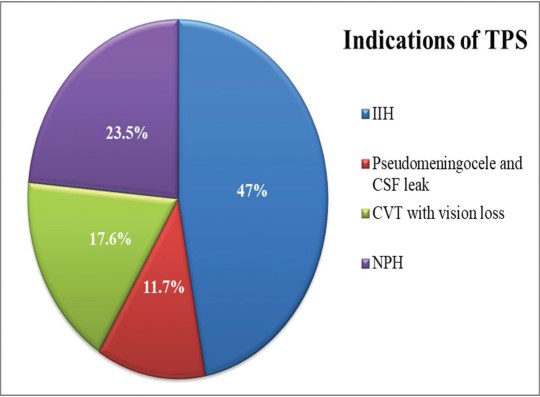
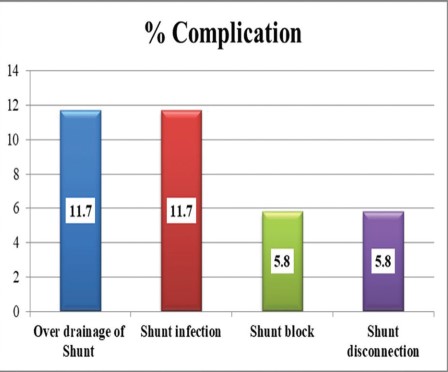
Background: Thecoperitoneal shunt (TPS) is a method of diverting cerebrospinal fluid (CSF), similar to the ventriculoperitoneal shunt (VPS). While VPS is a common and widely used procedure for hydrocephalus, TPS is less frequently practiced due to limited data on its indications and complications. Patients and Methods: In this study, we retrospectively reviewed our experience with TPS and its indications and complications, in 17 patients operated on from January 2021 to December 2023, with at least six months of follow-up. We analyzed the patients’ clinical data, indications, imaging studies, and complications. Results: Seventeen patients underwent TPS in our institute. The common indications were idiopathic intracranial hypertension (IIH), normal pressure hydrocephalus (NPH), cerebral venous thrombosis (CVT) with vision loss, pseudomeningocele, and CSF leak from the surgical site. The mean follow-up period was 1.2 years. Common complications included shunt overdrainage with subdural collection, shunt infection, shunt blockage, and shunt disconnection. A literature review revealed various other indications and complications. Conclusion: TPS is an effective and favorable treatment modality for various conditions and demonstrates good clinical outcomes. The encountered complications can be managed effectively and may be reduced with additional precautions and strategies.
References
- 1. Foo NP, Tun YC, Chang CC, Lin HL, Cheng CH, Chuang HY. Clinical Outcome and Safety of Lumboperitoneal Shunt in the Treatment of Non-Obstructive Hydrocephalus. Clin Interv Aging. 2023;18:477-483 https://doi.org/10.2147/CIA.S401116
- 2. Aoki N. Lumboperitoneal shunt: clinical applications, complications, and comparison with ventriculoperitoneal shunt. Neurosurgery. 1990 Jun;26(6):998-1003; discussion 1003-4. PMID: 2362678.
- 3. Phalak, Manoj & Agrawal, Deepak &Dawar, Pankaj &Kothiwala, Anil & Singh, Pankaj & Sharma, Bhawani. (2013). Theco-peritoneal shunt for posttraumatic hydrocephalus – A valuable adjunct?. The Indian Journal of Neurotrauma. 10. 10.1016/j. ijnt.2013.10.005.
- 4. Le H, Yamini B, Frim DM. Lumboperitoneal shunting as a treatment for slit ventricle syndrome. PediatrNeurosurg. 2002 Apr;36(4):178-82. doi: 10.1159/000056054. PMID: 12006752.
- 5. Vassilouthis J, Papandreou A, Anagnostaras S Thecoperitoneal shunt for post-traumatic syringomyelia. Journal of Neurology, Neurosurgery & Psychiatry 1994;57:755-756.
- 6. Yadav YR. Cranio-cerebral erosion (growing skull fracture): Management by lumber-peritoneal shunt: Case report Clin Pract Rev. 2005;6:224–9
- 7. Robertson WC Jr, Gomez MR. External hydrocephalus. Early finding in congenital communicating hydrocephalus. Arch Neurol. 1978 Aug;35(8):541-4. doi: 10.1001/ archneur.1978.00500320061014. PMID: 666616.
- 8. Yang TH, Chang CS, Sung WW, Liu JT. Lumboperitoneal Shunt: A New Modified Surgical Technique and a Comparison of the Complications with Ventriculoperitoneal Shunt in a Single Center. Medicina (Kaunas). 2019 Sep 26;55(10):643. doi: 10.3390/medicina55100643. PMID: 31561485; PMCID: PMC6843463.
- 9. Alawamry, A., Youssef, E.M., Morsy, A.A. et al. Laparoscopic-assisted intraperitoneal placement of lumboperitoneal shunt in patients with idiopathic intracranial hypertension. Egypt J Neurosurg 38, 4 (2023). https://doi.org/10.1186/s41984-022-00184-8
- 10. Arumalla, Kirit& Mohammed, Naseer & Bhat, Dhananjaya & Shukla, Dhaval & Bhagavatula, Indira. (2023). Thecoperitoneal Shunts—Our 20 Years Experience. Indian Journal of Neurosurgery. 12. 10.1055/s-0042-1758777.
- 11. Reddy TA, Seshagiri DV, Reddy HK, Patwardhan AA, Joshi TH, Shukla D, et al. Surgical Management of Vision Loss in Cerebral Venous Thrombosis: Case Series from a Tertiary Care Stroke Center. Ann Indian AcadNeurol 2023;26:733–41
- 12. Aaron, Sanjith; Arthur, Anupriya1. Visual Impairment in Cerebral Venous Thrombosis: The Various Shades of Gray. Annals of Indian Academy of Neurology 26(5):p 629-630, Sep–Oct 2023. | DOI: 10.4103/aian.aian_449_23
- 13. Ketan Yerneni, Constantine L. Karras, Collin J. Larkin, Hannah Weiss, Benjamin Hopkins, Kartik Kesavabhotla, Matthew B. Potts, Matthew C. Tate, Orin Bloch, Lumboperitoneal shunts for the treatment of idiopathic normal pressure hydrocephalus,Journal of Clinical Neuroscience,Volume 86,2021,Pages 1-5,ISSN 0967- 5868, https://doi.org/10.1016/j.jocn.2020.12.031.
- 14. Lumboperitoneal shunt surgery for idiopathic normal pressure hydrocephalus (SINPHONI-2): an open-label randomised trial. Kazui, Hiroaki et al. The Lancet Neurology, Volume 14, Issue 6, 585 – 594
- 15. Aoki N. Lumboperitoneal shunt for the treatment of postoperative persistent collection of subcutaneous cerebrospinal fluid (pseudomeningocoele). Acta Neurochir (Wien). 1989;98(1-2):32-4. doi: 10.1007/ BF01407173. PMID: 2741733.
- 16. Kitchen N, Bradford R, Platts A. Occult spinal pseudomeningocele following a trivial injury successfully treated with a lumboperitoneal shunt: a case report. Surg Neurol. 1992 Jul;38(1):46-9. doi: 10.1016/0090-3019(92)90211-5. PMID: 1615374.
- 17. Kiran NA, Thakar S, Mohan D, Aryan S, Rao AS, Hegde AS. Subgaleo-peritoneal shunt: An effective and safer alternative to lumboperitoneal shunt in the management of persistent or recurrent iatrogenic cranial pseudomeningoceles. Neurol India. 2013 Jan-Feb;61(1):65-8. doi: 10.4103/0028- 3886.108014. PMID: 23466843.
- 18. Nadkarni, T. D., Rekate, H. L., & Wallace, D. (2008). Concurrent use of a lumboperitoneal shunt with programmable valve and ventricular access device in the treatment of pseudotumor cerebri: review of 40 cases. Journal of Neurosurgery: Pediatrics PED, 2(1), 19-24. https://doi.org/10.3171/ PED/2008/2/7/019
- 19. Matsubara T, Ishikawa E, Hirata K, Matsuda M, Akutsu H, Masumoto T, Zaboronok A, Matsumura A. A new mechanism of cerebrospinal fluid leakage after lumboperitoneal shunt: a theory of shunt side hole--case report. Neurol Med Chir (Tokyo). 2014;54(7):572-7. doi: 10.2176/nmc.cr2013- 0067. Epub 2013 Dec 5. PMID: 24305015; PMCID: PMC4533463.
- 20. Ibrahim A. Alhalal, Hashem T. Al-Salman, Abdulrahman H. Al Anazi. Bilateral sixth cranial nerve palsy following lumboperitoneal shunt. Neurosciences Journal Jul 2022, 27 (3) 187-190; DOI: 10.17712/nsj.2022.3.20210140
- 21. Alqroom R, Abu Nowar H, Firas S, Amer AS, Wesam K (2016) Thecoperitoneal Shunt ‘Cast Away’. J Neurol Stroke 5(2): 00172. DOI: DOI: 10.15406/jnsk.2016.05.00172
- 22. Elshirbiny, M.F., Badr, H., ahmed, A. et al. Migration complications of lumboperitoneal shunts. Egypt J Neurosurg 37, 36 (2022). https://doi.org/10.1186/ s41984-022-00178-6
- 23. Dembla, Saurabh R.. Migration of a Thecoperitoneal Shunt into the Bladder with Calculus Formation. Neurology India 70(5):p 2281-2282, Sep–Oct 2022. | DOI: 10.4103/0028-3886.359221
- 24. Yadav YR, Pande S, Raina VK, Singh M. Lumboperitoneal shunts: review of 409 cases. Neurol India 2004;52(02):188–190
- 25. Tanaka T, Goto H, Momozaki N, Honda E. Incidence of radiculopathy following lumboperitoneal shunt placement without fluoroscopy for normal pressure hydrocephalus. SurgNeurol Int. 2022 Sep 23;13:437. doi: 10.25259/SNI_791_2022. PMID: 36324979; PMCID: PMC9610451.
- 26. Tanaka T, Goto H, Momozaki N, Honda E. Creating of “fascial sheath” around subcutaneous lumboperitoneal shunt catheters largely prevents postoperative subcutaneous shunt catheter migration. SurgNeurol Int. 2022 Nov 11;13:528. doi: 10.25259/SNI_978_2022. PMID: 36447847; PMCID: PMC9699832.
- 27. McMaster M, Carey R. The lumbar theco-peritoneal shunt syndrome and its surgical management. J Bone Joint Surg Br. 1985;67-B(2):198-203. doi:10.1302/0301-620X.67B2.3980525
- 28. A late and extreme complication of lumboperitoneal shunt. Vural, Murat et al. The Spine Journal, Volume 15, Issue 5, e7 - e12
- 29. Johnston I, Jacobson E, Besser M. The acquired chiari malformation and syringomyelia following spinal CSF drainage: A study of incidence and management. Acta Neurochir (Wien) 1998;140:417–27
- 30. Hentati A, Badri M, Bahri K, Zammel I. Acquired Chiari I malformation due to lumboperitoneal shunt: A case report and review of literature. SurgNeurol Int. 2019 May 10;10:78. doi: 10.25259/SNI-234-2019. PMID: 31528416; PMCID: PMC6744799.
- 31. Chumas PD, Armstrong DC, Drake JM, et al. Tonsillar herniation: the rule rather than the exception after lumboperitoneal shunting in the pediatric population. J Neurosurg 1993;78(04):568– 573
- 32. Payner TD, Prenger E, Berger TS, Crone KR. Acquired Chiari malformations: incidence, diagnosis, and management. Neurosurgery 1994;34(03):429–434, discussion 434
- 33. Duthel R, Nuti C, Motuo-Fotso MJ, Beauchesne P, Brunon J. Complications des dérivationslombopéritonéales. Etude rétrospectived’unesérie de 195 patients (214 interventions) [Complications of lumboperitoneal shunts. A retrospective study of a series of 195 patients (214 procedures)]. Neurochirurgie. 1996;42(2):83-9; discussion 89-90. French. PMID: 8952901.
Data Sharing Statement
There are no additional data available. All raw data and code are available upon request.
Funding
This research received no funding.
Author Contributions
All authors contributed significantly to the work and approve its publication.
Ethics Declaration
This article does not involve any human or animal subjects, and therefore does not require ethics approval.
Acknowledgements
We would like to express our gratitude to the patients, their families, and all those who have contributed to this study.
Conflicts of Interest
No conflicts of interest in this work.
About this article

Cite this article
S. Dhanasekaran, S. Devanand Senthil Kumar, Thecoperitoneal Shunt: Indications and Complications. International Journal of Neurology and Neurosurgery. 2024;16(3-4):43-50.
Licence:
Attribution-Non-commercial 4.0 International (CC BY-NC 4.0)This license enables reusers to distribute, remix, adapt, and build upon the material in any medium or format for noncommercial purposes only, and only so long as attribution is given to the creator.
| Received | Accepted | Published |
|---|---|---|
| October 21, 2024 | November 15, 2024 | December 30, 2024 |
DOI: https://doi.org/10.21088/ijnns.0975.0223.163424.1
Keywords
Thecoperitoneal shuntLumboperitoneal shuntVentriculoperitoneal shuntidiopathic intracranial hypertensionnormal pressure hydrocephaluscerebral venous thrombosispseudomeningoceleCSF leakSearch for Similar Articles
Similar Articles
- Young Female Developed Cervical Hematoma While Weight Lifting
- Role of Bone: Abrasion in Wound Bed Preparation in Pediatric Scalp Electrical Bu...
- A Case Report of Rare Syndrome: Fahr’s Syndrome
- Is Resection of Disc Necessary in Surgery for Spinal Degeneration?
- Cerebral Infarction in Scalp Electrical Burns
Article Level Metrics
Last UpdatedMonday 23 November 2026, 00:42:03 (IST)
3630
Accesses
7
424
00
Citations
NA
NA
NA
Download citation
Article Keywords
Keyword Highlighting
Highlight selected keywords in the article text.
Timeline
| Received | October 21, 2024 |
| Accepted | November 15, 2024 |
| Published | December 30, 2024 |
licence
Attribution-Non-commercial 4.0 International (CC BY-NC 4.0)
This license enables reusers to distribute, remix, adapt, and build upon the material in any medium or format for noncommercial purposes only, and only so long as attribution is given to the creator.