Full Text (PDF)
Journal of Emergency and Trauma Nursing 6(2):p 49-59, July-December 2025. | DOI: NA
Original Article
Planned Teaching Strategy on Knowledge Regarding Prevention of Home and Miscellaneous Accidents among Under-five Children
Manjunath Jadhav, Tejesh Patil, Rohit Rathod, Ramesh Sollapuri
Author Information
Licence:
Attribution-Non-commercial 4.0 International (CC BY-NC 4.0)This license enables reusers to distribute, remix, adapt, and build upon the material in any medium or format for noncommercial purposes only, and only so long as attribution is given to the creator.
Journal of Emergency and Trauma Nursing 6(2):p 49-59, July-December 2025. | DOI: NA
How Cite This Article:
Jadhav M, Patil T, Rathod R, et al. Planned teaching strategy on knowledge regarding prevention of home and miscellaneous accidents among under-five children. J Emerg Trauma Nurs. 2025;6(2):49-59.Timeline
Received : October 29, 2025
Accepted : December 05, 2025
Published : December 31, 2025
Abstract
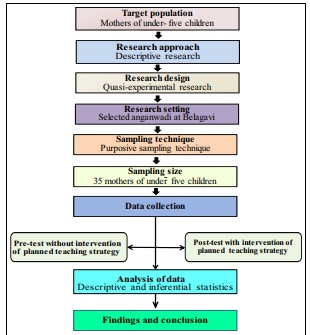
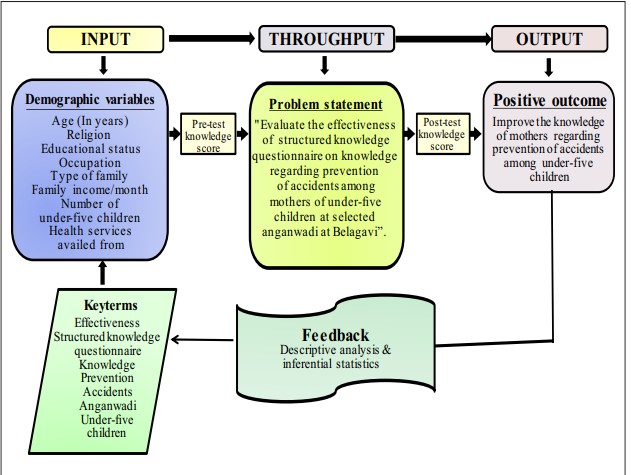
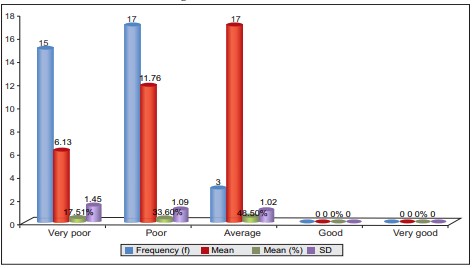
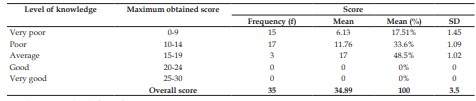
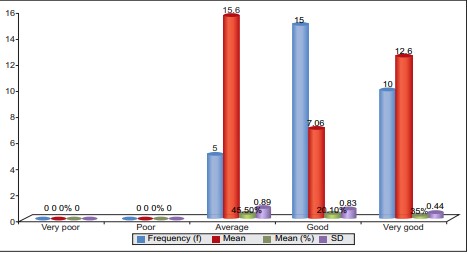
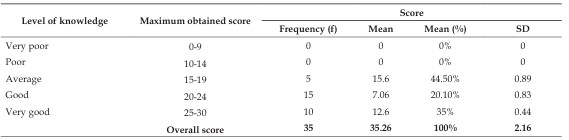
Background: Home & miscellaneous accidents are the main cause of disabilities and death among under-five children. Most of the times, children survive accidents with physical or mental damage that curtails their activities in the long term. The most commonly reported accidental injuries include head injuries, open wounds, and poisoning. Home accidents are an important public health problem worldwide among under-five children lead to disability in early years of life affecting their opportunities to lead a healthy life. Though there are many factors responsible for injury at home, Mothers knowledge and the environment plays an important role. The current research sought to evaluate the impact of a planned teaching strategy on the understanding of child safety and the prevention of home accidents among mothers with children under the age of five. A quantitative methodology utilizing a quasi-experimental pre-test & post-test control group design was adopted. Sixty mothers were chosen through convenience sampling from two anganwadi centres located in the Belagavi. The experimental group consisted of thirty mothers, while the control group also comprised thirty mothers. Pre-tests were administered to both groups utilizing a self-structured questionnaire. Aims: To evaluate the knowledge regarding prevention of accidents among mothers of under-five children, to evaluate the effectiveness of planned teaching strategies regarding prevention of accidents among mothers of under-five children, and to find out the association between post-test knowledge score regarding prevention of accidents among mothers of under-five children with selected socio demographic variables. Materials and Methods: The methodology employed for this study as descriptive in nature. For evaluating the knowledge the investigator employed “Planned Teaching Strategy”. The number of subjects were 35 mothers of under-five children concerned to anganwadi. Sampling has been done by using purposive sampling technique. Results: Distribution of Mean, Mean percentage, and SD of pre-test knowledge score of mothers of under-five children regarding prevention of accidents, reveals that highest mean score 17+1.02 which is 48.5% of mothers perceived average score, more or less similar mean score is 11.76+1.09 which is 33.6% of mothers perceived poor score, and the lowest mean score is 6.13+1.45 which is 17.51% of mothers perceived very poor score. distribution of Mean, Mean percentage, and SD of post-test knowledge score of mothers of under-five children regarding prevention of accidents, reveals that highest mean score 15.6+0.89 which is 44.50% of mothers perceived average score, more or less similar mean score is 7.06+0.83 which is 20.10% of mothers perceived good score, and more or less similar mean score is 12.6+0.44 which is 35% of mothers perceived very good score.
References
- 1. Brahaman S, Chhetri S, Banik T D, Adhikari S, Yadav. Knowledge regarding Prevention of Home Accidents among mothers of under-five children in Paediatric Department, Bangalore. RGUHS Journal of Nursing Sciences. 2020; 10(2).
- 2. Pakkirisamy U, Priya V. Planned Teaching Programme on Knowledge regarding Prevention of Accidents in Under-five Children among Mothers in selected villages, Gwalior, Madhya Pradesh.
- 3. Kumari G V. Effectiveness of Structured Teaching Programme Regarding Nature and Prevention of Accidents Among Mothers’ of Toddlers in a Selected Area of Raichur (Doctoral dissertation, Rajiv Gandhi University of Health Sciences).
- 4. El-Sabely A, Yassin A I, Zaher S A. Mother’s education and her knowledge about home accident prevention among preschool children in rural area in Sharkia Governorate. IOSR Journal of Nursing and Health Science. 2014; 3(1):32-40.
- 5. V Priya, U Pakkirisamy. Planned Teaching Programme on Knowledge regarding Prevention of Accidents in Under-five Children among Mothers in selected villages, Gwalior, Madhya Pradesh.
- 6. Kadam S. A Study to Assess the Effectiveness of Structured Teaching Programme on Knowledge Regarding Child Safety and Prevention of Home Accidents Among
- 7. Kumari S. A Study to Assess the Effectiveness of Structured Teaching Programme on Knowledge of Mothers Having Under Five Children Regarding Child Safety at Rural Area of Bangalore (Master›s thesis, Rajiv Gandhi University of Health Sciences (India)).
- 8. Debnath M, Reang T. A study to assess the knowledge of rural mothers regarding common domestic childhood injuries and home-safety measures adopted by them in west district of Tripura, India. Journal Evol Medical Dental Science. 2014 May 19; 3(20):5522-8.
- 9. Brahaman S, Chhetri S, Banik TD, HA V, Adhikari S, Yadav P, PV S. Knowledge regarding Prevention of Home Accidents among mothers of under five children in Pediatric Department, Bangalore. RGUHS Journal of Nursing Sciences. 2020; 10(2).
- 10. Kadam S. A Study to Assess the Effectiveness of Structured Teaching Programme on Knowledge Regarding Child Safety and Prevention of Home Accidents Among Mothers of Toddlers in Selected Anganwadies at Hassan, Karnataka.
- 11. P Nikhil, K Amitkumar, R Patel, H Parmar. A Study to Evaluate the Effectiveness of Planned Teaching Programme on Knowledge in relation to Prevention of Home Accident among Mothers of under-five Years Children in selected Urban Area of Waghodia Taluka,Vadodara. VOL. 11 NO. 22S (2025).
- 12. Roy S, Anantharaman P. International Journal of Trend in Scientific Research and Development (IJTSRD). Memory. 2018:1.
- 13. Bavana B, Mallela R G, Surekha K, Sujatha U. A Study to Assess the Effectiveness of Structured Teaching Programme on First Aid Management of Minor Abrasions among Elementary School Children at Tirupati. International Journal of Advances in Nursing Management. 2015; 3(3):225-30.
Data Sharing Statement
There are no additional data available
Funding
This research received no funding
Author Contributions
All authors contributed significantly to the work and approve its publication.
Ethics Declaration
This article does not involve any human or animal subjects, and therefore does not require ethics approval
Acknowledgements
Information Not Provided
Conflicts of Interest
No conflicts of interest in this work
About this article

Cite this article
Jadhav M, Patil T, Rathod R, et al. Planned teaching strategy on knowledge regarding prevention of home and miscellaneous accidents among under-five children. J Emerg Trauma Nurs. 2025;6(2):49-59.
Licence:
Attribution-Non-commercial 4.0 International (CC BY-NC 4.0)This license enables reusers to distribute, remix, adapt, and build upon the material in any medium or format for noncommercial purposes only, and only so long as attribution is given to the creator.
| Received | Accepted | Published |
|---|---|---|
| October 29, 2025 | December 05, 2025 | December 31, 2025 |
DOI: NA
Keywords
Planned Teaching StrategyPreventionAccidentsAnganwadiUnder-Five ChildrenSearch for Similar Articles
Similar Articles
- Recent Advances in Surgical Nursing
- Trauma Nursing Management: A Comprehensive Approach to Patient Care in Acute and...
- A Study to assess the Knowledge Regarding Tracheostomy Care among Critical Care...
- Oxygen Administration and the Vital Role of Nurses: A Comprehensive Review
- Antimicrobial Resistance in Paediatrics: An Alarming View
Article Level Metrics
Last UpdatedMonday 17 August 2026, 16:07:41 (IST)
678
Accesses
37
81
00
Citations
NA
NA
NA
Download citation
Article Keywords
Keyword Highlighting
Highlight selected keywords in the article text.
Timeline
| Received | October 29, 2025 |
| Accepted | December 05, 2025 |
| Published | December 31, 2025 |
licence
Attribution-Non-commercial 4.0 International (CC BY-NC 4.0)
This license enables reusers to distribute, remix, adapt, and build upon the material in any medium or format for noncommercial purposes only, and only so long as attribution is given to the creator.