Full Text (PDF)
International Journal of Neurology and Neurosurgery 14(2):p 45-53, APRIL-JUNE 2022. | DOI: https://doi.org/10.21088/ijnns.0975.0223.14222.4
Original Article
Network Gene Analysis of Potential Target for Neurological Disorders through System Biology Approach
Prachi Srivastava, Prekshi Garg, Mohd Aqib, Payal Trivedi, Neha Srivastava
Author Information
Licence:
Attribution-Non-commercial 4.0 International (CC BY-NC 4.0)This license enables reusers to distribute, remix, adapt, and build upon the material in any medium or format for noncommercial purposes only, and only so long as attribution is given to the creator.
International Journal of Neurology and Neurosurgery 14(2):p 45-53, APRIL-JUNE 2022. | DOI: https://doi.org/10.21088/ijnns.0975.0223.14222.4
How Cite This Article:
Prekshi Garg, Prachi Srivastava, Mohd Aqib, et. al. / Network Gene Analysis of Potential Target for Neurological Disorders through System Biology Approach/Int J Neurol Neurosurg.2022;14(2): 45-53.Timeline
Received : April 24, 2022
Accepted : June 04, 2022
Published : June 30, 2022
Abstract
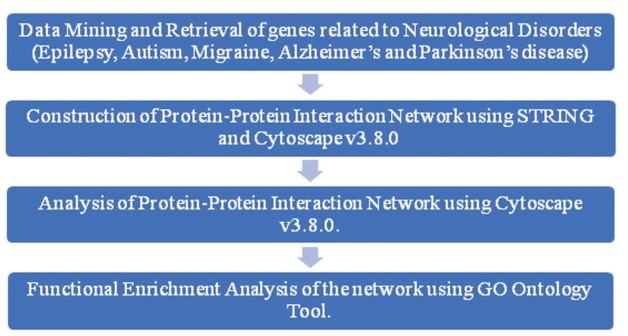
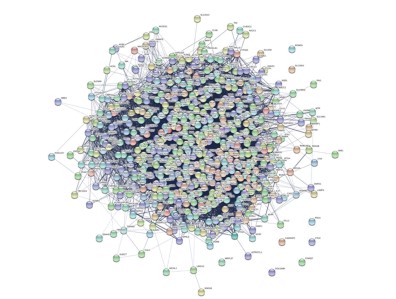
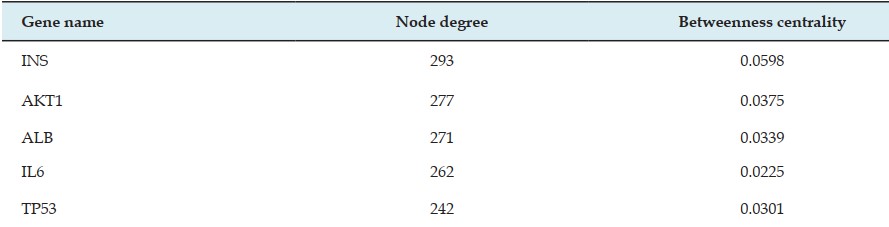
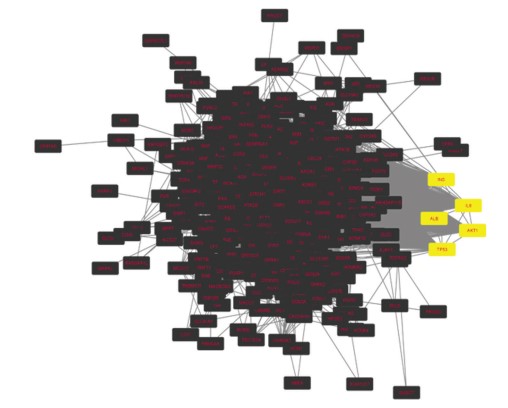
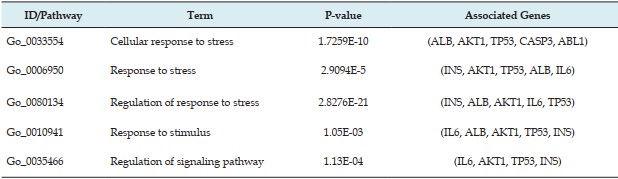
Neurological disorders are a major threat to the wellness of individuals. The neurological disorders included in the Global Burden of Disease (GBD) Study—Alzheimer’s and other dementias, Parkinson’s disease, multiple sclerosis, epilepsy, and headache ailments represent 3 percent of the global burden of illness. Though there are very many diagnostics approaches available for early diagnosis of neurological ailments, systems biology approaches, on the other hand, would attempt to identify the systems which, when altered, change the entire body by a ‘Healthy’ into a ‘disease’ state. In the present study, retrieval of selective genes that are related to Neurological Disorders (Epilepsy, Autism, Migraine, Alzheimer’s and Parkinson’s disease) was done by intense data mining using NCBI (https://www.ncbi.nlm.nih.gov/). The PPI (Protein-Protein Interaction) network was constructed using these genes by the use of STRING 11.0 database. The experimental and co-expression data with 0.400 confidence score were taken as key parameter for PPI network construction in STRING. Further the constructed network was subjected to network analysis and visualization using Cytoscape v 3.8 plug-in Network analyzer. Based on topology parameter betweenness centrality (BC) and node degree INS, AKT1, ALB, IL6 and TP53 genes are identified as the key genes in network. INS gene was obtained as a super hub gene amongst all other genes having the highest betweenness centrality (BC) of 0.0598 and node value of 293. The enrichment analysis of INS, AKT1, ALB, IL6 and TP53 reveals their active role in regulation of pathways and processes which are related to the selected neurological disorder. Thus, the study on these genes along with their pathways and biological mechanism can provide a potential target that may lead to the discovery of potential biomarkers for early detection, diagnosis and monitoring of neurological disorders at different stages.
References
- 1. Jensen, M., Cox, A.P., Chaudhry, N. et al. The neurological disease ontology. J Biomed Semant 4, 42 (2013).
- 2. Zoe Fisher, Emily Galloghly, ElormBoglo, Fergus Gracey, Andrew H. Kemp, Emotion. Wellbeing and the Neurological Disorders. Reference Module in Neuroscience and Biobehavioral Psychology. Elsevier, 2020.
- 3. Prof Christopher J L Murray, Prof Theo Vos, Prof Rafael Lozano, Mohsen Naghavi, Abraham D Flaxman, Catherine Michaud, et al. Disability-adjusted life years (DALYs) for 291 diseases and injuries in 21 regions, 1990–2010: a systematic analysis for the Global Burden of Disease Study 2010. The Lancet 380 (9859), 2197-2223, 2012.
- 4. Thakur KT, Albanese E, Giannakopoulos P, et al. Neurological Disorders. In: Patel V, Chisholm D, Dua T, et al., editors. Mental, Neurological, and Substance Use Disorders: Disease Control Priorities, Third Edition (Volume 4). Washington (DC): The International Bank for Reconstruction and Development / The World Bank; 2016 Mar 14. Chapter 5.
- 5. Birbeck, G., Meyer, AC. &Ogunniyi, A. Nervous system disorders across the life course in resource-limited settings. Nature 527, S167–S171 (2015).
- 6. Santiago Jose A., Bottero Virginie, Potashkin Judith A. Dissecting the Molecular Mechanisms of Neurodegenerative Diseases through Network Biology. Frontiers in Aging Neuroscience 9. 2017.
- 7. Sakharkar MK, Kashmir Singh SK, Rajamanickam K, Mohamed Essa M, Yang J, Chidambaram SB (2019) A systems biology approach towards the identification of candidate therapeutic genes and potential biomarkers for Parkinson’s disease. PLoS ONE 14(9): e0220995. https://doi.org/10.1371/ journal.pone.0220995.
- 8. Cacabelos R. Parkinson's Disease: From Pathogenesis to Pharmacogenomics. International journal of molecular sciences. 2017;18(3). Epub 2017/03/10. pmid:28273839; PubMed Central PMCID: PMC5372567.
- 9. Crous-Bou M, Minguillón C, Gramunt N, Molinuevo JL. Alzheimer's disease prevention: from risk factors to early intervention. Alzheimers Res Ther. 2017 Sep 12; 9(1):71.
- 10. Weller J, Budson A. Current understanding of Alzheimer's disease diagnosis and treatment. F1000Res. 2018;7:F1000 Faculty Rev-1161. Published 2018 Jul 31.
- 11. Ono T, Galanopoulou AS. Epilepsy and epileptic syndrome. Adv Exp Med Biol. 2012;724:99-113. doi:10.1007/978-1-4614-0653- 2_8
- 12. Sirven JI. Epilepsy: A Spectrum Disorder. Cold Spring HarbPerspect Med. 2015;5(9):a022848. 2015.
- 13. Sirven JI. Epilepsy: A Spectrum Disorder. Cold Spring HarbPerspect Med. 2015;5(9):a022848. Published 2015 Sep 1. doi:10.1101/cshperspect. a022848.
- 14. Lee, Sang-Yeon MDa; Lim, Jae-Sung MDb; Oh, Dong Jun MDc; Kong, Il Gyu MD, PhDd; Choi, Hyo GeunMDd,* Increased risk of neurodegenerative dementia in women with migraines, Medicine: February 2019 - Volume 98 - Issue 7 - p e14467.
- 15. Burstein R, Noseda R, Borsook D. Migraine: multiple processes, complex pathophysiology. J Neurosci. 2015;35(17):6619-6629. 2015.
- 16. D’Souza H, Karmiloff-Smith A. Neurodevelopmental disorders. Wiley Interdiscip Rev Cogn Sci 2017; 8(1-2)e1398.
- 17. Tran NQ, Miyake K. Neurodevelopmental disorders and environmental toxicants: Epigenetics as an underlying mechanism. International journal of genomics 2017; 2017
- 18. Nguyen Quoc Vuong Tran, Kunio Miyake,
- 19. Randolph-Gips M, Srinivasan P. Modeling autism: A systems biology approach. J Clin Bioinforma 2012; 2(1): 17.
- 20. Faras H, Al Ateeqi N, Tidmarsh L. Autism spectrum disorders. Ann Saudi Med 2010; 30(4): 295-300.
- 21. A. K. Srivastava, J. Kalita, P. Dohare, M. Ray, and U. K. Misra, “Studies of free radical generation by neurons in a rat model of cerebral venous sinus thrombosis,” Neuroscience Letters, vol. 450, no. 2, pp. 127–131, 2009.
- 22. A. K. Srivastava, J. Kalita, P. Dohare, M. Ray, and U. K. Misra, “Studies of free radical generation by neurons in a rat model of cerebral venous sinus thrombosis,” Neuroscience Letters, vol. 450, no. 2, pp. 127–131, 2009.
- 23. Parikshak NN, Gandal MJ, Geschwind DH. Systems biology and gene networks in neurodevelopmental and neurodegenerative disorders. Nat Rev Genet. 2015;16(8):441-458.
- 24. Szklarczyk D, Gable AL, Lyon D, et al. STRING v11: protein-protein association networks with increased coverage, supporting functional discovery in genome-wide experimental datasets. Nucleic Acids Res. 2019;47(D1): D607-D613.
- 25. Lopes CT, Franz M, Kazi F, et al. Cytoscape Web: an interactive web-based network browser. Bioinformatics (Oxford, England). 2010 Sep;26(18):2347-2348.
- 26. The Gene Ontology Consortium, The Gene Ontology Resource: 20 years and still GOing strong, Nucleic Acids Research, Volume 47, Issue D1, 08 January 2019, Pages D330–D338.
- 27. Dennis, Glynn & Sherman, Bt&Hosack, Da & Yang, Jiexia& Gao, Wei &Lempicki, Richard. (2003). DAVID: Database for Annotation, Visualization, and Integrated Discovery. Genome Biology. 4. 10.1186/gb-2003-4-5-p3.
- 28. Maere, Steven & Heymans, Karel & Kuiper, Martin. (2005). BiNGO: A Cytoscape plugin to assess overrepresentation of Gene Ontology categories in Biological Networks. Bioinformatics (Oxford, England). 21. 3448-9.
- 29. Maere, Steven & Heymans, Karel & Kuiper, Martin. (2005). BiNGO: A Cytoscape plugin to assess overrepresentation of Gene Ontology categories in Biological Networks. Bioinformatics (Oxford, England). 21. 3448-9.
- 30. Israel Steinfeld, Roy Navon, Michael L. Creech, Zohar Yakhini, Anya Tsalenko, ENViz: a Cytoscape App for integrated statistical analysis and visualization of sample-matched data with multiple data types, Bioinformatics, Volume 31, Issue 10, 15 May 2015, Pages 1683– 1685.
Data Sharing Statement
There are no additional data available. All raw data and code are available upon request.
Funding
This research received no funding.
Author Contributions
All authors contributed significantly to the work and approve its publication.
Ethics Declaration
All authors contributed significantly to the work and approve its publication.
Acknowledgements
We would like to express our gratitude to the patients, their families, and all those who have contributed to this study.
Conflicts of Interest
No conflicts of interest in this work.
About this article

Cite this article
Prekshi Garg, Prachi Srivastava, Mohd Aqib, et. al. / Network Gene Analysis of Potential Target for Neurological Disorders through System Biology Approach/Int J Neurol Neurosurg.2022;14(2): 45-53.
Licence:
Attribution-Non-commercial 4.0 International (CC BY-NC 4.0)This license enables reusers to distribute, remix, adapt, and build upon the material in any medium or format for noncommercial purposes only, and only so long as attribution is given to the creator.
| Received | Accepted | Published |
|---|---|---|
| April 24, 2022 | June 04, 2022 | June 30, 2022 |
DOI: https://doi.org/10.21088/ijnns.0975.0223.14222.4
Keywords
Neurological DiseasesSystems BiologyNetwork AnalysisNeurodegenerationSearch for Similar Articles
Similar Articles
- Young Female Developed Cervical Hematoma While Weight Lifting
- Role of Bone: Abrasion in Wound Bed Preparation in Pediatric Scalp Electrical Bu...
- A Case Report of Rare Syndrome: Fahr’s Syndrome
- Is Resection of Disc Necessary in Surgery for Spinal Degeneration?
- Cerebral Infarction in Scalp Electrical Burns
Article Level Metrics
Last UpdatedTuesday 24 November 2026, 02:43:39 (IST)
3641
Accesses
14
424
00
Citations
NA
NA
NA
Download citation
Article Keywords
Keyword Highlighting
Highlight selected keywords in the article text.
Timeline
| Received | April 24, 2022 |
| Accepted | June 04, 2022 |
| Published | June 30, 2022 |
licence
Attribution-Non-commercial 4.0 International (CC BY-NC 4.0)
This license enables reusers to distribute, remix, adapt, and build upon the material in any medium or format for noncommercial purposes only, and only so long as attribution is given to the creator.