Full Text (PDF)
RFP Indian Journal of Hospital Infection 5(2):p 45-53, July-December 2023. | DOI:
Original Article
Microbial Contamination and Poor Hygienic Practices among Food Handlers in a Slum of Kolkata: A Matter of Concern
Sayan Bhattacharyya, Associate Professor, Department of Microbiology, All India Institute of Hygiene & Public Health, Kolkata 700073,West Bengal, India. , Aloke Biswas , Aparajita Dasgpta , Sayan Bhattacharyya , Amit Banik , Soumit Roy , Pritam Ghosh , Atul Raj
Author Information
Licence:
RFP Indian Journal of Hospital Infection 5(2):p 45-53, July-December 2023. | DOI:
How Cite This Article:
Aloke Biswas, Aparajita Dasgpta, Sayan Bhattacharyya et al./Microbial Contamination and Poor Hygienic Practices among Food Handlers in a Slum of Kolkata: A Matter of Concern/RFP Ind. Jr. Hosp. Inf., 2023,5(2):45–53.
Timeline
Received : N/A
Accepted : N/A
Published : N/A
Abstract
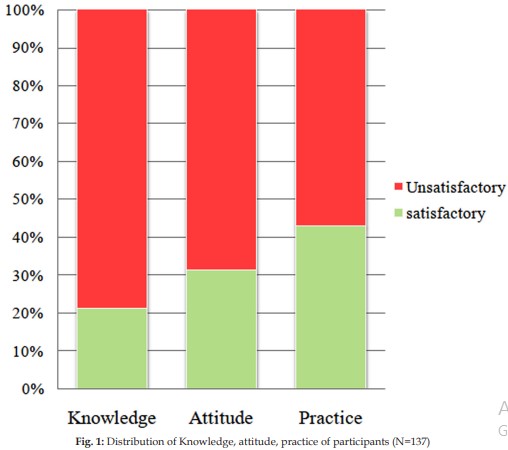
Purpose: Unsafe methods of food processing and food handling with relative lack of proper storage facilities possess higher risk of food-borne diseases. Current IDSP data suggested that nearly half of reported out breaks were food-borne. Proper hygienic practices are essential to preclude the microbial contamination from food establishments through sanitation barrier. Objectives: To find out the prevalence and predictors of poor hygienic practices and microbial contamination of hands among food handlers. Materials and Methods: A cross-sectional study was conducted among 137 randomly selected food handlers in Chetla, Kolkata from June to September 2019. Participants were interviewed using a predesigned, pretested schedule. Hygienic practices were observed using a predesigned pretested checklist. Micro biological assessments of hand swabs were also conducted. Data were analysed using SPSS version 16.0 and logistic regression was used. Results: Microbial contamination was observed in nearly two-third (69.3%) of the participants’ hand. High colony count (≥20 CFU/cm²) was noticed in 40% cases. Staphylococcus aureus was the commonest (36.5%) identified bacteria in their hand. Most of them (56.9%) had poor hygienic practices. Majority had an unsatisfactory level of knowledge (78.8%) and attitude(68.6%). Positive growth was significantly associated with Poor hygienic practice (P-value <0.01), unsatisfactory level of knowledge (P-value <0.01) and attitude (P-value <0.05). Conclusion: High prevalence of bacteriological growth indicated failure in safe food handling practices. Further training is needed to improve their knowledge, attitude and practices regarding safe food handling. Effective and inclusive food safety policy and legislation is the need of the hour.
References
No records found.
About this article

Cite this article
Aloke Biswas, Aparajita Dasgpta, Sayan Bhattacharyya et al./Microbial Contamination and Poor Hygienic Practices among Food Handlers in a Slum of Kolkata: A Matter of Concern/RFP Ind. Jr. Hosp. Inf., 2023,5(2):45–53.
Licence:
| Received | Accepted | Published |
|---|---|---|
| N/A | N/A | N/A |
DOI:
Keywords
Food Safety; Food Handling; Food-Borne Diseases; Drug Resistance-Microbial; Hand Hygiene.Search for Similar Articles
Similar Articles
- Surgical Site Infections: A Review and the Critical Role of Nurses in Preventio...
- Microbial Degradation of Bioplastics: Mechanisms, Challenges, and Future Prospe...
- Incidence and Grading of Surgical Site Infections Using the Southampton System...
- TP53 as a Tumor Suppressor Gene
- Prevailing Hospital Acquired Infections a Challenge to Safety of Patients and Ho...
Article Level Metrics
Last UpdatedTuesday 27 January 2026, 01:13:32 (IST)
109
Accesses
0
8
00
Citations
NA
NA
NA
Download citation
Article Keywords
Keyword Highlighting
Highlight selected keywords in the article text.
Timeline
| Received | N/A |
| Accepted | N/A |
| Published | N/A |