Full Text (PDF)
Pediatric Education and Research 12(2):p 55-59, July - Dec 2024. | DOI: https://dx.doi.org/10.21088/per.2321.1644.12224.4
Case Report
Hyper Eosinophilia with Hereditary Angioedema (HAE): Case Report
Malarvizhi, , Menaka J. , Malarvizhi G
Author Information
Licence:
Pediatric Education and Research 12(2):p 55-59, July - Dec 2024. | DOI: https://dx.doi.org/10.21088/per.2321.1644.12224.4
How Cite This Article:
Menaka J., Malarvizhi G., Hyper Eosinophilia with Hereditary Angioedema (HAE): Case Report. Pediatr. Edu. Res. 2024;12(2): 55-59.
Timeline
Received : N/A
Accepted : N/A
Published : N/A
Abstract
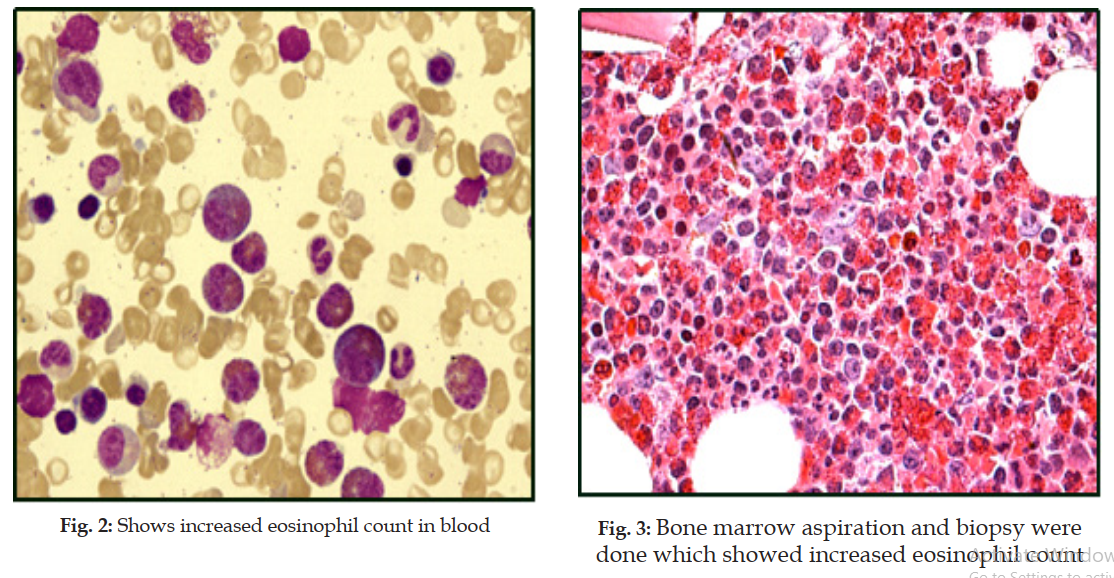
Background: Hyperesinophilia (HES)with Hereditary angioedema (HAE), is a rare disease characterized by peripheral blood eosinophilia > 1500/mcl (> 1.5 × 10⁹/L) persisting ≥ 6 months and the presence of end-organ damage. Hereditary angioedema is a lifelong illness characterized by recurrent swelling of the skin, intestinal tract, and, the upper airway. It results from insufficient activity of the C1-inhibitor protein, leading to disturbances in the kallikrein/bradykinin pathway. Case presentation: We reviewed a case of Hypereosinophilia with hereditary angioedema (HAE) in 7-year-old boy who was referred from another hospital in Coimbatore for further management. He had elevated absolute eosinophilic count & elevated IgE. Bone marrow aspiration and biopsy were done which showed increased eosinophil. Stool for ova/ cyst was negative. He was initiated on oral prednisolone (10mg), pantaprozole (20mg) & dexamethasone (50mg). Conclusion: Hereditary angioedema (HAE) is a genetic condition that poses a threat to life; this condition necessitates rapid diagnosis and treatment to control acute attacks and avert potentially lethal complications, especially when swelling impacts the airway, and can despite recent developments in treatment options, a child quality of life can be significantly affected.
References
No records found.
Data Sharing Statement
There are no additional data available
Funding
This research received no funding
Author Contributions
All authors contributed significantly to the work and approve its publication
Ethics Declaration
This article does not involve any human or animal subjects, and therefore does not require ethics approval
Acknowledgements
Information Not Provided
Conflicts of Interest
No conflicts of interest in this work
About this article

Cite this article
Menaka J., Malarvizhi G., Hyper Eosinophilia with Hereditary Angioedema (HAE): Case Report. Pediatr. Edu. Res. 2024;12(2): 55-59.
Licence:
| Received | Accepted | Published |
|---|---|---|
| N/A | N/A | N/A |
DOI: https://dx.doi.org/10.21088/per.2321.1644.12224.4
Keywords
HyperesinophiliaHereditary angioedemaProtein C1-inhibitorKallikrein/ bradykininBone marrowBiopsy.Search for Similar Articles
Similar Articles
- Contributions of Dr. James A. Hanson in the Field of Paediatrics
- Contribution of Dr. Y.M. Bhende in the Field of Pediatrics
- Contribution of Dr. Nevin S. Scrimshaw in Field of Pediatrics
- Dr. Sidney Farber: Pioneer of Pediatric Oncology and Chemotherapy
- The Contribution of Dr. Jonas Salk to the Field of Paediatrics
Article Level Metrics
Last UpdatedMonday 07 September 2026, 04:00:37 (IST)
1862
Accesses
7
192
00
Citations
NA
NA
NA
Download citation
Article Keywords
Keyword Highlighting
Highlight selected keywords in the article text.
Timeline
| Received | N/A |
| Accepted | N/A |
| Published | N/A |