Full Text (PDF)
International Journal of Political Science 11(1):p 55-63, Jan-June 2025. | DOI: https://doi.org/10.21088/ijops.2454.9371.11125.7
Review Article
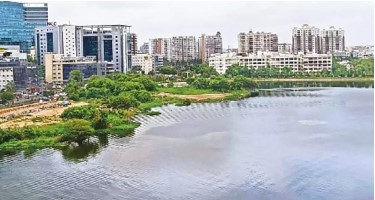
HYDRA: Building a Disaster-Resilient Hyderabad for the Future
Author Information
Licence:
Attribution-Non-commercial 4.0 International (CC BY-NC 4.0)This license enables reusers to distribute, remix, adapt, and build upon the material in any medium or format for noncommercial purposes only, and only so long as attribution is given to the creator.
International Journal of Political Science 11(1):p 55-63, Jan-June 2025. | DOI: https://doi.org/10.21088/ijops.2454.9371.11125.7
How Cite This Article:
Gedam Kamalakar. HYDRA: Building a Disaster-Resilient Hyderabad for the Future. Int J Pol Sci 2025; 11(1): 55–63.Timeline
Received : March 12, 2025
Accepted : June 17, 2025
Published : June 30, 2025
Abstract
This content presents the HYDRA (Hyderabad Disaster Resilience and Assets) project, a comprehensive project to transform Hyderabad into a disaster-resilient city. Hyderabad, one of the largest cities in India, faces increasing risks of natural disasters such as floods, heat waves, and urban failure. HYDRA works to address these challenges using risk assessment, infrastructure development, and community engagement strategies. Early warning and smart solutions. In addition, it emphasizes the role of public-private partnerships (PPPs) and institutional collaboration to ensure a coordinated response. Give special attention to vulnerable groups and support sustainable urban planning to reduce long-term risks. Labah has become a model for disaster management in emerging megacities. The initiative highlights the need for good infrastructure and governance to protect lives, safeguard the economy and make cities sustainable for the future.
References
- 1. Agarwal, A., &Narain, S. (1991). Floods, Flood Plains and Environmental Myths. Centre for Science and Environment.
- 2. Bhattacharyya, B. (2019). Disaster Management in India: Perspectives, Issues and Strategies. New Delhi: Sage Publications.
- 3. Das D., Skelton T. Hydrating Hyderabad: Rapid urbanisation, water scarcity and the difficulties and possibilities of human flourishing. Urban Studies. 2019.
- 4. Government of India. (2005). Disaster Management Act, 2005. Government Press.
- 5. https://indianexpress.com/article/cities/ hyderabad/politicians-industrialists-filmstars-in-hyderabad-long-arm-of-the-hydracauses-a-stir-9540534/
- 6. https://timesofindia.indiatimes.com/city/ hyderabad/illegal-structures-found-in-ftland-buffer-zones-of-13-lakes-in-hyderabad/ articleshow/112935909.cms
- 7. https://timesofindia.indiatimes.com/city/ hyderabad/revanth-directs-hydra-to-manage- 2000-sq-kms-up-to-orr-in-hyderabad/ articleshow/111700949.cms
- 8. https://www.deccanchronicle.com/southernstates/telangana/govt-constitutes-hydra-fortelangana-core-urban-region-1811207
- 9. https://www.newindianexpress.com/states/ telangana/2024/Jul/13/hydras-tentacles-setto-protect-city-till-outer-ring-road
- 10. https://www.thehansindia.com/news/ c i t i e s / h y d e r a b a d / i i m - j a m m u - h o l d s - meet-on-boosting-industry-partnerships- 903897?infinitescroll=1
- 11. Hussain Z., Hanisch M. Dynamics of periurban agricultural development and farmers’ adaptive behaviour in the emerging megacity of Hyderabad, India. Journal of Environmental Planning and Management. 2014; 57(4): 495-515.
- 12. Pelling, M. (2010). Adaptation to Climate Change: From Resilience to Transformation. Routledge.
- 13. Rangari V.A., Sridhar V., Umamahesh N.V., Patel A.K. Floodplain mapping and management of urban catchment using HECRAS: A case study of Hyderabad City. Journal of the Institution of Engineers Series A. 2019; 100(1): 49-63.
- 14. Rao H.K. DC laterite mining sites are swallowing land in Hyderabad. Deccaan Chronicle. 2016; 11.
- 15. Sarkar, S. (Ed.). (2018). Disaster Risk Reduction in South Asia. Routledge India.
- 16. Sehra V. Hyderabad’s Musi River: Why do technocratic solutions fail in safeguarding urban waterbodies? Economic and Political Weekly. 2020; 55(10).
- 17. Shaw, R. (Ed.). (2014). Urban Disaster Resilience: New Dimensions from International Practice in the Built Environment. Elsevier.
Data Sharing Statement
There are no additional data available. All raw data and code are available upon request.
Funding
This research received no funding.
Author Contributions
All authors contributed significantly to the work and approve its publication.
Ethics Declaration
This article does not involve any human or animal subjects, and therefore does not require ethics approval.
Acknowledgements
We would like to express our gratitude to the patients, their families, and all those who have contributed to this study.
Conflicts of Interest
No conflicts of interest in this work.
About this article

Cite this article
Gedam Kamalakar. HYDRA: Building a Disaster-Resilient Hyderabad for the Future. Int J Pol Sci 2025; 11(1): 55–63.
Licence:
Attribution-Non-commercial 4.0 International (CC BY-NC 4.0)This license enables reusers to distribute, remix, adapt, and build upon the material in any medium or format for noncommercial purposes only, and only so long as attribution is given to the creator.
| Received | Accepted | Published |
|---|---|---|
| March 12, 2025 | June 17, 2025 | June 30, 2025 |
DOI: https://doi.org/10.21088/ijops.2454.9371.11125.7
Keywords
UrbanizationFlood resiliencePolicy analysisDisaster managementSearch for Similar Articles
Similar Articles
- Identity, Knowledge, and Autonomy: A Study of Minority Educational Institutions...
- Digital Governance in State vs Central Universities: A Comparative Study
- Primary Educational Development in Telangana: Policy Impact and Future Direction...
- The Role of Cultural Nationalism in India’s Development: A Study of RSS Ideology
- Navigating China’s Historic Evolution
Article Level Metrics
Last UpdatedMonday 19 October 2026, 06:32:57 (IST)
1554
Accesses
11
257
00
Citations
NA
NA
NA
Download citation
Article Keywords
Keyword Highlighting
Highlight selected keywords in the article text.
Timeline
| Received | March 12, 2025 |
| Accepted | June 17, 2025 |
| Published | June 30, 2025 |
licence
Attribution-Non-commercial 4.0 International (CC BY-NC 4.0)
This license enables reusers to distribute, remix, adapt, and build upon the material in any medium or format for noncommercial purposes only, and only so long as attribution is given to the creator.