Full Text (PDF)
RFP Indian Journal of Medical Psychiatry 7(1):p 19-25, January – June 2024. | DOI: NA
Review Article
Computational Methodologies in Psychometry and Mental Health
Author Information
Licence:
Attribution-Non-commercial 4.0 International (CC BY-NC 4.0)This license enables reusers to distribute, remix, adapt, and build upon the material in any medium or format for noncommercial purposes only, and only so long as attribution is given to the creator
RFP Indian Journal of Medical Psychiatry 7(1):p 19-25, January – June 2024. | DOI: NA
How Cite This Article:
T.V. Gopal. Computational Methodologies in Psychometry and Mental Health. RFP Ind Jr of Med Psy. 2024;7(1):19–25.Timeline
Received : April 03, 2024
Accepted : May 29, 2024
Published : June 30, 2024
Abstract
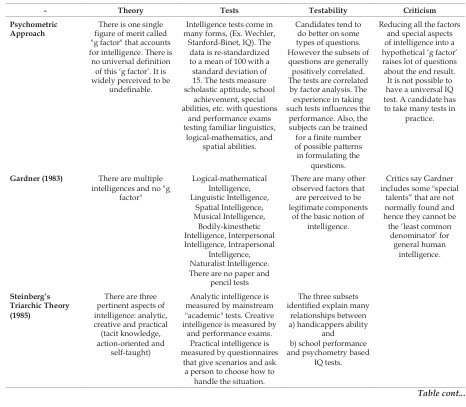
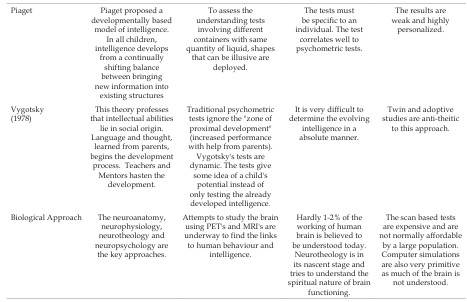
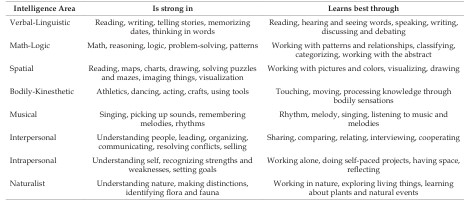
Psychometry’ the science of measuring human intelligence has evolved slowly over the last century. Today we have several theories for measuring this socially vital attribute of human beings at various stages of development. Many of these theories are often contradictory and the results are not conclusive. The measurement is done by administering mental ability tests However, the search for a theory that yields good correlation is still ongoing. Digital mental health by using a suite of digital technologies ranging from digital interventions to the application of artificial intelligence is a logical next step in this progress. Telepsychiatry and virtual reality in psychiatric treatment and rehabilitation are showing considerable progress. This paper reports the research of the author using three of the six major theories of intelligence. The computational methodologies are generic and can be extended to any facet of human potential measurement and development. It is reliant on advances in computer and communication technologies such as high speed networking, multimedia and virtual reality. If future generations are to remember us more with gratitude than sorrow, we must achieve more than just the miracles of technology. We must also leave them a glimpse of the world as it was created, not just as it looked when we got through with it. - Lyndon B. Johnson, 36th president of the United States of America
References
- 1. Brian Macwhinney and Ping Li, “Neurolinguistic Computational Models”, Pp 229 – 236, In: Brigitte Stemmer, Harry A. Whitaker (Eds), “Handbook of the Neuroscience of Language”, Academic Press, 2008.
- 2. Cherniss, C., Boyatzis, R.E., and Elias, M. (eds.), “Developments in Emotional Intelligence”, JosseyBass, San Fransisco, 2001.
- 3. Daniel Goleman, “Emotional Intelligence”, Bantam Books, Ney York, 1996.
- 4. David E Simth, “Knowledge, Groupware and the Internet”, Butterworth-Heinmann,, New Delhi, 2001.
- 5. Fogg, B J, “Persuasive Technologies
- 6. Fogg, B.J, “Persuasive Technology: Using Computers to Change What We Think and Do”, Morgan Kaufmann Publishers, 2003.
- 7. Green R S, Gastfriend D R, Kolodner R M and Fowler R D, “Personal Computer Applications for Psychiatry and Psychology”, Proceedings of the Annual Symposium on Computer Applications in Medical Care, Pp 280–285, Nov 7, 1984.
- 8. Hans and Michael Eysenck, “Mind Watching” , Rupa & Co., New Delhi, 2001.
- 9. Marvin Minsky, “The Emotion Machine”, Simon & Schuster, 2006
- 10. Mizutani A and Fassler D, “Computer Technology in Psychiatric Practice: The Automated Interview in Perspective”, The Psychiatric Hospital, Vol. 16, No. 3, Pp 135-140, Summer 1985.
- 11. Richard Bandler and John Grinder, “The Structure of Magic I: A Book about Language and Therapy.” Science and Behavior Books Inc, 1975.
- 12. Richard Bandler and John Grinder, “The Structure of Magic II: A Book about Language and Therapy.” California: Science and Behavior Books, 1976.
- 13. Stephen Wiseman (Editor), “Intelligence and Ability”, Penguin Books, UK, 1973.
- 14. Waguih William Ishak and Tal Burt, “Computer Applications in Psychiatry: Role in Patient Care, Education, Research and Communication”, Cyber Psychology & Behavior, Volume 1, Number 2, Pp 147 – 150, 1998
Data Sharing Statement
There are no additional data available. All raw data and code are available upon request.
Funding
This research received no funding
Author Contributions
All authors contributed significantly to the work and approve its publication
Ethics Declaration
This article does not involve any human or animal subjects, and therefore does not require ethics approval
Acknowledgements
We would like to express our gratitude to the patients, their families, and all those who have contributed to this study.
Conflicts of Interest
No conflicts of interest in this work
About this article

Cite this article
T.V. Gopal. Computational Methodologies in Psychometry and Mental Health. RFP Ind Jr of Med Psy. 2024;7(1):19–25.
Licence:
Attribution-Non-commercial 4.0 International (CC BY-NC 4.0)This license enables reusers to distribute, remix, adapt, and build upon the material in any medium or format for noncommercial purposes only, and only so long as attribution is given to the creator
| Received | Accepted | Published |
|---|---|---|
| April 03, 2024 | May 29, 2024 | June 30, 2024 |
DOI: NA
Keywords
PsychologyIntelligent QuotientHuman Resource DevelopmentPsychometryMental HealthComputational ModelsMultimediaVirtual RealitySearch for Similar Articles
Article Level Metrics
Last UpdatedWednesday 21 October 2026, 07:05:16 (IST)
1331
Accesses
23
243
00
Citations
NA
NA
NA
Download citation
Article Keywords
Keyword Highlighting
Highlight selected keywords in the article text.
Timeline
| Received | April 03, 2024 |
| Accepted | May 29, 2024 |
| Published | June 30, 2024 |
licence
Attribution-Non-commercial 4.0 International (CC BY-NC 4.0)
This license enables reusers to distribute, remix, adapt, and build upon the material in any medium or format for noncommercial purposes only, and only so long as attribution is given to the creator