Full Text (PDF)
Indian Journal of Cancer Education and Research 12(1):p 27-30, January - June 2024. | DOI: https://doi.org/10.21088/ijcer.2321.9815.12124.4
Case Report
Biphenotypic Sinonasal Sarcoma: A Rare Case Report
Virendra Bhandari, Pragati Kesharwani, Somya Sharma, Saloni Singhal, Ashar Iqbal Lodi
Author Information
Licence:
Attribution-Non-commercial 4.0 International (CC BY-NC 4.0)This license enables reusers to distribute, remix, adapt, and build upon the material in any medium or format for noncommercial purposes only, and only so long as attribution is given to the creator.
Indian Journal of Cancer Education and Research 12(1):p 27-30, January - June 2024. | DOI: https://doi.org/10.21088/ijcer.2321.9815.12124.4
How Cite This Article:
Pragati Kesharwani, Somya Sharma, Saloni Singhal et. al. Biphenotypic Sinonasal Sarcoma: A Rare Case Report/Ind J Canc Educ Res 2024;12(1):27-30.Timeline
Received : July 18, 2023
Accepted : September 01, 2023
Published : June 25, 2024
Abstract
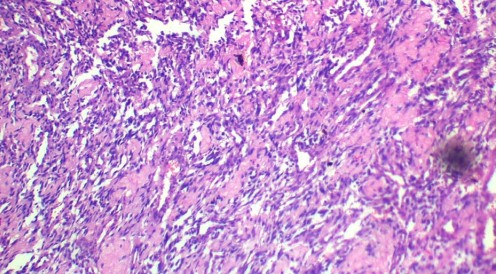
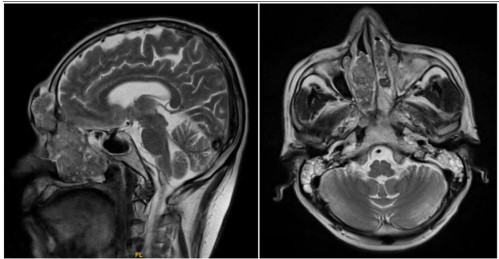
Background: Biphenotypic Sinonasal Sarcoma (BSNS) is a recently described tumor with its site of origin limited to the nose and paranasal sinus. It is a rare low-grade sarcoma characterized by concomitant neural and myogenic differentiation with high recurrence rates but lacks metastatic potential. Limited literature is available about the standard treatment regimens due to their rarity. Case Presentation: Herein we describe the details of the case of a 55-year-old male, known case of recurrent biphenotypic sinonasal Sarcoma who presented with bilateral nasal obstruction. The diagnosis was confirmed by immunohistochemistry. He underwent surgery but developed recurrence twice, and later treated with Radiation Therapy. Conclusions: Mainstay of the treatment remains surgery but due to its rarity, no definite treatment guidelines are defined. Radica or adjuvant treatment with chemotherapy and/or radiotherapy have been tried with limited data on the outcome.
References
- 1. Lewis JT, Oliveria AM, Nascimento AG, Schembri - Wismayer D, Moore EA, Olsen KD, et al. Low - grade sinonasal sarcoma with neural and myogenic features: a clinicopathologic analysis of 28 cases. The American journal of surgical pathology. 2012; 36(4): 517-25.
- 2. Agaimy a, Haller F, Hartmann A. Sinonasal tumors: News from the WHO with special reference to mesenchymal entities. Pathologe. 2018; 39(1).
- 3. Connan R, Wiggins R, Witt B, Dundar Y, Johnston T, Hunt J. Imaging and Outcomes for a New Entity: Low - Grade Sinonasal Sarcoma with Neural and Myogenic Features. Journal of Neurological Surgery Reports. 2017; 78(01): 15-19.
- 4. Chitguppi C, Koszewski I, Collura K, Curtis M, Nyquist G, Rabinowitz M, et al. Addendum: Biphenotypic Sinonasal Sarcoma—Case Report and Review of Clinicopathological Features and Diagnostic Modalities. Journal of Neurological Surgery Part B: Skull Base. 2019.
- 5. Wang X, Bledsoe KL, Graham RP, Asmann YW, Viswanatha DS, Lewis JE, et al. Recurrent PAX3-MAML3 fusion in biphenotypic sinonasal sarcoma. Nature Genetics. 2014; 46(7): 666-668.
- 6. Kominsky E, Boyke AE, Madani D, Kamat A, Schiff BA, Agarwal V. Biphenotypic Sinonasal Sarcoma: A Case Report and Review of Literature. Ear, Nose and Throat Journal. 2021.
- 7. Le Loarer F, Laffont S, Lesluyes T, Triode F, Antonescu C, ucile ACD, et al. Clinicopathologic and Molecular Features of a Series of 41 Biphenotypic Sinonasal Sarcomas Expanding Their Molecular Spectrum. American Journal of Surgical Pathology. 2019; 43(6): 747-754.
- 8. Bell D, Phan J, DeMonte F, Hanna EY. High-Grade Transformation of Low - Grade Biphenotypic Sinonasal Sarcoma: A Morphological, Immunohistochemical, and Molecular Study. In 31st Annual Meeting North American Skull Base Society; 2022.
- 9. Lin Y, Liao B, Han A. Biphenotypic sinonasal sarcoma with diffuse infiltration and intracranial extension: A case report. International Journal of Clinical and Experimental Pathology. 2017; 10(12).
- 10. Rooper LM, Huang SC, Antonescu CR, Westra WH, Bishop JA. Biphenotypic sinonasal sarcoma: An expanded immunoprofile including consistent nuclear β-catenin positivity and absence of SOX10 expression. Human Pathology. 2016; 55.
Data Sharing Statement
There are no additional data available. All raw data and code are available upon request.
Funding
This research received no funding.
Author Contributions
All authors contributed significantly to the work and approve its publication.
Ethics Declaration
This article does not involve any human or animal subjects, and therefore does not require ethics approval.
Acknowledgements
We would like to express our gratitude to the patients, their families, and all those who have contributed to this study.
Conflicts of Interest
No conflicts of interest in this work.
About this article

Cite this article
Pragati Kesharwani, Somya Sharma, Saloni Singhal et. al. Biphenotypic Sinonasal Sarcoma: A Rare Case Report/Ind J Canc Educ Res 2024;12(1):27-30.
Licence:
Attribution-Non-commercial 4.0 International (CC BY-NC 4.0)This license enables reusers to distribute, remix, adapt, and build upon the material in any medium or format for noncommercial purposes only, and only so long as attribution is given to the creator.
| Received | Accepted | Published |
|---|---|---|
| July 18, 2023 | September 01, 2023 | June 25, 2024 |
DOI: https://doi.org/10.21088/ijcer.2321.9815.12124.4
Keywords
Biphenotypic Sinonasal SarcomaSpindle Cell NeoplasmSMAPAX3Search for Similar Articles
Similar Articles
- Carcinoma Cervix with Ulnar Mets: Unusual Case Report
- Cervical Cancer
- Awake Fiberoptic Intubation in Patient with Hyperthyroidism with Goiter posted f...
- Assessment of Difference in Planning Target Volume Margins and Deviation in Late...
- Real World Study to assess Efficacy of Ferric Carboxymaltose in Treatment of Ane...
Article Level Metrics
Last UpdatedMonday 23 November 2026, 03:36:27 (IST)
2738
Accesses
10
445
00
Citations
NA
NA
NA
Download citation
Article Keywords
Keyword Highlighting
Highlight selected keywords in the article text.
Timeline
| Received | July 18, 2023 |
| Accepted | September 01, 2023 |
| Published | June 25, 2024 |
licence
Attribution-Non-commercial 4.0 International (CC BY-NC 4.0)
This license enables reusers to distribute, remix, adapt, and build upon the material in any medium or format for noncommercial purposes only, and only so long as attribution is given to the creator.