Full Text (PDF)
Journal of Forensic Chemistry and Toxicology 9(1):p 9-15, January – June 2023. | DOI: http://dx.doi.org/10.21088/jfct.2454.9363.9123.1
Original Article
A Comparative Observational Study of Postmortem Computed Tomography and Traditional Forensic Autopsy Findings in Hanging Cases
Abhishek Yadav, Anam Khan, Karthi Vignesh Raj K, Sudhir K. Gupta, Varun Chandran A, Abilash S, Swati Tyagi
Author Information
Licence:
Attribution-Non-commercial 4.0 International (CC BY-NC 4.0)This license enables reusers to distribute, remix, adapt, and build upon the material in any medium or format for noncommercial purposes only, and only so long as attribution is given to the creator
Journal of Forensic Chemistry and Toxicology 9(1):p 9-15, January – June 2023. | DOI: http://dx.doi.org/10.21088/jfct.2454.9363.9123.1
How Cite This Article:
Khan A, Raj KKV, Yadav A, Gupta SK, Chandran VA, Abilash S, et al. A Comparative Observational Study of Postmortem Computed Tomography (PMCT) and Traditional Forensic Autopsy Findings in Hanging Cases. J Forensic Chem Toxicol. 2023;9(1):9–15.Timeline
Received : October 01, 2022
Accepted : November 03, 2022
Published : June 30, 2023
Abstract
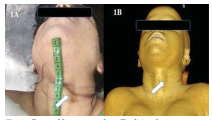
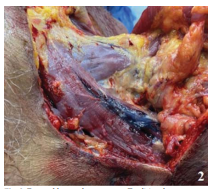
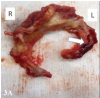
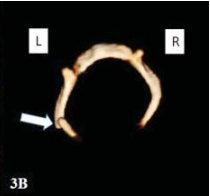
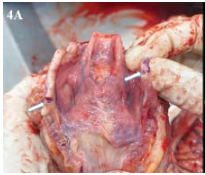
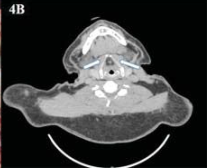
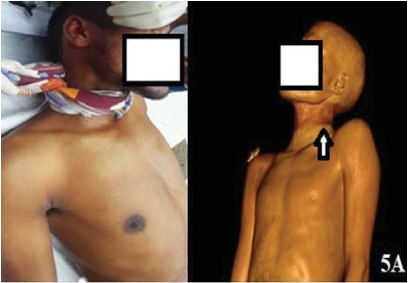
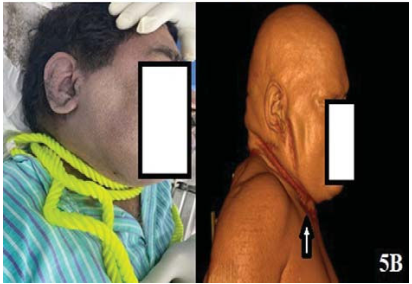
Background: The use of advanced radiological techniques is rising in the field of forensics to supplement and validate the evidence. Postmortem Computed Tomography (PMCT) is now used as a standard procedure in many institutions to augment traditional autopsy findings. The application of PMCT in hanging cases will greatly reduce the number of invasive traditional autopsies, as hanging is the most common method of suicide in Northern parts of India. Therefore this observational study was conducted to compare PMCT with traditional autopsy in fifty hanging cases. Result: Out of 50 cases, the age of the subjects ranged between 14 years and 70 years. PMCT with the help of 3D reconstruction was able to detect external ligature marks on the neck in 92% (N=46) of cases giving a sensitivity of 92% (CI = 80.77% to 97.78%). Skin and subcutaneous tissue desiccation were identifiable in 96% (N=48) by PMCT, giving a sensitivity of 96% (CI= 86.29% to 99.51%). The muscle hemorrhage was identified in 4% (N=2) of the cases in traditional autopsy while the authors found difficulty in interpreting the muscle hemorrhage in PMCT. In detecting thyroid cartilage fracture, the sensitivity of PMCT was found to be 100% (CI= 15.81% to 100.00%) and specificity of 100% (CI=92.60% to 100.00%). In detecting hyoid bone fracture, the sensitivity was 100% (CI= 2.50% to 100.00%) and specificity of 100% (CI=92.60% to 100.00%). In addition, there was a great degree of agreement between the two observers for these findings suggesting the reproducibility of the result. Conclusions: A consistency in findings of both the PMCT and traditional autopsy was found. However, CT was unable to detect muscle hemmorhages, compared to traditional autopsy. Authors suggest the use of CT angiography to overcome this shortcoming, till then CT can only augment invasive autopsy findings not replace it.
References
- 1. Byard RW. Pekka Saukko, Bernard Knight. Asphyxia. In: Knight’s Forensic Pathology 4th ed. England: CRC Press;2016.
- 2. Kempter M, Ross S, Spendlove D, Flach PM, Preiss U, Thali MJ, Bolliger SA. Post-mortemimaging of laryngohyoid fractures in strangulation incidents: first results. Leg Med.2009;11(6):267-71.
- 3. Saternus KS, Maxeiner H, Kernbach-Wighton G, Koebke J. Traumatology of the superiorthyroid horns in suicidal hanging–An injury analysis. Leg Med.2013;15(3):134-9.
- 4. Yadav A, Kumath M, Tellewar S, Kumar RL. Study of fracture of hyoid bone in hanging cases. J Indian Acad Forensic Med. 2013;35(3):239-41.
- 5. Thali MJ, Schweitzer W, Yen K, Vock P, Ozdoba C, Spielvogel E, Dirnhofer R. New horizons in Forensic Radiology: the 60-second “Digital Autopsy—fullbody examination of a gunshot victim by Multislice Computed Tomography. Am J Forensic Med Pathol.2003;24(1):22-7.
- 6. Levy AD, Abbott RM, Mallak CT, Getz JM, Harcke HT, Champion HR, Pearse LA. Virtualautopsy: preliminary experience in high-velocity gunshot wound victims. Radiology. 2006;240(2):522-8.
- 7. Dedouit F, Telmon N, Guilbeau Frugier C, Gainza D, Otal P, Joffre F, Rougé D. Virtualautopsy and forensic identification—practical application: a report of one case. J Forensic Sci. 2007;52(4):960-4.
- 8. Wallace SK, Cohen WA, Stern EJ, Reay DT. Judicial hanging: postmortem radiographic, CT, and MR imaging features with autopsy confirmation. Radiology. 1994;193(1):263-7.
- 9. Hayashi T, Hartwig S, Tsokos M, Oesterhelweg L. Postmortem Multislice Computed Tomography (PMMSCT) imaging of hangman’s fracture. Forensic Sci Med Pathol. 2014;10(1):3–8.
- 10. Tumram NK, Ambade VN, Bardale RV, Dixit PG. Injuries over neck in hanging deaths andits relation with ligature material: is it vital?. J Forensic Leg Med.2014;22:80-3.
- 11. Yen K, Thali MJ, Aghayev E, Jackowski C, Schweitzer W, Boesch C, et al. Strangulationsigns: initial correlation of MRI, MSCT, and forensic neck findings. J Magn Reson Imaging.2005;22:501–10.
- 12. Polacco M, D’Alessio P, Ausania F, Zobel B, Pascali VL, d’Aloja E, Miscusi M, De-GiorgioF. Virtual autopsy in hanging. Am J Forensic Med Pathol. 2013;34(2):107-9.
- 13. Gascho D, Heimer J, Tappero C, Schaerli S. Relevant findings on postmortem CT andpostmortem MRI in hanging, ligature strangulation and manual strangulation and theiradditional value compared to autopsy–a systematic review. Forensic Sci Med Pathol. 2019;15(1):84-92.
- 14. Graziani G, Tal S, Adelman A, Kugel C, BdolahAbram T, Krispin A. Usefulness ofunenhanced post mortem computed tomography–Findings in postmortem non-contrastcomputed tomography of the head, neck and spine compared to traditional medicolegalautopsy. J Forensic Leg Med. 2018; 55:105-11.
- 15. Ross S, Spendlove D, Bolliger S, Christe A, Oesterhelweg L, Grabherr S, Thali MJ, Gygax E.Postmortem whole-body CT angiography: evaluation of two contrast media solutions. Am Jof Roentgenology. 2008;190(5):1380-9.
- 16. Schulze K, Ebert LC, Ruder TD, Fliss B, Poschmann SA, Gascho D, Thali MJ, Flach PM. The gas bubble sign—a reliable indicator of laryngeal fractures in hanging on post-mortemCT. British J Radiol. 2018;91(1084):20170479.
- 17. Sen Gupta BK. Studies on 101 cases of death due to hanging. J Indian Med Assoc. 1965.
- 18. Naimo P, O’Donnell C, Bassed R, Briggs C. The use of computed tomography in determining developmental changes, anomalies, and trauma of the thyroid cartilage. Forensic Sci Med Pathol. 2013;9(3):377-85.
- 19. Jurik AG. Ossification and calcification of the laryngeal skeleton. Acta Radiological Diag. 1984;25(1):17-22.
- 20. Charoonnate N, Narongchai P, Vongvaivet S. Fractures of the hyoid bone and thyroidcartilage in suicidal hanging. Med J Med Asso Thai. 2010;93(10):1211.
- 21. Sharma BR, Harish D, Singh VP, Singh P. Ligature mark on neck: how informative?. J Indian Acad Forensic Med. 2005;27(1):10-5.
- 22. Ahmad M, Hossain MZ. Hanging as a method of suicide: retrospective analysis ofpostmortem cases. JArmed Forces Med Coll. 2010;6(2):37-9.
- 23. Patel AP, Bansal A, Shah JV, Shah KA. Study of hanging cases in Ahmedabad region. JIndAcad Forensic Med. 2012;34(4):342-5.
- 24. Begum A, Khan NT, Shafiuzzaman AK, Shahid F, Anam AA, Ahmed KS, Begum RA, Fahmi S. Suicidal death due to hanging. Delta Med Coll J. 2017;5(2):89-93.
- 25. Chatzaraki V, Heimer J, Thali M, Dally A, Schweitzer W. Role of PMCT as a triage toolbetween external inspection and full autopsy–case series and review. J Forensic Rad Imaging. 2018;15:26-38.
Data Sharing Statement
There are no additional data available
Funding
This research received no funding.
Author Contributions
All authors contributed significantly to the work and approve its publication.
Ethics Declaration
This article does not involve any human or animal subjects, and therefore does not require ethics approval
Acknowledgements
Information Not Provided
About this article

Cite this article
Khan A, Raj KKV, Yadav A, Gupta SK, Chandran VA, Abilash S, et al. A Comparative Observational Study of Postmortem Computed Tomography (PMCT) and Traditional Forensic Autopsy Findings in Hanging Cases. J Forensic Chem Toxicol. 2023;9(1):9–15.
Licence:
Attribution-Non-commercial 4.0 International (CC BY-NC 4.0)This license enables reusers to distribute, remix, adapt, and build upon the material in any medium or format for noncommercial purposes only, and only so long as attribution is given to the creator
| Received | Accepted | Published |
|---|---|---|
| October 01, 2022 | November 03, 2022 | June 30, 2023 |
DOI: http://dx.doi.org/10.21088/jfct.2454.9363.9123.1
Keywords
Traditional autopsy; Post Mortem Computed Tomography; Hanging; Thyroid fracture; Hyoid fracture; Neck muscle hemorrhage.Traditional autopsyPost Mortem Computed TomographyHangingThyroid fractureHyoid fractureNeck muscle hemorrhageSearch for Similar Articles
Similar Articles
- Lethal Poisoning Cases: The Poisoning Cases of India: A Review Study
- Deciphering the Secrets of Magic Pen Inks: A Review
- From Effluents to Exposure: Wastewater-Based Epidemiology in Occupational and En...
- Sub Standard and Falsified Drugs Toxicity: An Alarming Concern of Today
- Detection and Identification of Kerosene in Turpentine Oil: A Review
Article Level Metrics
Last UpdatedTuesday 21 July 2026, 23:41:29 (IST)
890
Accesses
3
94
00
Citations
NA
NA
NA
Download citation
Article Keywords
Keyword Highlighting
Highlight selected keywords in the article text.
Timeline
| Received | October 01, 2022 |
| Accepted | November 03, 2022 |
| Published | June 30, 2023 |
licence
Attribution-Non-commercial 4.0 International (CC BY-NC 4.0)
This license enables reusers to distribute, remix, adapt, and build upon the material in any medium or format for noncommercial purposes only, and only so long as attribution is given to the creator